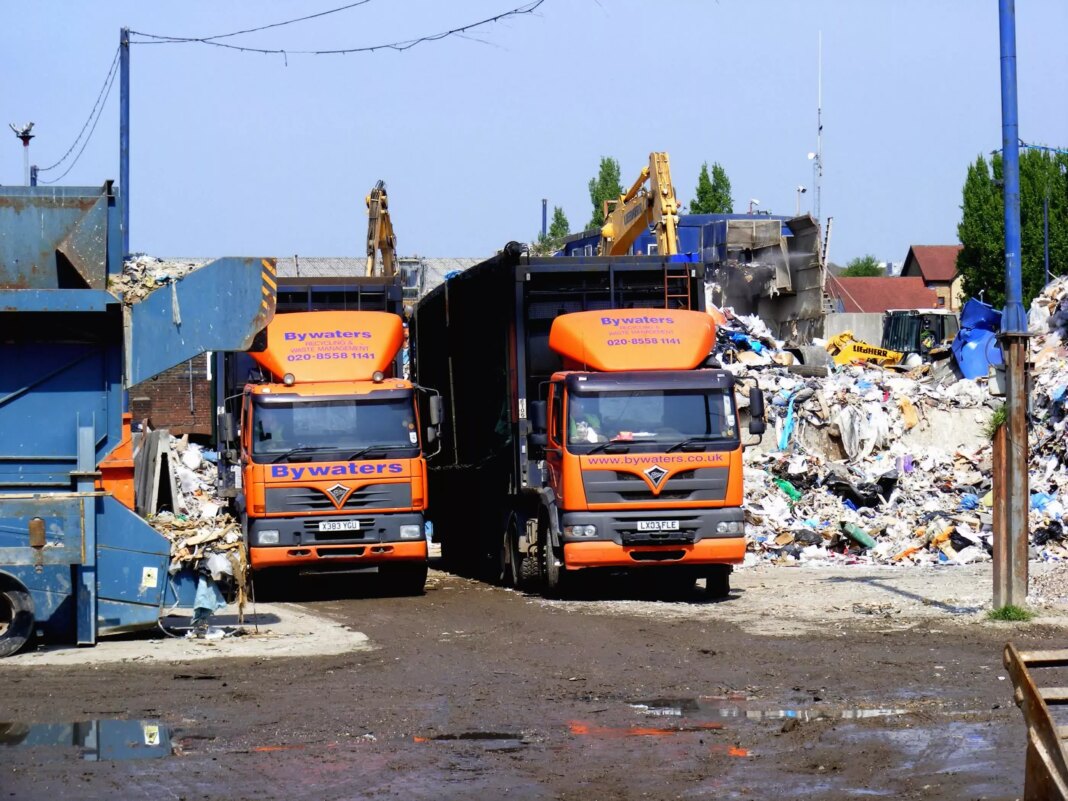
WTF?! Want another reason why there’s a big pushback against artificial intelligence? In Dallas, AI-powered cameras mounted on trash collection trucks are photographing properties and assigning them a “blight score” – a rating based on perceived code violations.
NBC 5 obtained city records showing that Dallas started testing the AI cameras on bulk trash collection trucks in April, ramping up their use over the summer.
The cameras identified at least one possible code violation on more than 21,000 properties. These include grass height, litter, debris, overgrown weeds, and structural issues.
The properties are then assigned a “blight score” based on the level of violations. A score of 1 is the least severe, while 4 is most severe.
Some homeowners whose properties appeared on the list received code enforcement “courtesy notices,” which could result in fines if the violations aren’t addressed.
One person whose property was flagged by the camera for a chimney paint violation and given a score of 2 said the rating was too severe – even a 1 seems a little harsh.

Courtesy: Edward Ayala, NBC 5 Investigates
Plenty of other locals are far from happy about the cameras. There are the obvious privacy concerns about photos being taken of someone’s home without their consent, and many are asking who has defined what counts as blight on their property.
The system consists of 100 cameras mounted in pairs on 50 brush and bulky-waste trucks, with one pointing from each side of the vehicle. The 1920 × 1080 cameras use fixed-focal-length lenses and have no optical or digital zoom. Dallas officials say they operate at street level and cannot see above fences. The city expects the trucks to provide a visual scan of Dallas roughly once every 30 days.
City Detect, which operates the cameras, said it has no say in how the city uses the data for enforcement. CEO Gavin Baum-Blake said faces and license plates are blurred.
The company configures the AI according to Dallas’s requirements. The city says its models were trained on examples covering different seasons, building styles, neighborhoods, lighting conditions, weather, and geographic areas, with the aim of reducing inconsistent or biased detections. Images and other data are kept in cloud storage located in the United States, and City Detect maintains the data for the duration of the contract.
There’s also the problem of AI getting things wrong and just hallucinating things that aren’t there. There was a case last year in which a 16-year-old high school student was swarmed by police and handcuffed after an AI camera system mistook the bag of Doritos he was carrying for a gun.
The biggest concern surrounding the Dallas trucks is that the program could increase fines for those already struggling financially in economically challenged areas. The city said it has already sent out 1,800 courtesy notices, and its goal is to issue around 5,200 per year.
The good news for locals is that the cameras might not be around for much longer. Dallas City Councilmember Chad West has proposed an amendment to the budget to stop funding the three-year, $2.5 million camera contract.
West agreed to table his request to strip funding for the cameras after he said the city manager agreed to a hearing on the issue in December. While he believes the cameras do have uses, such as detecting illegal dumping sites, there needs to be further investigation into their impact on families and who can access the images.
Image credit: Sludge G