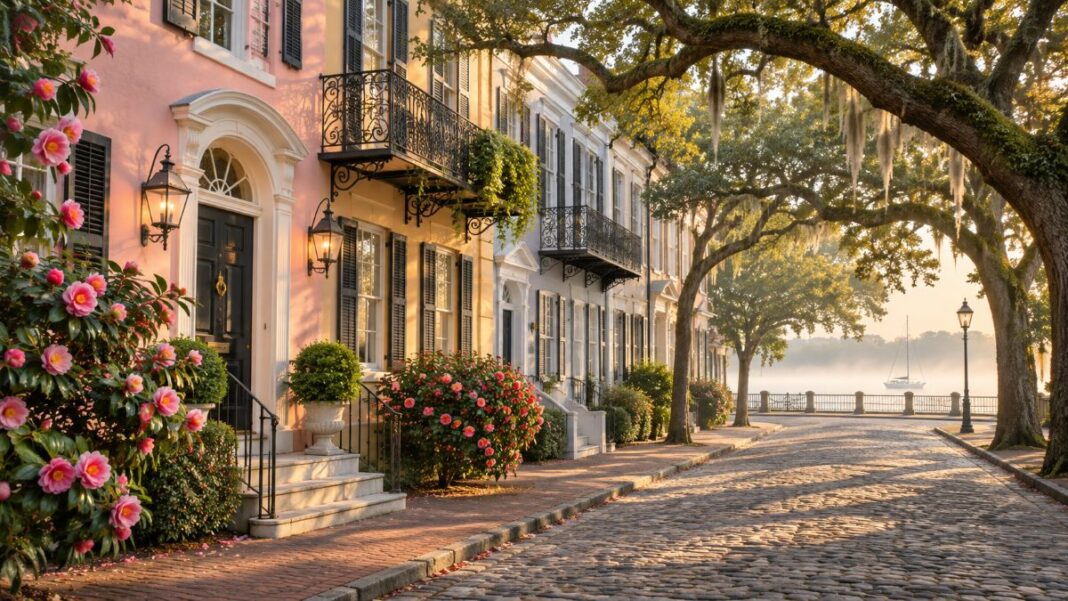

Charleston in winter feels calm, bright and full of stories. This historic city in South Carolina is known for its colourful homes, old streets, great food and deep past. In summer, the heat can feel heavy. Crowds can also fill the streets. Winter changes the mood.
From December to February, Charleston becomes a smart choice for a short city break. The air is cooler. The streets are easier to explore. Hotel prices can fall. Visitors can take their time. They can walk, eat, learn and relax.
Winter is not hot beach weather. It is mild but changeable. Days are often around 14°C to 16°C. Nights can feel cold. January is usually the coolest month. Rain can come during the week. A warm coat, a rain jacket and good shoes are important.
Still, many winter days feel pleasant. The sun can shine. A walk by the harbour can feel fresh and peaceful. A warm lunch can turn into a long afternoon. Charleston works best for people who enjoy culture, history and food.
January Offers the Best Value
January is the strongest month for travellers who want better value. Hotel prices are often lower than in spring. Average room prices can be far below the rates seen in March, April and May. This makes a three-night break more affordable.
January also gives visitors more room to breathe. The city’s famous lanes, shops and museums are not as busy as they are in spring. It is easier to book a restaurant. It is easier to take photos. It is easier to feel the real pace of the city.
The month is also rich in culture. Museum Mile Month gives visitors a chance to see several major historic and cultural sites with one special pass. This makes January a good time for families, history fans and curious first-time visitors.
Charleston Restaurant Week also brings special menus and dining offers. The city is famous for seafood, oysters, rice dishes and modern Southern cooking. Winter is a fine time to sit inside a warm restaurant and try the flavours of the Lowcountry.
Christmas Lights Bring a Magical Mood
December gives Charleston a festive glow. Historic homes, hotels and public spaces shine with lights, ribbons and holiday displays. The city looks grand but also cosy.
One of the biggest winter events is the Holiday Festival of Lights at James Island County Park. The event runs from mid-November to the end of December. Visitors drive through a long route filled with bright displays. There are hundreds of light scenes. Families can also enjoy a train ride, a carousel, sweet treats and marshmallow roasting.
This is a strong choice for families and couples. It shows a lighter, playful side of Charleston. But travellers should book early. Christmas and New Year can bring higher hotel prices and more visitors.
February Brings Wildlife, Art and Excitement
Early February can still feel quiet. Then the city changes quickly for the Southeastern Wildlife Exposition. This major event is due to take place from 12 to 14 February 2027.
The exhibition fills downtown Charleston with wildlife art, outdoor displays, conservation talks and live events. It brings together artists, nature lovers and families. It is one of the city’s biggest winter weekends.
This is a great time to visit for people who want energy and events. Yet it is not the best choice for bargain hunters. Hotels can sell out. Restaurant tables can be hard to find. Visitors should plan well ahead.
Later in winter, Charleston’s gardens start to show colour. Camellias bloom at Magnolia Plantation and Gardens. These flowers can bring pink, red and white colour to the quiet season. At Middleton Place, historic gardens also offer winter beauty. These sites make a good day trip when the weather is dry.
A City With a Deep and Difficult Story
Charleston is beautiful. It has pastel houses, church towers, old markets and waterfront views. But its story is much bigger than its pretty streets.
The city played an important role in the history of slavery and the Atlantic trade. Visitors should not ignore this part of Charleston. It is key to understanding the city.
The International African American Museum is one of the most important places to visit. It stands at Gadsden’s Wharf. This was a place linked to the arrival and sale of enslaved African people. The museum tells stories of pain, strength, family, culture and achievement. It connects Charleston with Africa, the Caribbean, Europe and the wider world.
A visit here gives a fuller picture of Charleston. It helps travellers move beyond the postcard view. It explains why the city matters.
Visitors can also learn about Gullah Geechee culture. This living culture comes from African people who were forced to the coastal South. Their language, food, music, crafts and traditions remain important in the Lowcountry today.
Fort Sumter is another key stop. It sits in Charleston Harbour and is linked to the start of the American Civil War. Visitors reach it by ferry. The boat trip also gives clear views of the harbour and city skyline.
Stay Central and Walk More
The best place to stay is often on the Charleston peninsula. The French Quarter and waterfront suit first-time visitors. These areas are close to galleries, historic buildings, restaurants and the harbour.
Lower King Street is ideal for dining, shopping and nightlife. Cannonborough is a good choice for travellers who want a more local feel. It has cafés, small shops and creative restaurants.
A car is not needed for most of a central break. Charleston is easy to explore on foot. The free DASH trolley also helps visitors move around downtown. Cars are more useful for gardens, beaches, James Island and other places outside the centre.
Charleston in winter is not loud or rushed. It is thoughtful. It is tasty. It is full of beauty and truth. For travellers who want more than sunshine, it offers a powerful and memorable American city break.