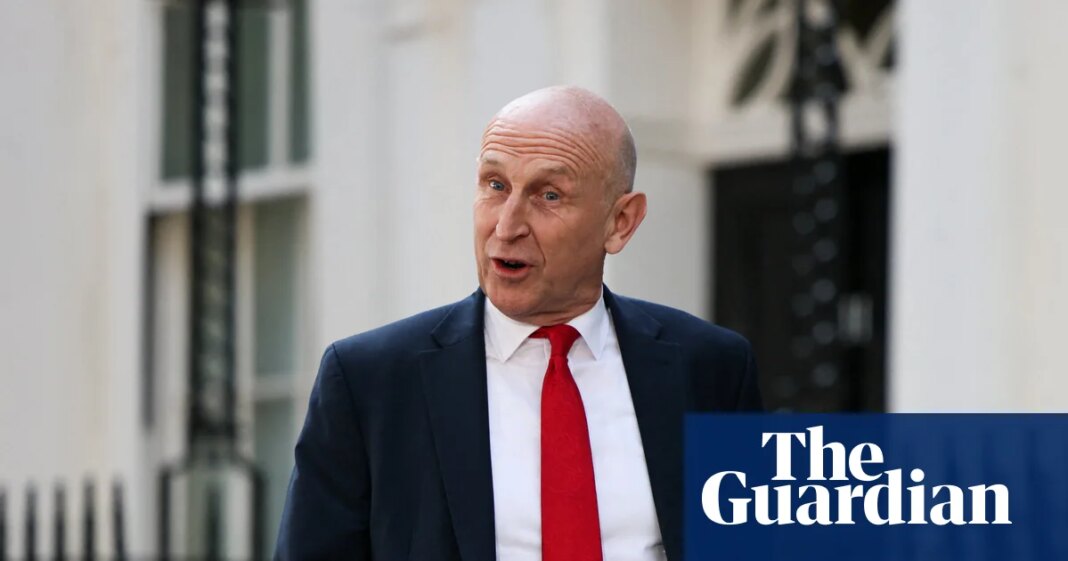
The chancellor, John Healey, has said the government is standing by to prevent the public from “being taken for a ride at the pump or the till” as the Iran war continues to hit prices.
While he said there had been “no significant evidence of so-called price gouging” during the crisis, he used a weekend column to tell the big retailers that ministers were “watching closely” for any signs of profiteering.
Healey faces a difficult economic balancing act as the energy price shock caused by the months-long conflict in the Middle East reignites the cost of living crisis.
Last week the Bank of England kept UK interest rates on hold as it warned that a further escalation in the Iran war could drive inflation above 4% next year, adding to financial pressures on households.
“The conflict affects our national security, our UK bases, personnel and allies in the Middle East,” Healey wrote in the Sunday Telegraph. “But it also threatens our economic security: impacting the family finances of millions of British people.
“And I know that many British businesses have been put under pressure by increasing costs too. Conflict and uncertainty increases inflation, threatens growth and pushes up costs for businesses and governments alike.”
The comments about profiteering threaten a new war of words between the government and retailers. Amid ongoing public concern about the cost of living, it emerged earlier this year that Rachel Reeves, then the chancellor, had raised the prospect of a cap on food prices to limit inflation caused by the Middle East conflict. The proposals prompted a backlash from supermarket bosses, with Stuart Machin, the chief executive of Marks & Spencer, calling the plans “completely preposterous”.
The British Retail Consortium suggested on Sunday that the new chancellor should instead be looking at the effect of tax increases, including employers’ national insurance and business rates, on inflation.
after newsletter promotion
Andrew Opie, of the British Retail Consortium, which represents big retailers including Sainsbury’s, Tesco and Asda, said: “Supermarkets operate in a highly competitive environment, delivering the most affordable food in western Europe. The government’s independent competition regulator, the CMA [Competition and Markets Authority], has repeatedly found that fierce competition between retailers, not government action, has kept food prices as low as possible.”