Food
“All bets are off,” said Prof Tim Lang from City St George’s, University of London. He is one of the world’s food supply chain experts and has written numerous reports on food security, which he said have largely been ignored by successive governments.
“Britain, and the rest of the world, has not seen what a medium-term impact of a massive shock to the world energy system is,” he said. A sharp hike in fossil fuel prices has huge impacts even in the short term to food supplies, as fuel is used to transport food, and the inputs such as fertiliser used to grow vegetables are made from fossil fuels. Greenhouses and chicken barns are heated with gas.
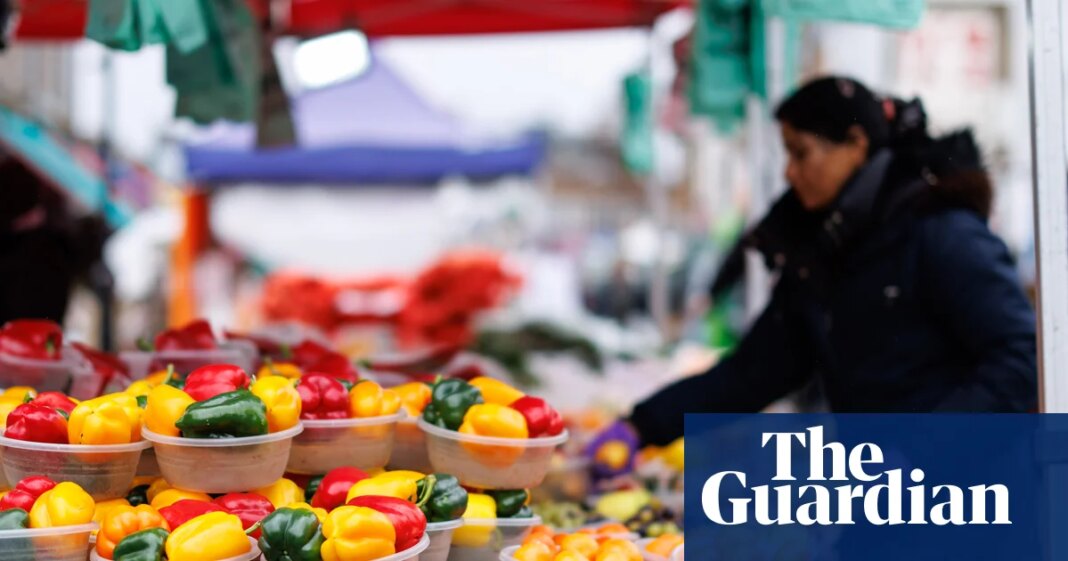
“There are some sober industry analyses beginning to come out which say food price inflation in England will double,” Lang said. That is baked in as the costs of food production have already risen so sharply; if the war carries on much longer, this high rate of inflation will be sustained, and could rise further.
Organic food will face less of a price shock, he added, because it requires fewer of these now expensive inputs.
The farming sector says that producers of salad vegetables and dairy are already running into problems.
Dairy production has taken a hit as dairy farmers buy fertiliser when they need it because of cash and storage constraints, but often it is around this time as pastures emerge from winter and into the main spring grass-growing season.
The National Farmers’ Union president, Tom Bradshaw, said: “Disruption to global oil and gas markets is already putting UK farm businesses under immense pressure, which will only grow the longer the disruption continues.
“Arable, livestock and dairy farmers are having to shoulder increased costs of fuel and fertiliser, often only being made aware of the price they will pay once products have been delivered on to farm. Meanwhile, horticulture businesses face a double whammy with the surging cost of heating glasshouses, combined with large increases to their standing charges for energy use.”
In terms of Iranian imports, the supply of pistachios and saffron is already facing a jolt, the former government food adviser Henry Dimbleby said. “For saffron, Iran produces [approximately] 85-90% of the world’s supply,” he added. “Iran is the world’s largest exporter of pistachio kernels ([about] 70% of global kernel exports), and 20% of nuts.”
Medicines
“Currently, we’ve not got any hard evidence of medicine shortages as a result of the conflict,” said Gareth Thomas, the director of policy at the National Pharmacy Association, but he added: “We are seeing quite a lot of price increases, which can be a sign of disruption in the medicine supply chain.”
These price hikes are absorbed by the NHS, and don’t transfer to consumers directly. “We’d encourage to keep requesting medicines in the usual way,” he said.
Iran does not manufacture many medicines, but the sector is affected by the war through rising energy costs as well as transport links between leading pharmaceutical-manufacturing countries such as India and China, and countries that import most medicines, such as the UK. This is because ships are unable to pass through the strait of Hormuz, and reduced travel through the Middle East’s hub airports is affecting air freight.
David Weeks, the director of supply chain risk management at the analytics group Moody’s, said: “The shortages affecting the drugs themselves, not the packaging, are being driven by delays in the transit of petrochemical precursors used to produce active pharmaceutical ingredients (APIs), and in some cases by production being halted entirely.”
But not much will change over the next fortnight, added Constantin Blome, a leading supply chain researcher based at the Stockholm School of Economics. “The strait of Hormuz is not the Suez canal,” he said.
He noted that manufacturers usually held eight weeks of buffer stocks, while most European countries – including the UK – held stockpiles of up to six months, unlike some African countries, which will be worse affected.
Prof Liz Breen, who researches pharmaceutical supply chains at the University of Bradford, said: “Prices may be rising purely based on speculation of shortages (opportunism) and panicking, which is the normal response.”
Breen noted that 85% of medicines prescribed in the UK were generics, which the UK relies on India and China to supply. “This does make us vulnerable once disruptions occur,” she said.
The medicines most likely to be affected include vaccines, insulin, biologics with living materials that require cold storage, and cancer therapies, because of short shelf lives and transport challenges, as well as petroleum-based products such as aspirin and paracetamol, said Breen.