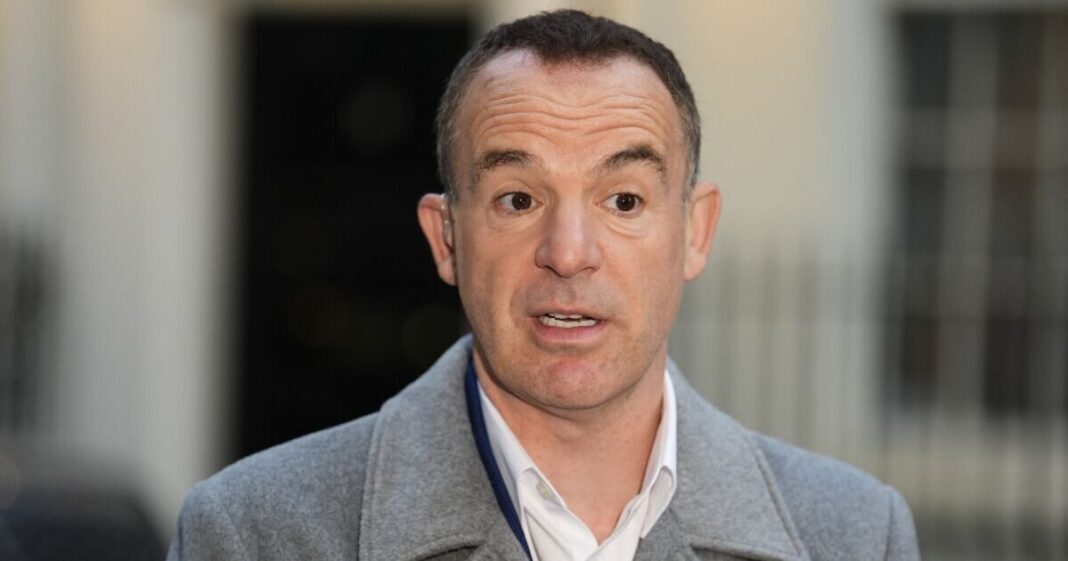

Martin Lewis’s Money Saving Expert has joined a coalition urging a rethink on a finance Bill (Image: PA Images)
Martin Lewis’s Money Saving Expert has joined a coalition of campaign groups and charities urging ministers to rethink potentially “catastrophic” legal changes to a body which settles disputes between consumers and finance firms.
The bloc is warning the legislative shake-up could lock consumers out of free, independent redress. Fifteen organisations have added their names to the warning, including Which?, Money Saving Expert, Citizens Advice, Age UK, StepChange and Fairer Finance.
They fear proposed changes to the Financial Ombudsman Service (FOS) set out in the Financial Services and Markets Bill could ultimately prevent consumers from getting the redress they are entitled to, leading to what they describe as “potentially catastrophic results”.
The Financial Conduct Authority has also warned against some of the changes, arguing they risk gumming up the system.
Currently, the FOS offers an entirely free, impartial route for consumers to seek redress when they complain of having been treated unfairly by a financial services company.
If the FOS decides a business has treated a consumer unfairly, its decision is binding and can force the company to fix its mistake or offer compensation without an individual having to pursue time consuming or costly alternatives, such as court action.
The bloc therefore insists when an individual is locked in a dispute with their bank or an insurer, the FOS offers an “absolutely vital safety net” for individuals.
Rocio Concha, Which? Director of Policy And Advocacy, said: “For millions of families walking a financial tightrope, the Financial Ombudsman is an essential lifeline that stands between them and big business when something goes wrong.
“When many households are already stretched to breaking point, introducing reforms that risk making it slower and more challenging for people to access redress sends a chilling message: that when powerful institutions make costly mistakes, ordinary people will be left to pick up the pieces.”
The coalition on Monday issued a damning verdict on the proposed changes and urged the Government to urgently rethink its plans. They were joined by a former Labour MP for Makerfield, the constituency which helped catapult Andy Burnham to power.
Yvonne Fovargue said: “Having represented the constituency and its people for 14 years, I am concerned these changes to the Financial Ombudsman Service do not pass the Prime Minister’s Makerfield Test by making it harder for people to get fair access to redress.”
In his by-election victory speech, Mr Burnham promised to put a “Makerfield Test” at the heart of his premiership. He vowed to deliver for places such as Makerfield which he suggested have felt forgotten by Westminster.
Others included in the bloc are: Centre for Responsible Credit, Christians Against Poverty, Community Money Advice, Debt Justice, Fairer Finance, Financial Inclusion Centre, Institute of Money Advisers, Money Advice Trust, National Trading Standards, Surviving Economic Abuse and Victim Support.
Which? has also voiced its concern that some claimants could face two-tier justice if their claim relates to events predating the Consumer Duty, which came into force in July 2023.
The Consumer Duty is a regulatory standard introduced by the Financial Conduct Authority. It requires UK financial services firms to put their customers’ needs first and actively deliver “good” outcomes.
It is predicted that tens of thousands of submissions made in the next year could be affected. The bloc says these consumers are at risk of missing out on redress if a business has narrowly complied with a regulatory rule, but fallen short of the higher standards set out in the Duty.
The grouping also argues that the Financial Services and Markets Bill introduces a vastly more complex system for how the FOS determines complaints.
It insists the Bill’s shift from a level-playing field with an impartial fairness test to one that initially presumes the firm was in the right means consumers could now face a harder uphill battle to obtain redress or could even be denied the redress they would have received under the old test.
A formal referral mechanism between the FOS and the FCA could also, in practice, strip the FOS of its decision-making discretion and hand it to the FCA, which the bloc maintains is not designed to handle individual disputes.
Lewis and others argue the changes will lead to significant delays and extra stress for consumers.
The bloc concludes its statement: “With new leadership in No.10 and an increased focus on ensuring consumers get the best outcomes in essential markets, we’re asking for the Government to rethink its approach on this vital matter.”
A Treasury Spokesperson said: “These reforms will strengthen the Financial Ombudsman Service, not weaken it. The Ombudsman will remain independent and impartial in resolving disputes, while the changes provide greater consistency and more certainty for both consumers and firms.”
See more of the stories you love from Daily Express and find us easily in Google by making us a Preferred Source. Free and easy-to-do, just click here to activate or add us as Preferred Source in your Google search settings.