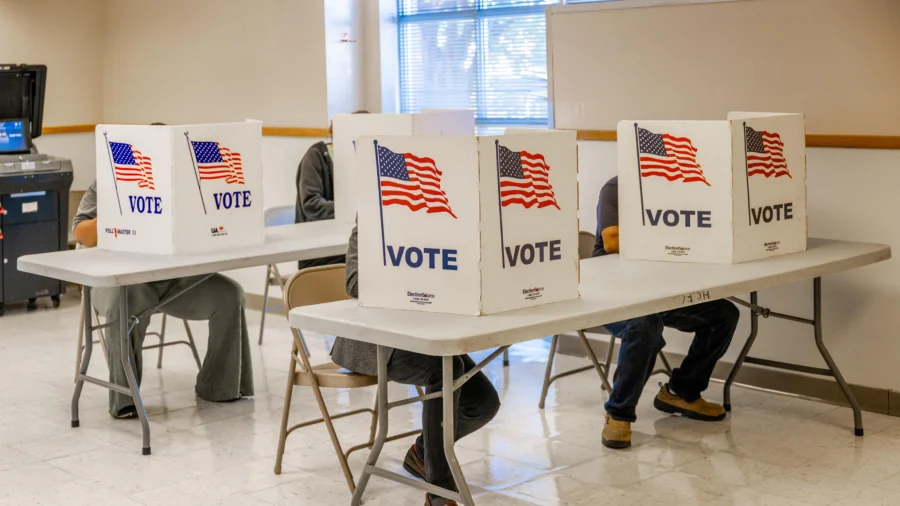
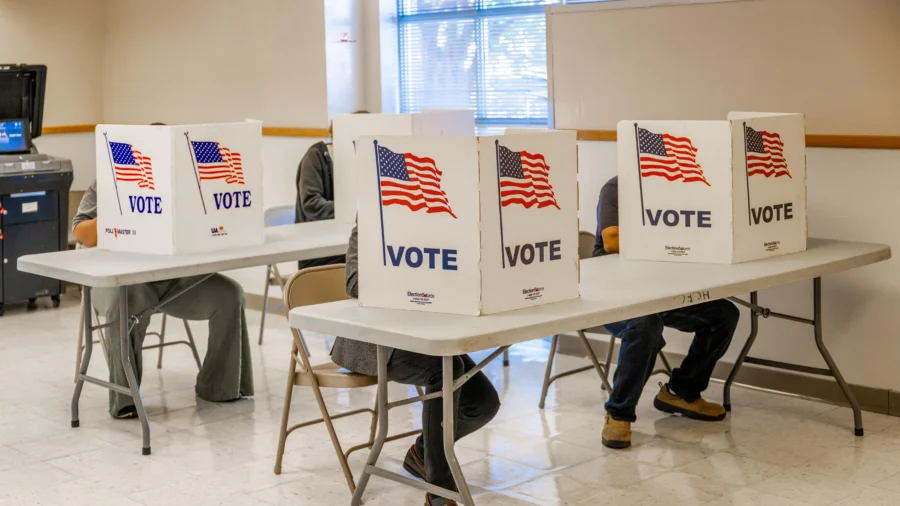
The governor of Mississippi enacted a law this week that adds proof of citizenship to the state’s voter registration protocol.
Under the SHIELD Act, the citizenship of voters will now be verified through a federal immigration database.
The legislation also permits an annual audit of voter rolls.
“This is another win for election integrity in Mississippi (and America),” Tate said.
Acceptable documents include an individual’s birth certificate or legible photocopy of the birth certificate, a United States passport, or a legible photocopy, naturalization documentation or a legible photocopy or the Naturalization Certificate number.
The law takes effect before the November mid-term elections on July 1.
“This shouldn’t be a controversial issue, but it is,” Tate said. “And it’s because Democrats are desperately trying to appease their growing radical base and outsource the management of our country to those who shouldn’t be here.”
Mississippi Democrats oppose the new law partly because of the types of documentation that are not included
Mississippi is just the latest state to implement stricter voting requirements while the national SAVE America Act (S. 1383) remains stalled in the Senate.
The Supreme Court ruled in 2013 that requiring citizenship documentation for federal elections without federal or court approval is unlawful.
“We will continue to do everything in our power to make it infinitely harder – with a goal to make it impossible – to cheat in our elections,” Tate added. “We will always put American citizens first.”
South Dakota Gov. Larry Rhoden enacted Senate Bill 175 last week that requires individuals to prove their U.S. citizenship when registering to vote.
Also known as the South Dakota SAVE Act, Senate Bill 175 requires documented proof of citizenship for registering to vote in state elections, but critics warn that it could prevent eligible voters from casting their ballots.
Florida Gov. Ron DeSantis also enacted legislation this week that requires voters statewide to prove they are U.S. citizens.
However, HB 991 won’t be implemented in time for the mid-term November elections. Instead, it takes effect on Jan. 1, 2027.