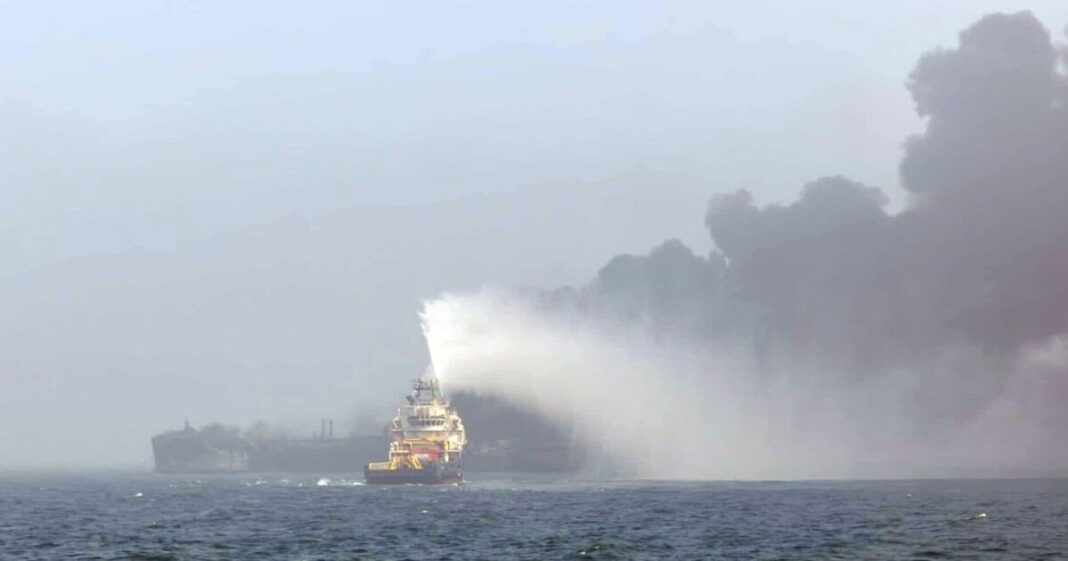
An oil tanker carrying jet fuel and a cargo ship packed with highly toxic chemicals collided in the North Sea off the coast of East Yorkshire on March 10. A crew member remains missing, with one person hospitalised and 36 other mariners from across both ships’ crews now “safe and accounted for”, according to a local MP.
The Solong cargo ship was reportedly carrying 15 containers of sodium cyanide when it crashed into Stena Immaculate, which was carrying 18,000 tons of jet fuel. Although it is not confirmed if this has split into the sea, the impact would be disastrous for local wildlife.
What is it?
Sodium cyanide is a highly toxic chemical asphyxiant which disrupts the body’s ability to use oxygen – it usually takes the form of a white powder.
It releases the highly dangerous hydrogen cyanide gas, according to the US Centers for Disease Control (CDC).
Why is it dangerous?
Exposure to sodium cyanide can be rapidly fatal. It particularly affects the brain, heart blood vessels and the lungs.
Sodium cyanide is commercially used for fumigation, electroplating, extracting gold and silver from ores, and chemical manufacturing.
If both vessels split their cargo, it would be a huge environmental disaster. Fears are mounting for wildlife as the sodium cyanide blocks cellular respiration, which, in short, leads to death by suffocation.
Even in relatively small doses, sodium cyanide is deadly to birds, fish and mammals. Spills into the water have been known to cause mass die-offs of aquatic and marine life. Sodium cyanide ranks among the most deadly, rapidly-acting poisons.
Symptoms
Following contact with the chemical, symptoms can include shortness of breath, dizziness and discombobulation.
One will likely feel sick, leading to vomiting with the possibility of passing out. For those exposed to a high dosage, they will die within minutes.
Other symptoms can include feeling weak and confused and often lead to a severe migraine-like headache.