City officials said both reports were mandated by voter-approved referendums in 2022 and are intended to guide agencies in measuring affordability and addressing racial inequities. The city will collect public feedback for 30 days before issuing a final version.
The mayor’s office describes the racial equity plan as the first citywide framework requiring agencies to evaluate policies and services through a racial equity lens.
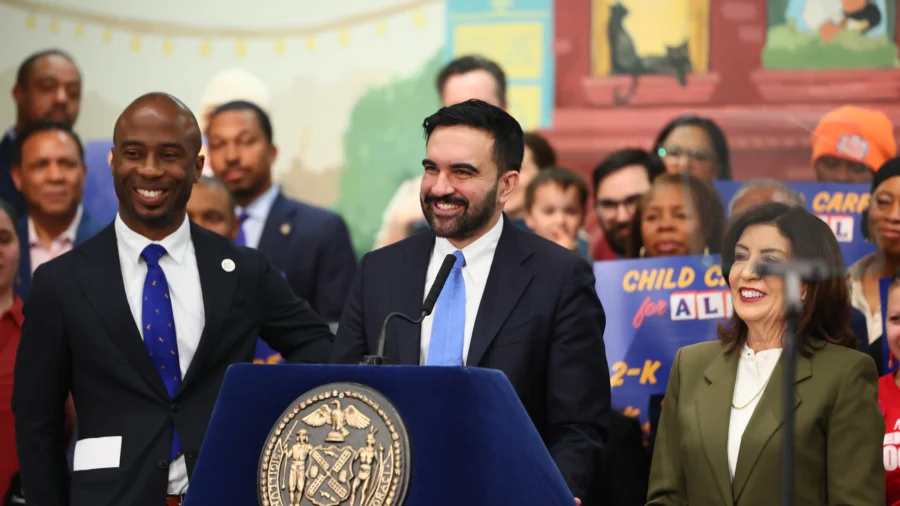
“The True Cost of Living Measure offers an honest account of what it actually costs to live in this city — and who is being left behind,” Mamdani said in a statement, adding that the cost of living crisis is not felt equally.
“Black and Latino New Yorkers — who have been pushed out of this city for decades — are bearing the brunt,” the mayor said. “The Preliminary Racial Equity Plan is where we begin to reverse that pattern. These reports make one thing clear: we cannot tackle systemic racial inequity without confronting the affordability crisis head-on, and we cannot solve the cost-of-living crisis without dismantling systemic racial inequity.”
“The practice of racial equity strives to build a city in which outcomes for every group are just as strong as they are for white New Yorkers, so that all New Yorkers, including Black people, Latine people, Asian people, Indigenous people, and other people of color, can thrive,” it states.
The racial equity plan traces New York City’s history to 1624, stating it “has been one of colonization, exploitation, and racial oppression.” In a section on the modern era, it says the Black Lives Matter movement has driven demands to end police violence and dismantle systemic racism, leading to efforts to embed racial equity across city government.
“This has all led us to the creation of this moment, right here, right now, to operationalize racial equity into every aspect of city life,” it states.
The report places the average annual shortfall at $39,603 per family. The report also estimates that about 3.6 million residents earn above the poverty line but still cannot cover essential expenses.
About 73 percent of children in the city live in households that do not meet the calculated cost of living, while 92 percent of residents with self-reported disabilities face similar gaps. The report also states that Hispanic, black, and Asian residents are more likely than white residents to fall below the threshold.