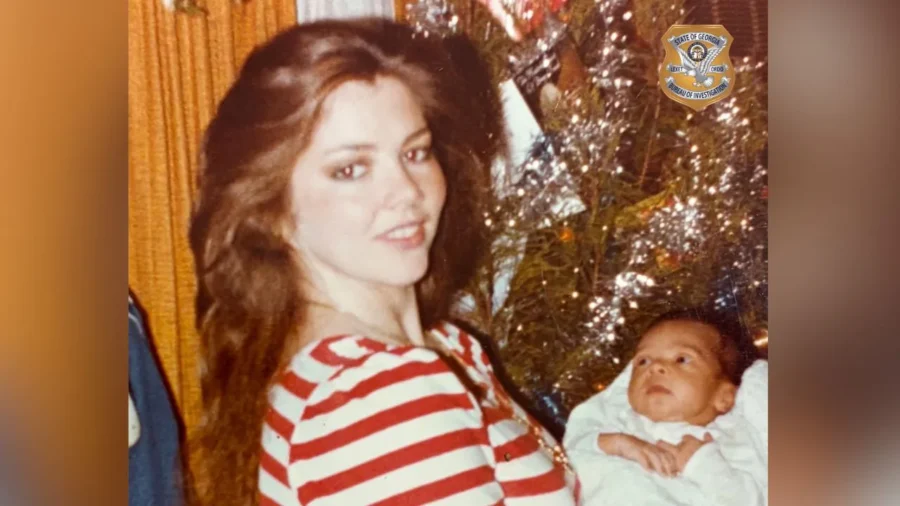
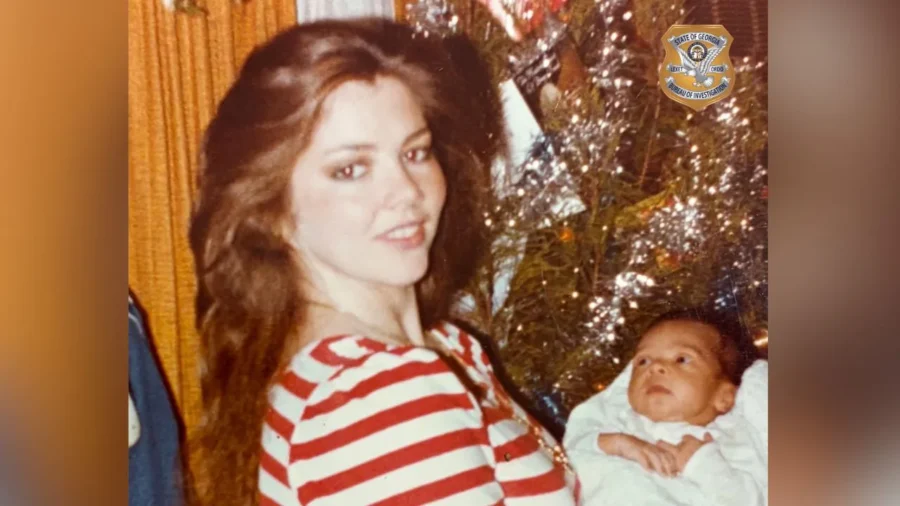
Investigators say newly analyzed DNA evidence has led to the arrest of a south Georgia man in the 1984 rape and strangulation of a 22-year-old woman. The discovery shatters a long-cold case as similar breakthroughs ripple through other decades-old investigations nationwide.
Davis’s body was found Sept. 1, 1984, beside a home on Kollock Street in Waycross; she had been strangled.
Waycross police later sought help from the state agency, and over the years, both departments “remained committed to finding the truth behind Davis’s death,” the bureau said. That commitment, paired with new forensic work, paid off when continued DNA testing linked Granger to the crime.
Granger was taken into custody on March 31 and booked into the Ware County Jail after a coordinated effort involving the Waycross Police Department, the Ware County Sheriff’s Office, the Georgia Department of Community Supervision, and the GBI’s Cold Case Unit, which worked with the GBI Regional Investigative Office in Douglas.
The investigation remains “active and ongoing,” and once it is complete, the case will be forwarded to the Waycross Judicial Circuit District Attorney’s Office for prosecution.
Cold Cases Reopened
The arrest comes as DNA technology is cracking open other long-unresolved cases.
Aime vanished after leaving a Halloween party on Oct. 31, 1974, and her body was found nearly a month later in American Fork Canyon; she had been bound, severely beaten, stripped, and strangled with a nylon stocking, the Utah County Sheriff’s Office said April 1 in a press release.
Bundy verbally admitted killing Aime before his 1989 execution, but at the time, Utah officials declined to accept his “verbal accountability” because they lacked the scientific tools to prove it in court.
In 2025, cold case Detective Jake Hall and Supervisor Sgt. Michael Reynolds pushed for a new review, sending old evidence to the Utah Bureau of Forensic Services, which used modern testing to reexamine it.
“The results were magnificent as they confirmed irrefutably that DNA evidence recovered from Laura’s body verified the existence of DNA belonging to Bundy,” the agency said, adding that it now has “definitive proof” he killed her.
The Sonoma County Sheriff’s Office sought help from the nonprofit, which developed a DNA profile and uploaded it to the GEDmatch database in January, then quickly narrowed in on a family that had moved from the East Coast to California.
Investigators homed in on Walter Karl Kinney, a former banker born in 1940 who grew up in San Diego and later moved to Santa Rosa, near Salmon Creek.
A key clue surfaced when team members found an article about remains that washed ashore in nearby Bodega Bay in 1999; in 2003, a woman contacted authorities about her missing father, last seen Aug. 10, 1999, and those remains were identified as Kinney using X-ray records.
After the DNA Doe Project flagged Kinney as a likely match in just eight days, the sheriff’s office confirmed that the bone found at Salmon Creek also belonged to him, meaning he had become a John Doe twice.
“This case was unusual—it’s not often we see someone end up as a John Doe twice,” team leader Traci Onders said. “But thanks to investigative genetic genealogy, we were able to resolve this mystery and provide some answers to everyone involved in this case.”