President Donald Trump warned late on Thursday about striking and destroying bridges and electric power plants in Iran in his latest threat to hit the country’s infrastructure.
The U.S. military “hasn’t even started destroying what’s left in Iran. Bridges next, then Electric Power Plants,” Trump wrote on social media.
His post said that Iran’s leadership “knows what has to be done, and has to be done, FAST!”
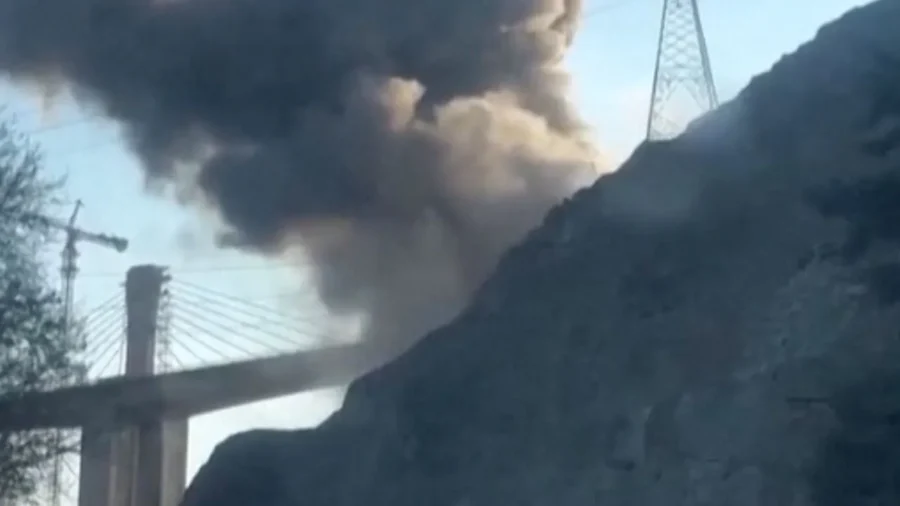
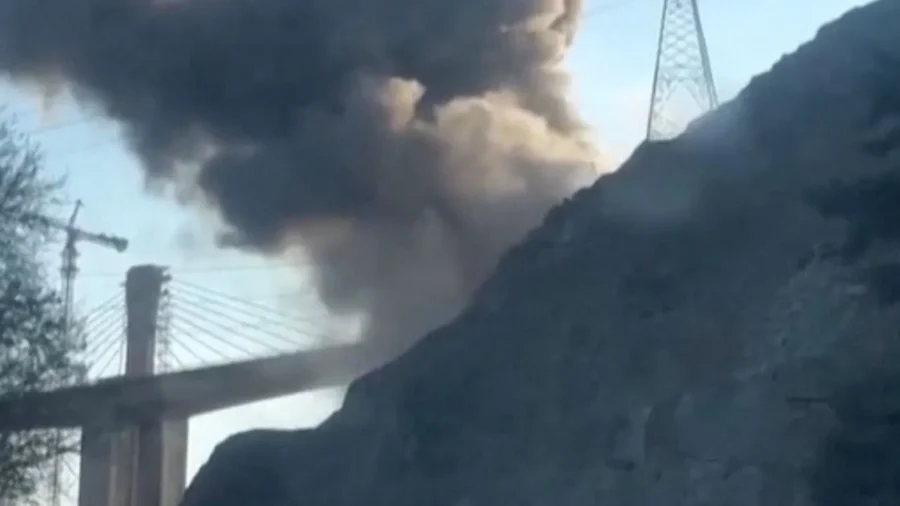
Trump earlier posted video of the U.S. bombing a newly constructed bridge between Tehran and the major northwest suburb of Karaj. The B1 bridge was scheduled to open to traffic this year.
“Striking civilian structures, including unfinished bridges, will not compel Iranians to surrender,” Iran Foreign Minister Abbas Araqchi said in a statement.
Satellite images also showed smoke rising from the port in Qeshm, an Iranian island strategically located in the Strait of Hormuz, earlier this week.
Still, Iran and its allies have continued to strike targets around the Gulf. Kuwait Petroleum Corporation said its Mina al-Ahmadi refinery was hit by drones, setting off fires at operating units, but no injuries were reported, according to the state news agency.
Saudi Arabia’s defence ministry said on Friday its air defences intercepted seven drones in recent hours, according to its state news agency.
And a spokesperson for Iran’s Khatam al-Anbiya central HQ said on Friday a second U.S. F-35 fighter jet was shot down over central Iran by Revolutionary Guard air defences, with low chances of pilot survival.
There was no immediate comment from the United States.
Last month, the U.S. military said in a statement that a U.S. F-35 aircraft conducted an emergency landing after flying a combat mission over Iran. The military said the pilot was in stable condition.
Trump said in a televised speech on Wednesday that the war could escalate if Iran did not give in to Washington’s terms, with strikes on its energy and oil infrastructure possible.
“We are going to hit them extremely hard over the next two to three weeks. We are going to bring them back to the Stone Ages, where they belong,” Trump said in his Wednesday address.
While he said Washington was nearing the completion of its goals in Iran, Trump did not lay out a timeline to end the war.
That drew vows of retaliation from Iran, weighed on global share prices and sent oil prices surging on concerns the Strait of Hormuz would remain largely closed.
Britain chaired a virtual meeting on Thursday of some 40 countries to explore ways to restore freedom of navigation that did not produce any specific agreement.
UNSC to Vote on Bahraini Plan to Protect Shipping
The U.N. Security Council is set to vote on Saturday on a Bahraini resolution to protect commercial shipping in and around the strait, diplomats said, but veto-wielding China made clear its opposition to authorizing any use of force.
Iran has effectively shut down the strait, which normally carries about a fifth of the world’s total oil trade, in retaliation for U.S.-Israeli attacks that began on Feb. 28.
Tehran offered a competing vision for future control of the strait, and said it was drafting a protocol with neighboring Oman that would require ships to obtain permits and licences.
The European Union’s foreign policy chief Kaja Kallas pushed back against Tehran’s plan, saying Iran cannot be allowed to charge countries a bounty to let ships pass. “International law doesn’t recognise pay-to-pass schemes,” wrote Kallas on social media.
Fears of Iranian Stranglehold on Middle East Energy
There are fears the conflict may leave Iran with a stranglehold over Middle East energy supplies now that it has shown that it can block the Strait of Hormuz by targeting oil tankers and attacking Gulf countries hosting U.S. troops.
Gulf states say they reserve the right to self-defense but have refrained from responding militarily to repeated Iranian attacks over the past month, seeking to avoid escalation into a far more devastating all-out Middle East war.
Kuwait reported that its air defenses were working to intercept missiles and drones twice on Friday.
Thousands of people have been killed and tens of thousands injured across the Middle East since the war began, with the head of the International Federation of Red Cross and Red Crescent Societies delegation saying on Thursday that medical needs were rising exponentially and supplies could run low.