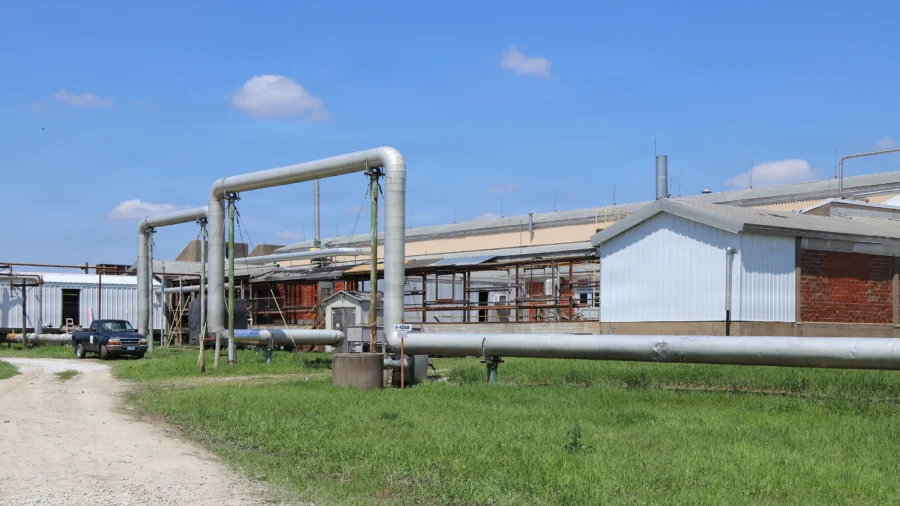
A federal appeals court has blocked the U.S. Army’s detonation of bomb-making, lead-based chemicals at an Iowa munitions plant amid concerns about its impact on the environment and residents.
In an order issued Thursday night, the U.S. Eighth Circuit Court of Appeals granted an administrative stay of a permit that was issued by the Environmental Protection Agency (EPA) to carry out the detonation. The court wrote that it will now consider an emergency request from two environmental groups to stop the action.
The groups, the Sierra Club and the Iowa Environmental Council, filed a lawsuit against the EPA in an attempt to stop the detonation because the explosion could cause a release of toxic, lead-infused dust that could have adverse effects on the environment and human health in the nearby area.
“The Army’s planned detonation of 9,700 pounds of explosive lead material poses a significant risk of irreparable harm that cannot later be remedied,” attorneys for the groups wrote in an emergency motion to the U.S. Court of Appeals for the Eighth Circuit.
An emergency permit granted by the EPA to carry out the detonation has failed to prevent releases to air, water, and soil, they wrote.
“EPA cannot rely on conditions for sampling and clean-up as a substitute for preventing the harmful release in the first place.”
Inhaling or swallowing lead is considered highly toxic to people, especially children and pregnant women, according to the EPA’s website. Lead exposure in children, according to the Centers for Disease Control and Prevention, can cause damage to the brain and nervous system, slow development, cause learning or behavior problems, or hearing and speech issues.
In a statement on Thursday, acting Secretary of the Army Adam Telle wrote that the detonation was postponed from Friday until Monday.
“This will delay the detonation until the latest possible moment prior to a forecasted temperature drop, which would risk further destabilization of the material,” Telle wrote on X.
Earlier this year, the Army found lead azide—used in detonators and explosives—housed in bunkers at the base and started communicating with stakeholders and the public in the impact area about the danger it posed, the secretary said.
It was later determined that a controlled detonation posed the least risk to the public, he said.
“Public communication is essential to public trust. Therefore, the Army will continue to actively engage with state and local officials throughout the region to distribute accurate, up-to-date information,” Telle said.
The move to delay was also confirmed by Iowa Gov. Kim Reynolds in a statement in which she thanked Telle for the decision. Reynolds said she spoke with Telle about delaying the action.
Sen. Chuck Grassley (R-Iowa) posted that he submitted questions to the Army about locals’ concerns.
“I’ve emphasized the need for increased communication. The Army is delaying the controlled detonation until Monday to further educate the public,” he wrote in an X post on Thursday.
The Army shared details during a public meeting in Middletown in October, but a public advisory that was issued by the Army on Sunday was the first time other communities became aware of the potential impact. Nearly 400 people live in Middletown, but thousands more in surrounding areas could be affected by detonated material that could disperse in the air and land on the ground.
The Associated Press contributed to this report.