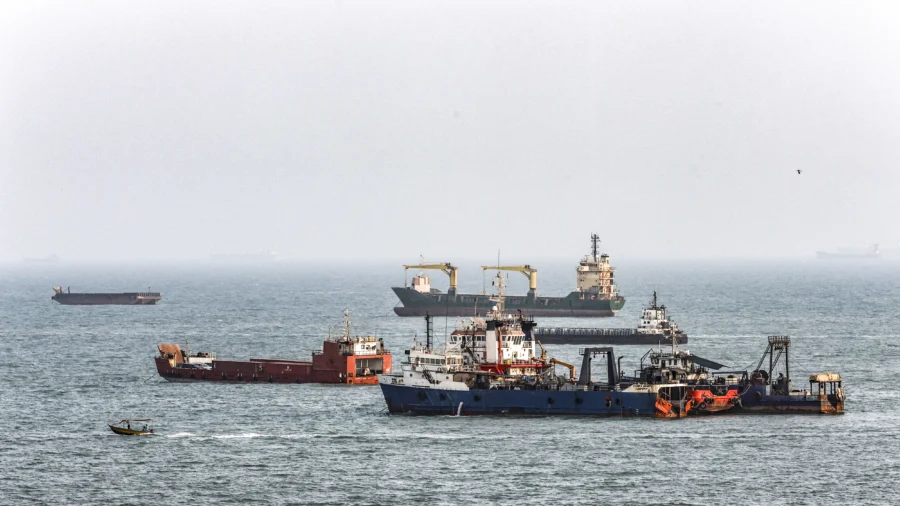
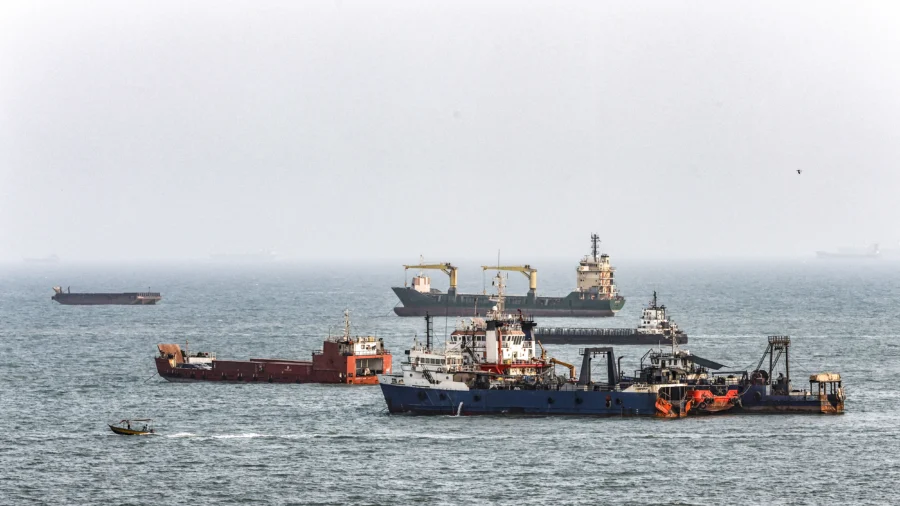
U.S. Energy Secretary Chris Wright has said that more than 17 million barrels of oil transited through the Strait of Hormuz on Monday—a record during the U.S.–Iran conflict—due to American military protection.
Iran is losing its capacity to “hold the world economic hostage” as the U.S. military provides security to oil tankers traveling through the strait, Wright told CNBC on Wednesday.
Since the start of the war, Tehran has fired upon commercial ships trying to pass through the strait while asserting that vessels must follow routes that only Iran approves.
In the meantime, U.S. forces have struck Iranian military assets in and around the strait, a key waterway that allows for about a fifth of the world’s oil to pass through during peacetime.
At least two oil tankers have come under attack in the Hormuz Strait this week, according to the British military-affiliated UK Maritime Trade Operations. Another ship was attacked in the Indian Ocean, not located in the strait, it said.
Conceding that Iran is “causing some disruption” in the strait, Wright said, “they are losing that card.”
“With or without Iran, oil and gas will flow out of the Arabian Gulf region and it’s happening,” Wright added in the CNBC interview.
Meanwhile, President Donald Trump on Thursday asserted that oil shipments through the disputed strait have resumed, saying that 18 million barrels per day are now traveling through the waterway.
In a post on Truth Social, Trump included an image with the text “Hormuz Oil Volumes are BACK” and noted that before the war, 20 million barrels per day were passing through the waterway. He did not provide additional details.
After the war started on Feb. 28, ship traffic through the waterway has slowed to a trickle, roiling the global economy and spiking prices for energy and other goods worldwide.
Oil prices increased again on Thursday amid new U.S. strikes on Iran and as Tehran targeted Gulf allies of the United States for two consecutive nights, firing drones at Kuwait and Bahrain.
The price of West Texas Intermediate crude oil increased around 1 percentage point to $92 per barrel, while Brent crude increased around 0.88 percent to $96 per barrel on Thursday.
U.S. gas prices also increased by roughly 2 cents from Wednesday to Thursday to $4.14 per gallon, on average, according to the American Automobile Association, and by roughly 5 cents over the past week.
Following a series of attacks on Wednesday, sirens sounded in Kuwait early Thursday, where air defenses were intercepting missile and drone attacks during a “blatant Iranian aggression,” the country’s Ministry of Defense said in a statement.
Bahrain also said its air defense systems intercepted several Iranian air attacks early Wednesday, without providing further details.
Fighting between the United States and Iran has increased this week after the U.S. military hit Iranian rocket launchers on an island in the Hormuz waterway on Sunday, saying Iran was planning to use them to shoot mines into the waterway. Iran retaliated by firing missiles at American bases in Jordan, which were all intercepted.
The Associated Press contributed to this report.