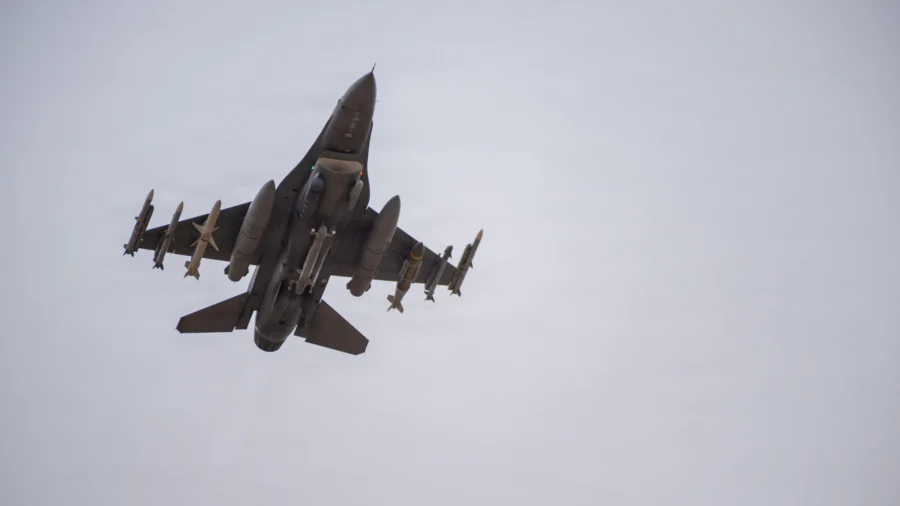
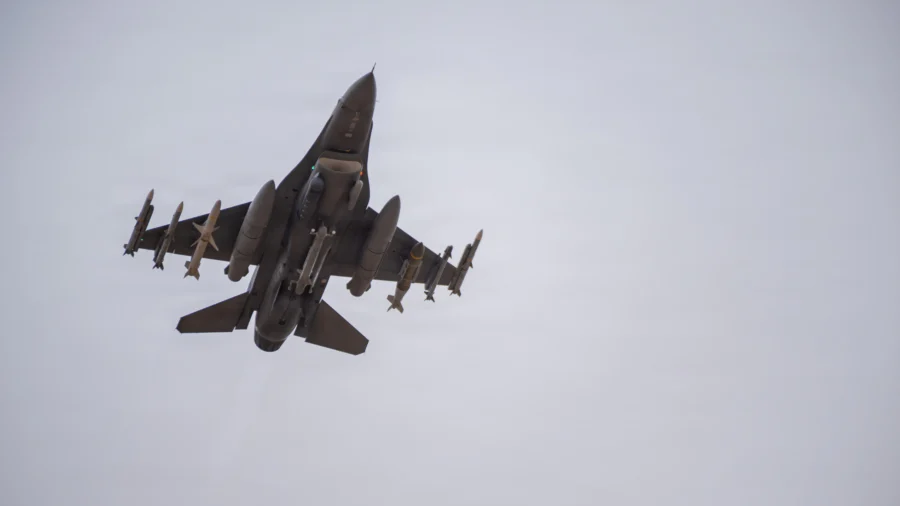
ARLINGTON, Va.—U.S. warplanes are increasingly hitting targets on the fly while over Iranian airspace, Secretary of War Pete Hegseth announced on March 31.
Speaking at a Pentagon press briefing, Hegseth announced that U.S. forces had conducted 200 “dynamic strikes” overnight, referring to when a U.S. warplane already on a mission is retasked mid-flight to pursue additional targets.
“They get a new target set based on real-time intel given to them: a new launcher, a new location, a new troop formation,” Hegseth explained. “A dynamic target is one that changes while you’re in the air because of improved intelligence.”
According to U.S. Air Force doctrine, dynamic strikes entail a narrow window for a pilot to receive intelligence of a target, weigh the risks of pursuing it, and strike it before the opportunity passes. Its increased use in this campaign could suggest U.S. forces have a growing awareness of targets in Iran and feel comfortable that Iranian air defenses are significantly diminished.
From the start of the conflict, U.S. planners have expressed an intent to gain dominance by destroying Iran’s air forces and air defenses, allowing U.S. warplanes to attack from inside Iran’s airspace with relative impunity. This also allows U.S. forces to switch from using long-range precision weapons to attacking from overhead with relatively cheap and plentiful gravity bombs.
“Given the increase in air superiority, we’ve successfully started to conduct the first overland B-52 missions, which allow us, as we’ve said before, to continue to get on top of the enemy,” Chairman of the Joint Chiefs of Staff Gen. Dan Caine said at the Tuesday press briefing.
Caine said the increased air superiority also supports the increased number of dynamic strikes.
In the first 30 days of the U.S. campaign against Iran, the U.S. Central Command reported that U.S. forces had struck more than 11,000 targets.
Hegseth said Iran’s offensive capabilities continue to decline.
“Of note, the last 24 hours saw the lowest number of enemy missiles and drones fired by Iran,” Hegseth said.
In his last press briefing on March 19, the secretary of war had reported that Iran’s missile and attack drone launches remained down by about 90 percent from their peak at the start of the conflict. Despite the overall drop in attacks, some Iranian strikes have continued to land on targets throughout the Middle East.
“We do continue to see a trend down. They are still shooting,” Caine said, adding that U.S. forces will continue conducting dynamic strikes on mobile launchers and on Iran’s arms production facilities.