Nobody warned me that the worst part of finishing Dark would be the two days following, when you’re sitting with a show-shaped void that nothing else can fill. That feeling, that desolation, is what I’m using as my benchmark. The sci-fi shows on this list all resulted in this feeling, to some extent. They build universes with histories and theologies and political systems that seem like they had existed long before the story begins, and will keep existing long after it ends.
The writers of TV shows like The Expanse, Battlestar Galactica, and Lost understood this perfectly. They treated world-building like an atmosphere, made sure the tiny details mattered, and that background conversations hinted at larger conflicts. The lore essentially shaped character decisions. I’ve always admired sci-fi writers who trust the audience enough not to explain every single thing immediately. Some of the most unforgettable lore emerges through fragments.
The funniest part is that sometimes, the actual plot becomes secondary. While I’ll forget specific storylines from a season, I’ll still remember the rules of a fictional empire, the history of an alien civilization, or the terrifying implications behind a mysterious technology.
‘Lexx’ (1997 – 2002)
Lexx is the most difficult entry to advocate for on this list, but I’m going to do it anyway. A Canadian-German co-production of unbelievable strangeness, it wraps an inventive cosmology inside a delivery system so campy and transgressive that most viewers don’t make it far enough to find the lore at all. The show is grimy, surreal, and completely unconcerned with mainstream approval.
Beneath the provocation, there’s the Divine Order, a theocratic empire governed by parasitic brain insects (the Divine Shadows), who transfer consciousness between host bodies across centuries of unbroken rule. The show includes two universes — Light and Dark — with Fire and Water functioning as afterlife realms for the condemned and dead. It’s heady material buried under the show that is almost hostile towards its own audience. But it’s there.
‘Lost’ (2004 – 2010)

I remember watching the Lost Season 2 premiere and not being able to sleep afterward. The hatch, the button, the idea that someone had been down there pressing it every 108 minutes for years and believed the world would end if they stopped… It’s insane. Lost gave us the DHARMA Initiative, a clandestine research organization with nine purpose-built stations scattered across the island, and it was one of the most seductive mysteries in the history of television.
It also gave us Jacob and the Man in Black as powerful opposing forces holding a grudge that spans millennia. We also can’t forget the numbers that had a theological omnipresence. For three seasons, the lore on Lost was astonishing. Then, the lore outpaced the writers’ ability to close it, and the final season’s pivot toward spiritual abstraction left a huge portion of the audience feeling deceived. I was one of them. The lore is extraordinary, though.
‘The X-Files’ (1993 – 2018)
What I find most impressive about Chris Carter and The X-Files is the structural audacity. This set-up — two distinct mythologies running simultaneously, each capable of working independently but deepening each other whenever they converge — is a genius plan for a sci-fi show. The standalone episodes were their own system.
One example of The X-Files lore includes the alien colonization arc, where a shadowy government was in a prolonged negotiation with an extraterrestrial force, with the Cigarette Smoking Man as its near-Shakespearean architect. The man made so many compromises that he became indistinguishable from the thing he was supposedly protecting humanity from. At its peak, The X-Files was a show where the truth was always one layer deeper than you could reach.
‘Stargate SG-1’ (1997 – 2007)

I’ll always respect how Stargate SG-1 took a pretty straightforward movie concept and somehow expanded it into 10 seasons and 214 episodes of absurdly detailed lore that never stopped expanding. It follows a military team traveling through an ancient portal network to explore distant planets. However, the real hook arrives once the Goa’uld, Ancients, Replicators, and Ori start reshaping the show’s cosmic hierarchy.
Suddenly, the show isn’t just about weekly adventures anymore; it’s about galactic empires, extinct civilizations, ascension, and the long-term consequences of advanced tech interfering with developing worlds. Revisiting the show now, I see how naturally the lore accumulates as the show layers cultures and alliances episode after episode. Somehow, it all remains incredibly watchable. Sure, it never carried the prestige of Star Trek, but honestly, Stargate SG-1 deserves more respect than it gets.
‘For All Mankind’ (2019 – Present)
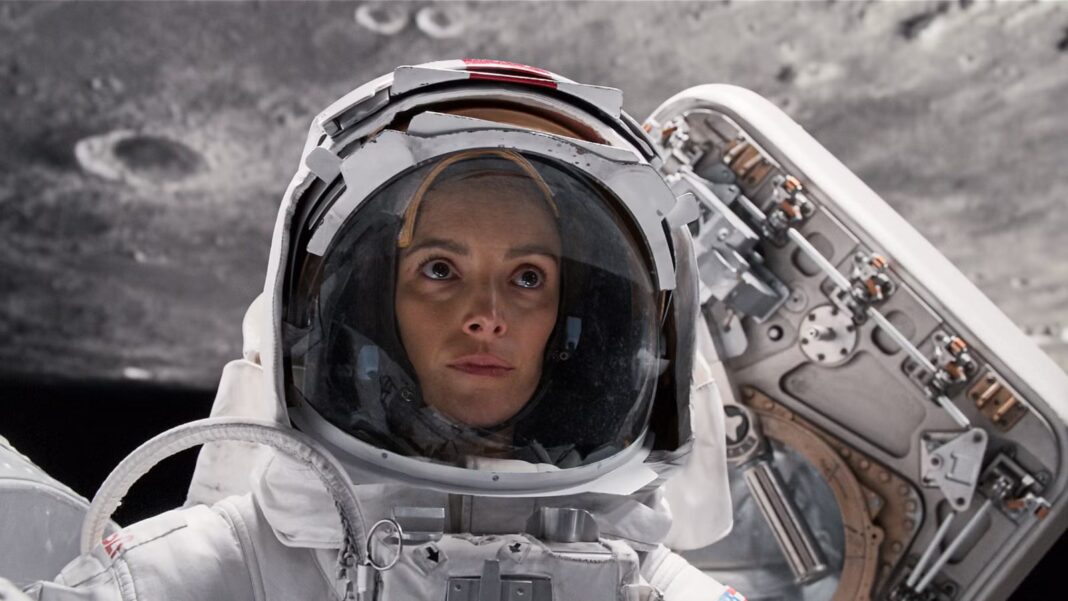
Alternate-history sci-fi usually collapses once it starts overexplaining itself, but For All Mankind thrives because it focuses on consequences. The Apple TV series imagines a world where the Soviet Union lands on the Moon first, forcing NASA into a space race that dramatically reshapes global politics and technological progress. Every season jumps forward a decade, showing how one altered historical moment changes culture, economics, gender roles, and international tension.
The lore works because the show treats institutions like living organisms. NASA, Helios, and Roscosmos all carry histories, rivalries, and baggage. And despite the massive scope, Joel Kinnaman and Wrenn Schmidt grounded the series in emotion. I also love that the show allows space exploration to feel dangerous and messy instead of clean and inspirational.
‘Fringe’ (2008 – 2013)

Fringe is the show I most frequently recommend to people who think they’ve already seen everything worth watching in the sci-fi genre, and I’ve rarely been wrong about it. It holds a 91% score on Rotten Tomatoes, which is a remarkable score for a show that is progressively more demanding with each season and never apologizes for it.
What I admire the most about Fringe is how slowly and deliberately it builds its world. First, the Pattern, a coordinated series of biological attacks suggesting someone is running experiments on the fabric of reality itself; then the parallel universe, which doubles every relationship the audience had invested in; then the Observers, silent witnesses in period suits who have attended every significant event in human history without explanation.
‘Star Trek: The Next Generation’ (1987 – 1994)
Star Trek: The Next Generation had already begun and ended before I was born, so I grew up with the show available for me to devour in its entirety. That puts me in the position of having to argue for something I love without letting the nostalgia do the work. It holds up on the lore alone. Roddenberry’s Federation, the post-scarcity, post-nationalist civilization, gave the show a conceptual backbone that no production value could manufacture.
Additionally, the civilizations here remain the genre’s gold standard. The Borg are an expression of collectivist horror. Klingon culture is a fully realized warrior philosophy, the Romulan political apparatus is built on paranoia, and the Prime Directive is a moral framework with critics on every side. Curiosity matters in this universe. Empathy matters. Sure, the show occasionally looks dated now, but the world-building remains incredibly influential because it’s hopeful without being naive.
‘Severance’ (2022 – Present)

I think Severance might be building the most methodically constructed lore on television right now, and I find it genuinely unsettling how much of it is still withheld. The premise is elegant in its horror: employees at Lumon Industries undergo a surgical procedure that creates two entirely separate selves. The innie, who exists only within the office with no memory of the outside world, and the outie, who surrenders all knowledge of their working hours.
Beneath that setup, Severance builds a corporate mythology and has an amazing narrative density. The weird worship around Lumon founder, Kier Eagan, complete with rituals and company traditions that feel religious; the Nine Principles employees follow like they’re strict rules for living; and the mysterious Macrodata Refinement numbers that the show still refuses to fully explain, even after two seasons. It sits at this rank in the list because the universe is still being shaped, and I don’t yet know where the ceiling is.
‘Battlestar Galactica’ (2004 – 2009)
I’ve watched Battlestar Galactica twice all the way through, and I’m still not entirely sure what Starbuck is, which is either a failure or a feature depending on your tolerance for ambiguity, and I’ve landed firmly on… feature. Ronald D. Moore’s reboot is one of the rare instances of a show improving so dramatically on its own source material that the original becomes a historical footnote.
Moore grounded a survival narrative in a religious history stretching back to the ancient planet Kobol, then crafted an enemy mythology sophisticated enough to resist easy categorization. The Cylons are not simply antagonists; they are a civilization with a history of resurrection, an evolving understanding of consciousness, and 12 humanoid models each representing a distinct psychological archetype. Premiering in a post-9/11 world, Battlestar Galactica used all of this to question terrorism and surveillance.
‘Babylon 5’ (1993 – 1998)

The single most important fact about Babylon 5 is that J. Michael Straczynski wrote the entire five-season arc before a single frame was filmed. He knew where every character ended up, what every ancient civilization’s true motivation was, and how the central conflict – a million-year cyclical war between the Shadows and the Vorlons – would resolve, before the show aired its first episode.
No sci-fi TV show of the 1990s created something on that temporal scale or built a universe with that degree of conviction and deep history. Watching it knowing that changes everything. The early series’ seemingly throwaway lines hold meaning, and the space station at the center functions as the last viable neutral ground. When that neutrality erodes, it’s one of the most magnificent experiences.