Television has gotten a lot better at beginnings than endings. Every few months, I watch a new show arrive with a killer pilot, an outstanding premise, and enough forward momentum to convince me I’ve found my next obsession. Then a season falters, or the show gets canceled, or the finale loses the plot, and there’s immediate discourse about it online. I’ve learned not to judge a series until I’ve watched the last episode, because that’s where a show reveals its purpose.
There are several brilliant shows you won’t find here. Game of Thrones, Dexter, Lost, and How I Met Your Mother inspired years of arguments about how they ended. And while those discussions still feel important, I wanted to pick the opposite. I wanted TV endings that end the debate instead of starting one. While some of my picks might catch you off guard, even if you swap the rankings around, you’ll have a hard time arguing about the shows themselves.
Why You Should Trust Me: I’ve been writing about movies and television at MovieWeb for three and a half years. I regularly cover prestige dramas, comedies, and long-running TV franchises. The question of how stories end, and why some endings stay with you while others don’t, is something I find fascinating. I’ve watched every show on this list multiple times, and I can say they make the entire journey feel worth it.
‘Derry Girls’ (2018 – 2022)
Lisa McGee Always Knew the Show Would End at the Good Friday Agreement

Channel 4
The finale, titled “The Agreement,” opens with one of the Derry Girls’ birthday parties being upstaged by Jenny Joyce and closes with the gang walking into a polling station to vote yes to the 1990 Good Friday Agreement. The Cranberries’ “Dreams” plays, which is the same song that played in the very first episode. The show comes full circle: a story that began with soldiers and tanks and the ambient dread of life during the Troubles ends with an act of collective hope.
The detail that gets me is the Chelsea Clinton coda. Back in Season 2, the girls write a letter to Bill Clinton’s daughter during his visit to Derry. The finale jumps to the present day and shows a now-adult Chelsea finally receiving it. McGee has confirmed the letter was based on one she actually wrote as a 13-year-old girl, and that personal history makes the ending hit harder.
Watch This If: You want a comedy to end with emotion without sacrificing a single joke to get there. The last 10 minutes of “The Agreement” are both funny and devastating in a single scene. The sight of the whole gang, the families, and Sister Michael filing in to vote feels very rewarding.
Skip This If: You’re looking for huge last-minute surprises. Derry Girls trusts the characters to do all the heavy lifting.
‘Parks and Recreation’ (2009 – 2015)
A Finale That Goes All the Way to 2048
“One Last Ride” is the most unabashedly optimistic finale of all time, and it commits to that optimism so completely that even the most jaded viewer tends to succumb. The gang has one last task to complete together – repairing a broken swing – and each time Leslie touches a co-worker, the show flash-forwards to that character’s future.
Tom fails spectacularly and turns his failure into a bestselling book. Ron ends up as the superintendent of a national park. Garry, after decades of being an office punching bag, becomes mayor of Pawnee, serves multiple terms, and dies on his 100th birthday surrounded by people who love him. The ending feels believable because it doesn’t pretend that the world is uncomplicated. The 2017 world shown in the final season features corporations, no beef, and schools that don’t teach math. The flash-forward doesn’t show a better world, but characters who have chosen to make things better anyway because that’s what Parks and Recreation always argued was possible.
Watch This If: You need a reminder that television can make you feel good. The finale isn’t a subtle piece of art. It’s a clear-eyed, warm-hearted, deeply felt goodbye to characters worth saying goodbye to.
Skip This If: You’re in the mood for something with teeth. Parks and Rec is the TV equivalent of a long hug from someone you trust. If that’s not what you’re looking for, fair enough.
‘The Good Place’ (2016 – 2020)
The Only Honest Ending for a Story About Eternity Is to Let the Characters Choose to Leave

“Whenever You’re Ready” is a genius episode because there’s no plot left to resolve in the finale. Instead, it spends 90 minutes sitting with the aftermath of a solved problem and follows each character to the moment they decide they’re done. Jason goes first. Chidi goes next, walking without hesitation, as if the chronic indecision of his entire life has finally been cured. Eleanor, who spent all seasons of The Good Place running from grief and commitment, is the last to leave.
I think about that closing image a lot. Eleanor dissolves into sparks as she walks through the door, one of which drifts down to Earth and settles inside a stranger who is about to throw away a misdelivered letter. The stranger changes his mind and delivers it. The letter is addressed to Michael. And the show ends with Michael making a human joke, delivered to a human, as a human, on an ordinary afternoon. It’s the best thing ever.
Watch This If: You have ever found yourself thinking about what a meaningful life would look like, and you want to show that answers the question for you without becoming insufferable about it.
Skip This If: You can’t accept an ending that’s more of an elegy. There’s no dramatic twist or big reveal here. You’re just watching characters who have grown into the best versions of themselves, signing off.
‘Blackadder Goes Forth’ (1989)
One Final Scene That Changes Everything
The first five episodes of Blackadder Goes Forth follow Captain Blackadder’s creative attempts to escape the trenches and avoid the “big push.” Every plan fails. In “Goodbyeee,” he tries feigning madness with underpants on his head and pencils up his nose. General Melchett arrives and informs him that he once had an entire platoon shot for attempting exactly that maneuver. Blackadder sighs and says, “Who would have noticed another madman round here?”
And then the whistle blows. The four of them – Blackadder, George, Baldrick, Darling – go over the top together, and the show cuts to slow motion. The Blackadder theme plays on a solo piano, gradually swallowed by what sounds like cannon fire. The mud of No Man’s Land dissolves, in the most famous cut in British TV history, into a field of poppies. It’s the boldest choice any sitcom has ever made because it reminds you that comedy and tragedy always have and will exist in the same space. Nothing in the first five episodes prepares you for those 60 seconds, and yet they feel graceful and inevitable.
Watch This If: You want proof that comedy, when deployed right, can do things that drama sometimes can’t. The laugh dies in your throat and becomes ruminative.
Skip This If: You think sitcoms are supposed to stay in their lane. Blackadder Goes Forth doesn’t believe in lanes.
‘Halt and Catch Fire’ (2014 – 2017)
A Show About the Early Internet Ended the Only Way It Could

Whenever people talk about the Halt and Catch Fire finale, they usually jump straight to Donna’s quote, “I have an idea.” But I always think about the scene just before that. Cameron and Donna wander through the empty Mutiny office, years after the company is gone, remembering how much the place once meant to them. They start dreaming up a company that doesn’t exist. They give it a name, picture its successes and failures, and almost convince themselves they built it together.
It’s bittersweet without trying to be, and it captures the ambition behind the dream. That’s why the diner scene lands hard. Donna never tells us what the idea is because the idea isn’t the point. By then, Halt and Catch Fire, a realistic hard sci-fi series, had outgrown startups, product launches, and the race to build the future. It has become a show about people who keep finding each other. I can’t imagine a more honest ending.
Watch This If: You’ve made it this far and are wondering if the first season’s rough edges are worth pushing through. They are.
Skip This If: You need dramatic closure. The finale is ambiguous but confident. Nobody knows what Phoenix is, but that’s okay because it’s still hopeful.
‘Fleabag’ (2016 – 2019)
The Most Romantic Rejection in Television History
At the bus stop, at the end of everything, Fleabag tells the Priest she loves him, and he says, “It’ll pass.” Then, “I love you too.” And he walks away, back to God, back to a life that doesn’t include her. She turns to the camera one last time, to the fourth wall that has been her escape hatch and her confession booth and her armor, and she smiles, waves, and walks away. The camera doesn’t follow, and for the first time since Episode 1, Fleabag isn’t looking at us.
Phoebe Waller-Bridge has said in interviews that there was an alternative ending, but she hasn’t talked about it in detail. Honestly, I don’t want to know what it was. This is the only ending that works because the whole series is about a woman who uses humor and deflection and the direct gaze of an audience to avoid feeling things directly, and the finale forces her to feel them without anyone watching. The Priest choosing God is the correct choice. Her acceptance is growth.
Watch This If: You want to understand why “it’ll pass” is both simultaneously the cruelest and most compassionate thing one person can say to another. Also, watch Fleabag. The whole thing is six hours. What’s your excuse?
Skip This If: You were genuinely rooting for the Priest to leave the Church. Some people are still angry about the ending.
‘Justified’ (2010 – 2015)
Elmore Leonard’s Ghost Was in That Prison Visiting Room

Everyone expected Raylan to kill Boyd, right? I mean, for six seasons, Justified pointed at that showdown like it was the only possible ending. And when the moment arrived, Raylan kicked a loaded gun across the floor to Boyd and waited. Boyd didn’t pick it up, and Raylan arrested him instead. Showrunner Graham Yost has said that killing Boyd would have meant Raylan hadn’t grown. That Justified was always a show about whether a man shaped by violence could learn to choose differently.
The last scene features Raylan visiting Boyd in prison, separated by glass. Boyd says something typically elaborate, eloquent, and performative. Raylan waits. And then, when they have run out of things to say, Boyd offers the only true thing either of them has had in common: “We dug coal together.” Two men who spent a lifetime as enemies, connected by a childhood they cannot shake off, separated by a pane of glass and 30 years of choices.
Watch This If: You love the idea of watching a crime show that treats language like its most dangerous weapon. Raylan and Boyd have the best dialogue on television. Their final conversation is just as good.
Skip This If: You need a bloodbath. The finale is deliberately, deliberately restrained. After six seasons of watching Raylan draw first, the most powerful thing Graham Yost could do was have him put the gun away.
‘Schitt’s Creek’ (2015 – 2020)
A Show About a Family That Learned to Love Each Other Ended With a Wedding
David and Patrick’s wedding shouldn’t have worked as a finale. Weddings are the laziest ending on television. They’re like the default setting for “we ran out of ideas, here’s a party!” But the Schitt’s Creek ending is different because everything that goes wrong is exactly calibrated to show who these characters have become. The officiant cancels, the venue floods, David gets an accidental happy ending from a masseur Patrick didn’t hire for that purpose, and then the whole town pitches in to save the day because that’s what Schitt’s Creek does now.
Moira officiates in full Viking Pope drag, crying behind the costume. Patrick sings an a cappella version of Mariah Carey’s “Always Be My Baby” to David, and Noah Reid’s voice is really so, so beautiful. And when David tells Patrick, in his vows, “You are my happy ending,” which also happens to be the title of the episode, I swear you’ll shed a couple of tears. It’s an ending where exactly enough has changed and exactly enough has stayed the same.
Watch This If: You’ve been saving the finale just because you don’t want the show to be over. It’s okay. You can watch it as many times as you like.
Skip This If: You’ve never watched Schitt’s Creek and are somehow still here.
‘Six Feet Under’ (2001 – 2005)
The Only Time a TV Ending Shows You How Everyone Dies
“Everyone’s Waiting” is where George R.R. Martin drew his famous line, calling it “far and away the best finale in the entire history of television.” He’s not wrong. The ending of Six Feet Under is extraordinary. The episode begins with a birth and closes with a seven-minute montage that shows every major character dying, and it’s scored to Sia’s “Breathe Me.”
The montage plays over Claire driving east from Los Angeles toward New York, just starting her life. Alan Ball intercuts the deaths with her dashboard view of the desert at hyper-speed, time blurring past her windows while she stays still. It’s not a subtle metaphor because it’s so true: a show about a family who ran a funeral home, who argued with death for years, who processed other people’s mortality every day and still couldn’t grasp their own, ends by showing you how it ends for all of them.
Watch This If: You are ready for one of the best TV endings of all time. This is the standard. Everything else on this list is great, but this is the standard.
Skip This If: You’re already grieving something and can’t handle a beautifully structured reminder that everyone you love will die eventually. Come back when the timing is right. The show’s not going anywhere.
‘Better Call Saul’ (2015 – 2022)
It Refuses the Ending You Expect and Finds a Better One
When Better Call Saul caught up to Breaking Bad, I remember wondering how it could avoid becoming an extended epilogue. The finale, “Saul Gone,” is built around a single act. Jimmy, having negotiated a deal for seven years in prison, stands up in court and confesses to everything. He does it mainly because Kim is watching, and he wants her to see him without the performance, without the con, one last time. He confesses to his role in building Walter White’s empire and to sabotaging his brother Chuck’s career. He even tells the judge to refer to him as James McGill.
Jimmy’s sentence jumps from seven to 86 years, and he seems fine with that. The restraint in the final episode is unbearable. Before Kim’s visit ends, they share a cigarette – just like in the first episode – in the class. He makes finger guns, the same gesture he made at the end of the previous two season finales. Only this time, it means goodbye, and I’m sorry, and I know, and take care of yourself, all compressed into a single gesture.
Watch This If: You want the most psychologically precise crime drama ending ever written. The three flashbacks in “Saul Gone” function like the three ghosts in A Christmas Carol, with each showing Jimmy a version of regret he will not claim until the very end. The structure is immaculate.
Skip This If: Breaking Bad went out in a blaze of glory; Better Call Saul goes out in a whisper. Those are different shows about different men, and the endings suit them perfectly. If you want the M60, rewatch “Felina.”
‘The Americans’ (2013 – 2018)
Two People Standing in Moscow Saying “We’ll Get Used to It”

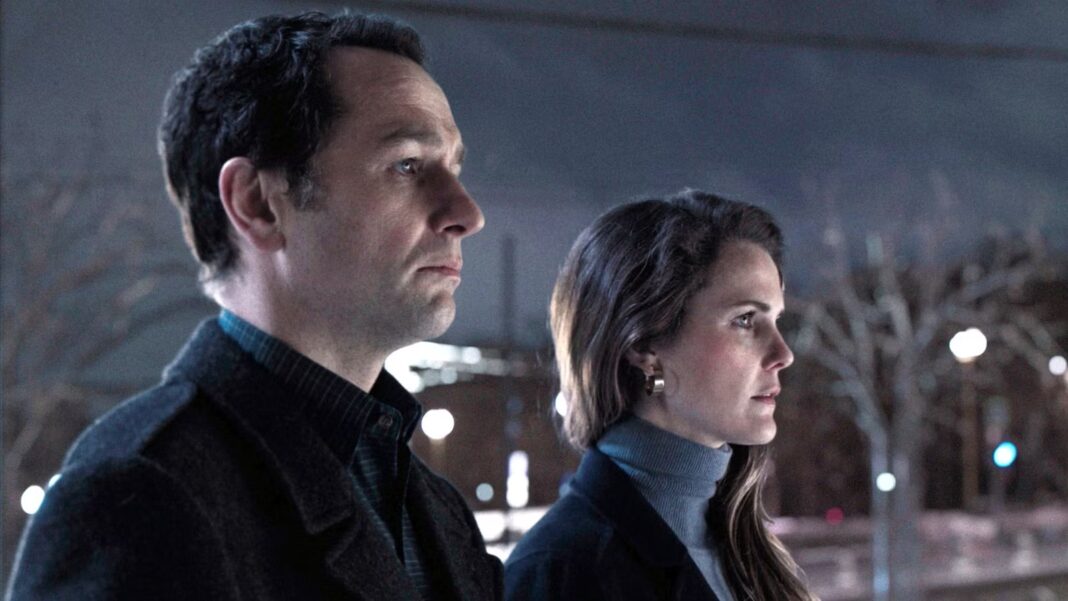
For a TV show about spies, The Americans subverts several tropes with its ending. And while every scene earns its place, if you asked me to pick the one that quietly breaks my heart, I’d choose the stop at McDonald’s. Philip, Elizabeth, and Paige sit separately in a fast food restaurant outside Washington, D.C., eating what might be their last American meal, barely speaking. Philip is leaving behind the only life he ever truly wanted; Elizabeth is going home to a country that no longer feels familiar; and Paige, already pulling away from both of them, is terrified.
None of them say anything, but as the camera watches them sit there with their food, it feels like the saddest meal I’ve ever seen on television. Showrunners Joe Weisberg and Joel Fields have said they knew the ending from Season 2. It’s not a grand farewell, but it’s unforgettable because it understands that the real tragedy isn’t whether Philip and Elizabeth escape. It’s the fact that there was never a version of this story where they could have their mission, their marriage, and their family all at once.
Watch This If: The Americans is less about intelligence and espionage and more about marriage, parenthood, and the cost of keeping secrets for too long. It’s emotional, and it never wastes a minute. If you’re up for something in the same ballpark, this is your show.
Skip This If: You need your protagonists to win. Philip and Elizabeth are alive and together, and that has to be enough. The Jennings don’t get to keep what they built. The show knew that from the beginning, and it never faltered.
‘Breaking Bad’ (2008 – 2013)
Walter White Died in a Meth Lab, Touching the Equipment One Last Time, With Badfinger Playing
I know there’s a case against “Felina,” and I think it’s a fair one. Walter White checks off almost everything on his list before the credits roll. He secures money for his family, he frees Jesse, and he settles old scores. On paper, it might feel a bit too tidy for a show that spent five seasons reminding us that actions have consequences. I understand why some people wanted a messier, more complicated ending. I just don’t think it would have been the right one.
The moment that settles the debate for me happens in Skyler’s kitchen, when Walt finally stops pretending. After years of telling himself, and everyone else, that he did it for his family, he admits the truth: “I did it for me. I liked it. I was good at it. And I was really… I was alive.” That confession doesn’t redeem him or ease what he’d done. It simply strips away the excuse. From that point on, the finale is no longer about Walt fixing his mistakes. It’s about him dying as the person he admits he’s been all along.
Watch This If: You’ve somehow made it this far in life without seeing Breaking Bad, in which case, I envy you slightly and respect you enormously. But seriously, watch it.
Skip This If: You want moral clarity at the end. Breaking Bad delivers consequences, and it’s for you to decide what that means.
What’s your pick for the greatest TV ending ever? Comment below!