The joint U.S.–Israeli military campaign against Iran entered its second week on March 7, with President Donald Trump weighing strikes on a wider range of targets across the Persian state.
Thus far, Iranian leaders have rejected calls for surrender, even after U.S. and Israeli forces killed Iranian Supreme Leader Ayatollah Ali Khamenei and numerous other senior Iranian military and intelligence officials, and continued to strike thousands more targets across the country.
Trump has made assurances that U.S. forces can sustain operations for a long time to come, but the fighting has touched countries throughout the Middle East and clogged oil flows through the Persian Gulf, riling markets.
Here’s what to know as the U.S. campaign against Iran—dubbed Operation Epic Fury—runs into a second week.
1. An Air Battle, For Now
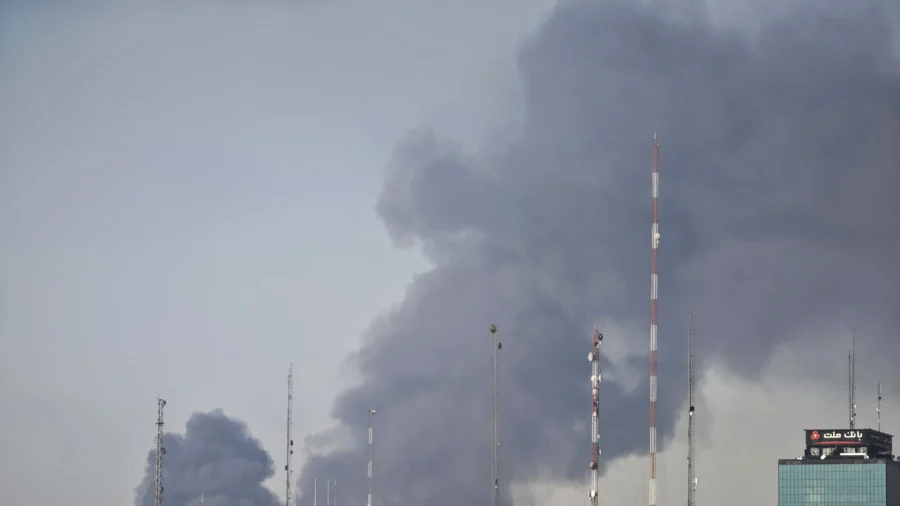
The first week of fighting with Iran played out in the air, as U.S. and Israeli forces launched missiles and conducted strikes with aircraft. Iran responded by lobbing salvos of missiles and drones across the region.
No U.S. ground troops have entered the fray, but the Trump administration hasn’t taken that option off the table.
“I certainly will never take away military options on behalf of the president of the United States or the commander-in-chief, and he wisely does not do the same for himself,” White House press secretary Karoline Leavitt said on March 4.
Speaking with Reuters this week, Trump said he’d “be all for it” if Kurdish fighters launched an incursion into Iran. During a press gaggle aboard Air Force One on March 7, however, Trump said he had ruled out involving the Kurds, stating, “The war is complicated enough.”
2. Iran Rejects Surrender
In a March 7 video statement, Iranian President Masoud Pezeshkian rebuffed the idea of Iran’s surrender.

Pezeshkian called surrender a dream that Iran’s enemies “should take to their grave.”
Trump has since threatened to intensify strikes on Iran.
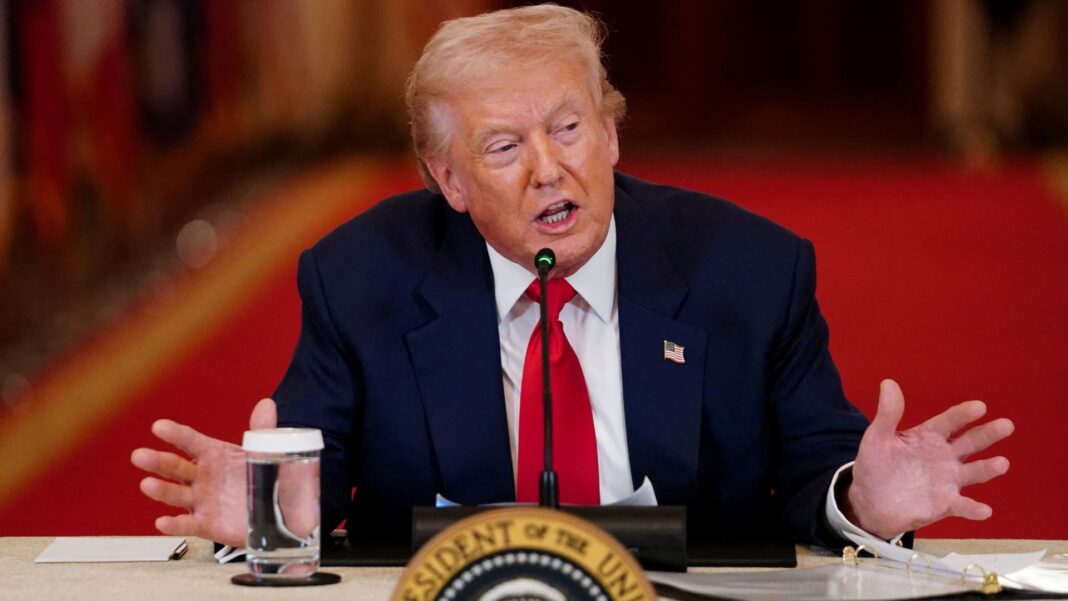
“Under serious consideration for complete destruction and certain death, because of Iran’s bad behavior, are areas and groups of people that were not considered for targeting up until this moment in time,” the U.S. president wrote on Truth Social March 7.
The U.S. president has expressed a desire for an approach similar to the one he took with Venezuela. After U.S. forces captured Venezuelan leader Nicolás Maduro in January, Trump agreed to have Maduro’s second-in-command, Vice President Delcy Rodríguez, fill in as the country’s interim leader.
3. Fighting Unsettles Region
While U.S. and Israeli forces continue to strike Iran, Israel has also had to divert attention to its northern border with Lebanon. There, Israeli air and ground forces have struck targets of Hezbollah, a designated terrorist group long considered an ally to Iran’s Shia Islamic leadership.
Israel’s military has reported striking dozens of Hezbollah targets across Lebanon. The Israeli military has reported several of its troops have been injured in the fighting.

Iranian drone and missile forces, meanwhile, have also continued to strike countries across the region, including Bahrain, Kuwait, Oman, Qatar, Saudi Arabia, and the United Arab Emirates.
As of March 6, the U.S. State Department said about 24,000 Americans have been repatriated from across the Middle East since the fighting with Iran began.
Pezeshkian, in his March 7 remarks, offered apologies to various Gulf States that Iranian forces have struck. He said Iranian forces have since been instructed not to attack neighboring countries “unless those countries are used to attack us.”
4. Bolstering Arms Stockpiles
U.S. forces have used hundreds of long-range strike weapons and missile interceptors over the past week of fighting with Iran. Lawmakers have since begun to raise concerns that the Iran conflict is draining stockpiles of those prized weapons.
“These munitions take a long time to replenish and risk being unavailable for the unforeseen contingencies elsewhere, particularly in the Indo-Pacific, where we face a peer adversary,” Sen. Mazie Hirono (D-Hawaii) said at a March 4 Senate Armed Services Committee hearing.
Amid concerns of shortages, Trump met on March 6 with the heads of arms industry leaders from BAE Systems, Boeing, Honeywell Aerospace, L3Harris Missile Solutions, Lockheed Martin, Northrop Grumman, and Raytheon. In a Truth Social post, Trump said those arms industry leaders had already begun expanding their output three months earlier.
Trump said U.S. forces have a “virtually unlimited supply of Medium and Upper Medium Grade Munitions” and armsmakers “have agreed to quadruple Production of the ‘Exquisite Class’ Weaponry.”
He did not specify which specific weapons systems would quadruple production.
5. Conflict Roils Oil Markets
The rain of missiles and exploding drones over the Persian Gulf the past week has spooked oil industry traffic through the key waterway.
About 25 percent of the world’s seaborne oil leaves the Persian Gulf through the narrow Strait of Hormuz, according to the International Energy Agency.

Stocks fell, and oil prices surged as the U.S. stock market opened on Monday, March 2. That same day, Secretary of State Marco Rubio offered assurances the Trump administration was preparing measures to stabilize fuel prices.
Trump has since suggested sending U.S. warships to escort oil transit through the Strait of Hormuz.
Looking beyond physical protection, the Trump administration has ordered a $20 billion federal reinsurance program to calm shipping operators.
The administration has also issued India a 30-day waiver to purchase otherwise-sanctioned Russian oil.
Sam Dorman, T.J. Muscaro, Savannah Hulsey Pointer, Owen Evans, and Andrew Moran contributed to this report.