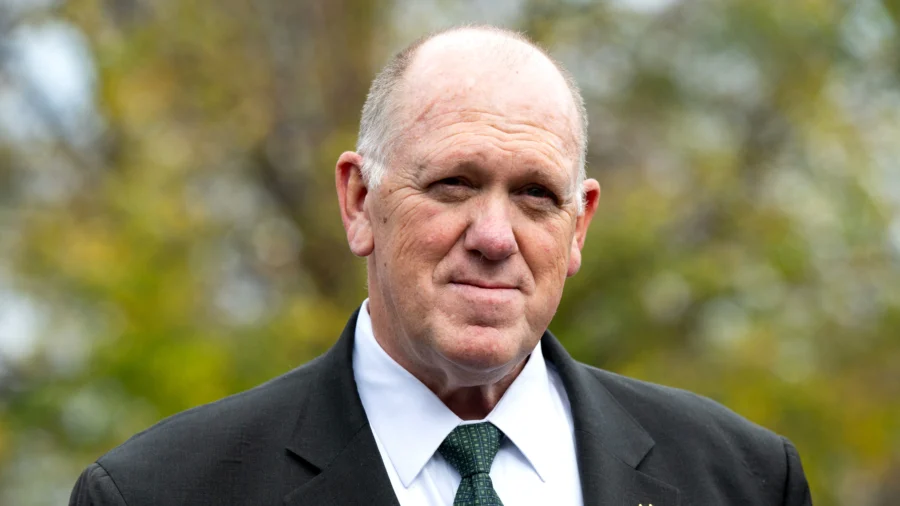
President Donald Trump’s Border czar Tom Homan said on Sunday that many refugees from third world nations who are currently residing in the United States will likely be deported due to the lack of record-keeping systems in their home countries.
“I really, truly think that most of them are going to end up getting deported because we’re not going to be able to properly vet them,” Homan said during an interview with Fox News.
Homan pointed out the challenges of the vetting process, point out that most countries of concern don’t have databases or even a formal government.
Even if they had those systems, Homan said, they wouldn’t share the information because they also lack good relations with the United States.
“We’re going to count on the people who run Afghanistan, the Taliban, to provide us any information who the bad guys were, or who the good guys are? Certainly not,” he said.
Homan’s comments come after an Afghan national shot two National Guard members in the line of duty in what authorities have described as a targeted attack. West Virginia National Guard Specialist Sarah Beckstrom, 20, died from her injuries, while Air Force Staff Sgt. Andrew Wolfe, remains in critical condition.
Just the day before the shooting in the nation’s capital, an Afghan national was arrested in Texas for threatening to blow up a building in Fort Worth.
Homan said those Afghan refugees didn’t have any identification at all, including travel documents or passports, when they came to the United States.
Since last week’s shooting, Trump has called for the reinvestigation of all Afghan refugees who entered the United States under the Biden administration.
Afghanistan, Cuba, Haiti, Iran, Somalia, and Venezuela are among those nations.
During his first year in office, Trump called for his administration to restrict the entry of foreign nationals from such countries.
Trump earlier this year formally directed his administration to build on those efforts. The president in a June 2025 order said Afghanistan was among those nations that faced vetting inadequacies.