Okay, confession: I have watched the finale of Lost no less than six times. It’s not perfect by a long shot, but something about that show just pulls you back in. The sci-fi genre has been doing this for decades now. In the early 60s, Rod Serling was narrating existential crises on The Twilight Zone. And then, a wildly underfunded BBC show about a time-traveler in a blue box somehow became a cultural phenomenon. Doctor Who is still going, still regenerating, and is still unhinged in the best possible way.
And now we’ve got Severance out here making people question the ethics of their own Monday morning commute. Sci-fi is constantly shape-shifting into something more and more addictive. But not every great sci-fi show hits hardest the first time around. Some of them reward you for paying attention, for revisiting, for noticing the details you missed when you were too busy being mind-blown. This list is for a select few sci-fi TV shows you’ve already binged and loved, but they just keep getting better after every rewatch.
‘Futurama’ (1999 – Present)

Matt Groening and David X. Cohen’s animated sci-fi comedy follows a pizza delivery guy who accidentally freezes himself on New Year’s Eve 1999 and wakes up a thousand years later in New New York, a city where robots have unions, aliens file HR complaints, and a one-eyed mutant named Leela is the most competent person in any room. Futurama ran on Fox from 1999 to 2003, got canceled (twice), resurrected (twice), and still has a fanbase that considers it the most emotionally intelligent show ever made, animated or otherwise. Because it is.
The comedy operates on about four frequencies at once. There’s the slapstick layer for the casual viewer, and then a dense grid of physics jokes, literary references, and sight gags. The humor is timeless, the emotional beats land harder with age, and while the animation may look deceptively light, the story is rich enough to reward multiple rewatches.
‘Fringe’ (2008 – 2013)

In Fringe, FBI agent Olivia Dunham teams up with a mad scientist named Walter Bishop and his estranged son, Peter, to investigate bizarre cases involving teleportation, reanimated corpses, and consciousness transfer. Season 1 is pretty great. Then the show becomes a meditation on parallel universes, parental grief, and what it means to save the world when saving it might destroy everything you love.
Anna Torv delivers a controlled performance as John Noble’s Walter Bishop is one of the greatest television characters of the 2000s. The emotional weight of the relationships, particularly Walter and Peter’s, is truly amazing. Also, J.J. Abrams seeded the Observer mythology across every episode, and it feels like background detail until you watch the show again and again.
‘Stranger Things’ (2016 – 2025)
Hawkins, Indiana, is a small, unremarkable American town, but the Duffer Brothers make it the epicenter of interdimensional horror. They built Stranger Things as a love letter to the 80s, Spielberg, Stephen King, and John Carpenter, and Season 1 wears that influence with total confidence. Later seasons expand the scope considerably, but the core story is always about friends trying to protect each other.
Rewatching Stranger Things changes your relationship with the details. The first time through, you’re chasing the plot. The second time, you notice how the Duffer Brothers deliberately stage Will’s arc as someone perpetually on the outside of his own story. Even after his rescue, he’s never truly back. It all makes sense in Season 5. And the friendship dynamics, particularly between Eleven and the boys, grow richer when you already know where each character ends up.
‘Falling Skies’ (2011 – 2015)

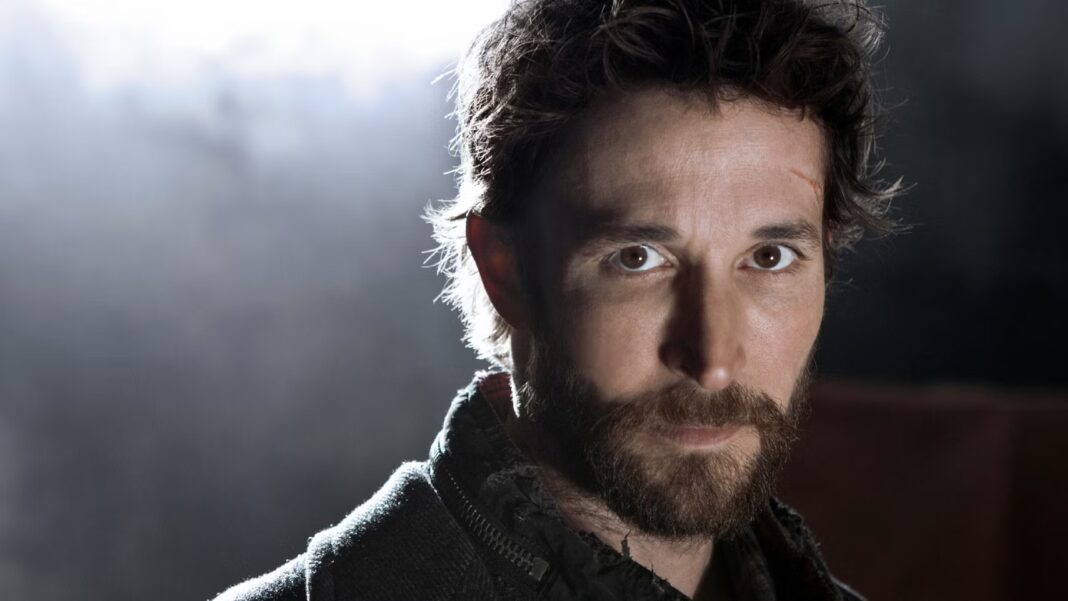
Falling Skies is TNT’s post-invasion drama that ran for five seasons from 2011 to 2015, earned decent ratings, and then disappeared from the conversation. Which is a shame because it’s a brilliant piece of survival science fiction. It follows Tom Mason (Noah Wyle), a history professor turned resistance leader, as he and his family fight alongside other survivors against the Espheni.
The show heavily relies on the intellectual angle. Mason’s constant references to historical resistance movements give the story an ideological texture. Most alien invasion shows skip that. Early episodes establish the alien factions as hostile, but the series gradually complicates that picture. Mason’s son, Ben, who spends part of the series with an alien harness attached to his spine, becomes a study in identity and allegiance. Falling Skies is slept on, and it needs to be revisited.
‘Resident Alien’ (2021 – 2025)

Resident Alien takes the classic “there’s an alien among us” trope and spins it into a quirky dramedy. Alan Tudyk stars as Harry, an extraterrestrial who crash-lands in Colorado and assumes the identity of a small-town doctor. His mission is to wipe out humanity, but his interactions with the people of the town complicate things. It’s a fish-out-of-water comedy with genuine sci-fi intrigue, and Tudyk’s performance is both hilarious and heartfelt.
Resident Alien ended last year, and rewatching the series is a real treat because the humor and character arcs feel more natural once you know Harry’s arc. The tonal balance between absurd and tender moments is perfect. Overall, it’s an easy watch on the surface, but there’s a surprising amount of heart tucked into its oddball rhythms.
‘Battlestar Galactica’ (2004 – 2009)

Ronald D. Moore’s reimagined Battlestar Galactica has almost nothing to do with spaceships. Released in 2004, the Syfy series drops you into a reality where robots called Cylons have wiped out most of civilization, and a ragtag fleet limps through space searching for Earth. From Commander Adama (Edward James Olmos) to President Roslin (Mary McDonnell), there are a lot of morally ambiguous people forced to make impossible decisions.
Battlestar Galactica ran four seasons and a miniseries, won a Peabody Award, and prompted a United Nations panel discussion on human rights. That last part is not a joke. The series is structured around the question: how are we supposed to separate ourselves from what we built? It was relevant then, and it’s relevant now. The final season is divisive, but even the most contested choices make sense when you catch the subtleties you missed before.
‘The Expanse’ (2015 – 2022)
About twenty minutes into The Expanse, it becomes quite clear that it’s not going to be an easy watch. A breath of fresh air for modern sci-fi television, it’s based on the novels by James S.A. Corey, and it operates in a future where humans have colonized the solar system but solved none of its political problems. Earth is bloated and bureaucratic, Mars is militarized, and the asteroid belt’s working-class population is exploited by both.
Three storylines running in parallel around a mystery involving a protomolecule, that’s The Expanse for you. The political maneuvering, the cultural tensions, and the personal sacrifices resonate deeply. But the show gets better upon a rewatch because you understand how precisely it has constructed its geopolitical allegory from the very first episode. The production design and attention to physics make it even more immersive.
‘Star Trek: The Next Generation’ (1987 – 1994)

When Star Trek: The Next Generation premiered in 1987, it had the daunting task of living up to Gene Roddenberry’s original vision. Over seven seasons, it not only succeeded in doing that but also redefined what sci-fi television could be, with the considerable advantage of Patrick Stewart in the captain’s chair. There’s also Brent Spiner’s unforgettable Data, and a crew that became iconic in their own right.
The episode “The Inner Light,” from Season 5, which is widely regarded as one of the finest hours in the franchise’s history, shows Picard living an entire lifetime on a dying planet in roughly twenty-five minutes, and it changes his character for everything that follows. The scene hits differently each time, depending on where you are in life when you watch it. TNG has a lot of episodes like that, actually. Where the thematic layers are all there in Season 1, but you have to wait till Season 7 to get the context.
‘Rick & Morty’ (2013 – Present)

Rick & Morty is a chaotic, self-aware animated sci-fi comedy that literally exploded into pop culture. The first episode features a drunk grandfather nearly destroying humanity on a casual Tuesday, and the show sticks with that energy throughout. Created by Justin Roiland and Dan Harmon, it features the adventures of genius scientist Rick Sanchez and his anxious grandson Morty.
It’s a zany comedy on the outside, but Rick & Morty quickly reveals itself as a precise, often dark exploration of existential dread, family dysfunction, and the absurdity of the multiverse. Its mix of outrageous humor, meta-commentary, and heartfelt moments is beloved among fans. Many episodes are known for their clever foreshadowing, and it has been on fans’ weekly rotation for over a decade now thanks to its strong tonal duality.
‘The X-Files’ (1993 – 2018)
When it comes to the 90s and TV partnerships, nobody does it better than Mulder and Scully. Created by Chris Carter, The X-Files follows FBI agents Fox Mulder (David Duchovny) and Dana Scully (Gillian Anderson) as they investigate paranormal cases, balancing monster-of-the-week episodes with a sprawling mythology about government conspiracies and alien abductions.
It’s hard for two actors to sustain a relationship defined by tension, trust, and unspoken feelings across nearly two hundred episodes, but Duchovny and Anderson delivered every single time. Going back to it feels like dissecting a long-running conversation, especially when you start noticing how Mulder and Scully shift roles. The mythology episodes, once confusing, feel more cohesive. Even the standalone stories gain depth. Here’s to hoping the reboot lives up to the reputation.
Which sci-fi show have you rewatched the most? Comment below!