Key events
UK business activity hit by Iran war; weakest rise in service sector output for 11 months
The Iran war has also hit business activity in the UK, where stagflation risks have also increased.
The headline seasonally adjusted PMI business activity index from S&P Global posted 50.5 in March, down from 53.9 in February and the lowest since April 2025. This final reading was below the earlier ‘flash’ estimate of 51.2 in March. Any reading above 50.0 indicates an overall expansion of business activity.
The monthly survey highlighted a considerable slowdown in business activity growth across the service economy. mostly linked to falling business and consumer spending due to concerns about the impact of the war in the Middle East.
Profit margins were under pressure as input cost inflation hit the highest level in 11 months, driven by higher prices paid for fuel, transportation and raw materials.
Higher output levels have been recorded in each of the past 11 months, but the latest expansion was only marginal and the weakest seen over this period.
Many companies said the escalating conflict in the Middle East affected client confidence and investment decisions in March. There was a renewed decline in total new work received by UK service sector companies, the first downturn in order books since November while the pace of contraction was the sharpest for eight months.
Export sales have taken a hit, with new business from abroad falling at the fastest rate since last April. Backlogs of work remained broadly unchanged, despite reports of international shipping delays and worsening supply chain performance.
Tim Moore, economics director at S&P Global Market Intelligence, said:
UK service providers experienced a marked slowdown in output growth in March as the war in the Middle East encouraged greater risk aversion among clients and postponed investment decisions. Cutbacks to business and consumer spending meant that the rate of business activity expansion was the weakest seen since April 2025.
Stagflation risks appear to have increased, with the final Services PMI data signalling slower growth and higher cost pressures than the earlier ‘flash’ estimates based on data compiled up to 20th March. Overall input cost inflation has accelerated sharply since February and was the strongest for 11 months, which was overwhelmingly linked to rising fuel and transportation bills. Many firms also noted that suppliers had sought to pass on higher prices paid for energy, raw materials and shipping.
Rising global economic uncertainty due to the war in the Middle East contributed to a further decline in business optimism across the UK service economy. Confidence levels have fallen sharply after hitting a 15-month high in January. Service providers widely commented on fragile domestic economic conditions and concerns about the impact of rising inflation and higher borrowing costs on client demand over the year ahead.
Eurozone posts slowest growth in business activity in 9 months, raising ‘spectre of stagflation’
The eurozone economy recorded the slowest growth in business activity in nine months in March, as new orders fell across the service sector and cost pressures jumped.
This raises the “unwelcome spectre of stagflation,” according a closely-watched monthly survey from S&P Global.
It showed that demand worsened in the eurozone for the first time since July. Its eurozone composite PMI output index, which covers manufacturing and services, fell to 50.7 in March from 51.9 in February, pointing to weakening of economic growth.
The headline measure was well below its historical average of 52.4. This was because of the dominant service sector, where activity levels barely rose, while manufacturing output growth remained solid.
At the national level, economic activity trends were mixed. Spain was the fastest-growing country in March, registering an accelerated upturn. Ireland followed closely behind, although the rate of expansion eased to a six-month low.
The eurozone’s largest economy – Germany – recorded the weakest growth so far this year, while France and Italy – the No 2 and No 3 economies – suffered contractions in business activity.
Chris Williamson, chief business economist at S&P Global Market Intelligence:
March’s PMI indicates that the eurozone economy has already been hit hard by the war in the Middle East. The encouraging signs of growth seen earlier in the year have been eradicated thanks to surging energy prices, choked supply chains, financial market volatility and a renewed downturn in demand. The accompanying surge in prices raises the unwelcome spectre of stagflation, or worse, in the near-term.
The near-stalling of growth in March drags the PMI’s signal for first quarter GDP growth down to 0.2%. More worrying is that there are clear risks of the economy contracting in the second quarter unless there is a swift resolution to the conflict, and even then we will likely see damaging energy market repercussions extending into the coming months.
JPMorgan gets go-ahead for new Canary Wharf tower
JPMorgan Chase has won approval to build a new tower in Canary Wharf, which will be one of the tallest in Europe.
The Wall Street bank had been in talks with officials from nearby City airport over potential height restrictions, but the two sides reached an agreement in February for the tower to rise to 265 metres, the Financial Times reported.
This means JPMorgan’s new UK headquarters will overtake One Canada Square as Canary Wharf’s tallest building, which at 235m has held that title for more than three decades.
When JPMorgan announced plans in November to build a multi-billion-pound tower on its Riverside South site, it did not provide details about its height because its final design plans were held back by the potential constraints.
The Docklands financial district is about three miles west of London City Airport and lies within its “safeguarding zone”, meaning the airport must be consulted on new developments.
The US bank revealed its plans to build a 3m sq ft tower in Canary Wharf last November, just hours after banks were spared tax hikes in Rachel Reeves’ autumn budget. It will house more than half of its 23,000 UK staff and is expected to cost £3bn.
Universal Music receives takeover offer from Bill Ackman’s Pershing Square
In other news, the American billionaire Bill Ackman’s hedge fund has offered to buy Universal Music Group (UMG) in a deal that values the world’s biggest music company at more than €50bn (£44bn).
Pershing Square, the New-York based hedge fund, has offered to buy the business, which is home to artists including Taylor Swift and Elton John, in a cash and stock deal.
Ackman said in a statement that while the company, which is led by the British-born Sir Lucian Grainge, had done “an excellent job nurturing and continuing to build a world-class artist roster and generating strong business performance”, its share price had lagged owing to issues “unrelated to the performance of its music business”.
Shares in UMG, which have been listed in Amsterdam since 2021, have lost more than a quarter of their value in the past year alone.
The company is one of the “big three” record labels, alongside Sony Music Entertainment and Warner Music Group. Its roster ranges from classical music to stars such as Adele, Drake and Ariana Grande.
European stocks mixed
On the stock markets, the FTSE 100 index in London rose by 70 points in early trading, but is now down nearly 22 points, or 0.2%, at 10,414.
Germany’s Dax slipped 0.2% while France’s CAC rose 0.45%, and Italy’s FTSE MiB and Spain’s Ibex edged 0.1% and 0.2% higher respectively.
Spot gold has dipped 0.07% to $4,644 an ounce.
Richard Hunter, head of markets at interactive investor, said:
US markets finished on a cautiously positive note after the long weekend, but in the immediate term investors are facing a binary event – ceasefire or further escalation of the conflict.
As such, guidance continues in the form of often unconfirmed third party reports detailing progress (or the lack of it) in negotiations. Of little doubt is that the US president’s latest deadline to Iran expires this evening where, in the absence of any agreement from his foes, he has threatened to destroy Iran’s power plants and bridges, causing irreversible damage to the country’s energy infrastructure.
The latest reports perhaps suggest a less sinister outcome, with claims that mediators are discussing a 45-day ceasefire, which could conceivably mark an end to the war. Separately it is claimed that such an agreement would be accompanied by an immediate reopening of the Strait of Hormuz. In any event, time is quickly running out as the deadline approaches which in turn will keep investor sentiment brittle and on high alert.
UK construction activity tumbles
Construction activity in the UK has tumbled as the industry struggles to cushion the blows from the war in the Middle East and a persistently weak economy, according to a survey.
Work starting on site declined by 17% in the three months to March compared with the fourth quarter of last year, and was 18% below 2025 levels, according to Glenigan’s latest construction index.
The US-Israel war on Iran started at the end of February and shows no sign of coming to an end any time soon, resulting in considerable uncertainty for the construction sector.
Residential construction dropped by 13% quarter on quarter, and was down 30% year on year, also hit by confusion around planning policy and a weak economy.
Non-residential project starts fell by 15% on the quarter, and by 5% on the year. Offices bucked the trend, with increases in new projects starting on site.
The index covers all underlying projects with a value of £100m or less. It highlights the serious challenges facing the UK construction sector, a “severely disrupted supply chain and unprecedented market volatility”.
Glenigan’s Allan Wilen said:
All three main verticals: housing, non-residential buildings and civil engineering are considerably lower than a year ago and on the previous quarter on a seasonally adjusted basis.
The sector is fighting on all fronts, home and abroad. Particularly, the Iran war will depress activity further near-term as private developers and house purchasers delay investment decisions due to fears of higher than anticipated interest rates, rising material costs, spiralling energy costs and stalled economic growth. It will have a knock-on effect on the non-residential verticals which, although many have ring-fenced funding, will no doubt be putting activity on hold to ensure they don’t waste budgets whilst rates spike.
Introduction: Oil rises above $110 as Trump deadline looms for Iran to reopen strait
Good morning, and welcome to our rolling coverage of business, the financial markets and the world economy.
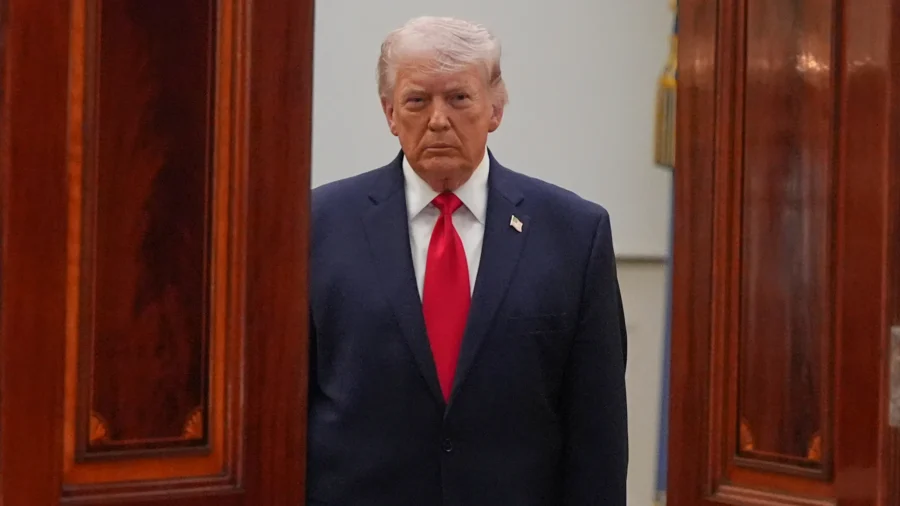
Oil prices continued to climb on Tuesday above $110 a barrel amid a deadline imposed by Donald Trump for Iran to open the strait of Hormuz or be “taken out,” with the US president threatening to order attacks on Iranian power plants and bridges.
He threatened to rain “hell” on Tehran if it does not meet his deadline of Tuesday 8pm ET (1am BST Wednesday) to reopen the strait, a key shipping route. In response to a US proposal through mediator Pakistan, Tehran rejected a ceasefire and insisted on a permanent end to the war.
Brent crude rose 1.1% to $111.01 a barrel, while New York light crude hit $115.3 a barrrel, up 2.6%.
Asian stock markets were mostly higher, with Japan’s Nikkei rising 0.19% and South Korea’s Kospi up 1.2%, while Hong Kong’s Hang Seng fell by 0.7%.
The war in the Middle East will lead to higher inflation and slower global growth, the head of the International Monetary Fund warned, ahead of the lender’s latest forecast next week.
The war has triggered the worst-ever disruption in global energy supply, with millions of barrels of oil production shuttered due to Iran’s effective blockage of the strait of Hormuz, through which a fifth of the world’s oil and gas pass in normal times. Even if the conflict is swiftly resolved, the IMF is set to reduce its forecast for economic growth and lift its outlook for inflation, Kristalina Georgieva, managing director of the IMF, told Reuters.
Kyle Rodda, senior financial market analyst at the trading platform Capital.com, said:
The markets are back on a Trump-imposed countdown clock. To use a sporting analogy, it’s red time, and the result could go either way. Like a fortnight ago when the first threats from the Trump administration to attack Iranian power plants and other infrastructure were made, the markets are plonked at a crossroad, facing a binary outcome, at least in the short term.
Either the attacks happen, marking a possibly catastrophic escalation where regional energy assets and civilian infrastructure across the Gulf is considered fair game. In such an instance, the energy complex jumps, pushing the US Dollar and global yields higher, and equities and non-yielders like gold lower. Or there’s a backdown, even better, a ceasefire, and the markets stage an epic relief rally, where a plunge in oil takes yields and the US Dollar with it, and equities and gold rip.
Despite some hopeful headlines yesterday, most of the news paints a grim picture of how things are unfolding roughly 27 hours after Trump’s deadline. President Trump’s rhetoric is hawkish and increasingly unhinged and the Iranians remain obstinate, with reports suggesting both sides remain worlds apart on the terms of a ceasefire, especially as it pertains to the Strait of Hormuz. Neither would benefit from an escalation.
New car sales in the UK climbed by around 6% in March – usually the biggest month for vehicle registrations, according to preliminary industry data.
Sales of battery electric vehicles reached a record high, the Society of Motor Manufacturers and Traders said. However, their market share of 23% is still below the government-mandated target of 33% for this year.
The industry has called for an urgent review of the UK’s electric vehicle transition, as surging gas prices driven by war in the Middle East have lifted electricity rates.
The Agenda
-
8.45am-9am BST: Italy, France, Germany, eurozone S&P Global PMIs (final) for March
-
9am BST: UK new car sales for March
-
9.30am BST: UK S&P Global PMI for March
-
1.30pm BST: US durable goods for February