
We independently evaluate all recommended products and services. Any products or services put forward appear in no particular order. if you click on links we provide, we may receive compensation.
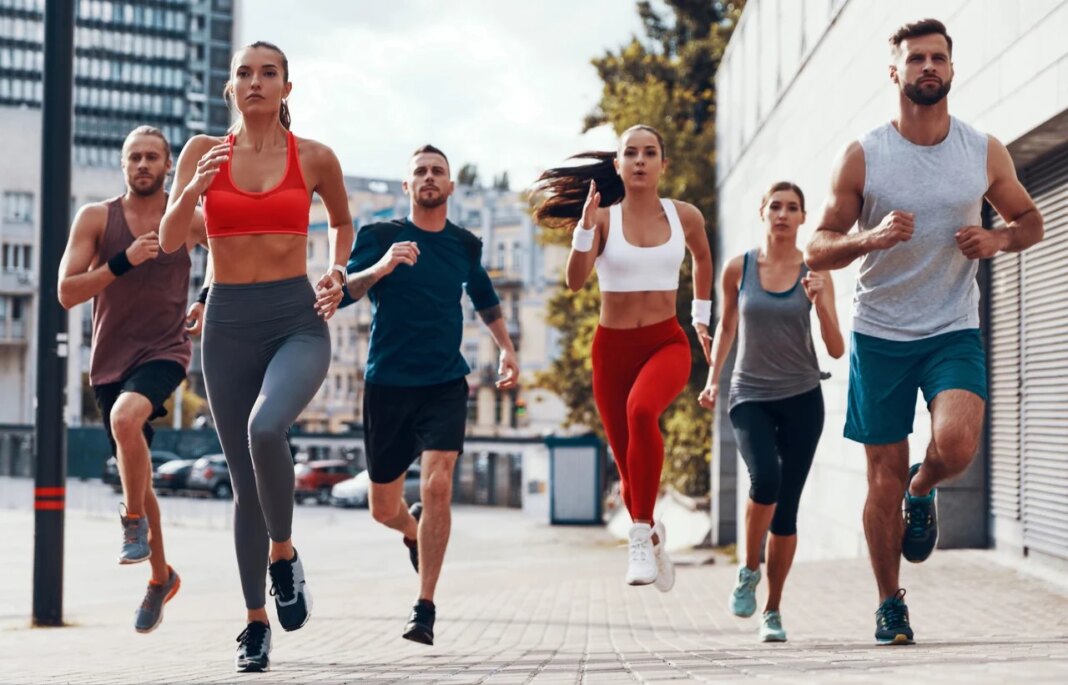
Run clubs have changed. What used to be a casual jog with strangers is now a proper social event — Strava meet-ups, post-run coffee, and a crowd that notices what you’re wearing before you hit the first kilometre. That’s not a bad thing. It just means showing up unprepared is more noticeable than it used to be.
Understand the vibe first
Strava meet-ups sit somewhere between fitness culture and social culture. Not a gym. Not a race. Something more like athletic but curated — the kind of setting where what you wear signals whether you’re in on it or not.
You’re being seen before the run starts, during it, and after — particularly if the group heads for coffee. That’s three distinct contexts your kit needs to survive. The principle is simple: functional first, aesthetic second. But both matter. The guy in a decade-old race tee and sagging cotton shorts reads as an afterthought. The guy in a clean, considered kit reads as someone who takes it seriously — even if his mile time says otherwise.
| THE READ
Showing up in a well-worn race shirt is fine if it’s tasteful. Showing up in a faded 2014 charity 5K tee is a different statement entirely. The kit you choose communicates before you open your mouth. |
The essentials, top to bottom
No need to overthink the individual pieces — but each one matters.
Top — Technical tee or singlet
Neutral or muted tones. Light technical fabric. Avoid heavy logos — unless the brand is niche enough to signal taste rather than just spend. Satisfy Running’s trail-adjacent aesthetic or a clean Adidas Running tee both land well.


Bottoms — 5–7 inch running shorts
Built-in liner or compression — personal preference. What you want to avoid: anything too long, too baggy, or too obviously gym-adjacent. Basketball shorts read as uninitiated.


Footwear — Clean, current running shoes
Carbon-plated is a nice flex but not required. What matters is that they look current and cared for. Hoka’s Clifton or Bondi reads as serious without being ostentatious. On or Saucony both signal you know your brands.

Accessories The details are where a run meet kit either comes together or falls apart.
Socks: crew is the current standard. White or off-white, logos fine — loud isn’t. A simple branded crew from Nike Running works well.
Cap: functional and aesthetic in equal measure. A low-profile technical cap — Satisfy Running’s PeaceShell is the reference point — keeps the sun off and signals you know the culture. Avoid fashion caps; the brim and fit read differently when you’re running.
Layer: a zip-up, shell, or overshirt is worth packing for pre- and post-run. It completes the look when you’re standing around and handles the temperature drop after a hard effort

The style layer — what makes it yours
Colour discipline is everything. Two or three colours maximum. Earth tones, monochrome, or soft contrast palettes all work. The guy who’s coordinated every piece of his kit in neon is doing too much; the guy in all-black with one considered accent is doing it right.
THE FORMULA — CLEAN, EFFORTLESS, CREDIBLE
| TOP | Off-white technical tee — Satisfy Running or Adidas Running |
| SHORTS | Black 5-inch lined shorts |
| SHOES | Hoka Clifton or On Cloudmonster — keep them clean |
| SOCKS | White crew — Nike Running or similar |
| EXTRAS | Garmin or Coros watch · Cap optional · Performance sunglasses if sunny |
On the watch: A Garmin, Coros, or Apple Watch signals you take performance seriously. On sunglasses: performance-oriented always — oversized fashion sunglasses on a run read as a photoshoot, not a workout.

Key brands in focus: Adidas Running · Satisfy Running · Hoka · Nike Running
What not to wear
The don’ts are as instructive as the dos.
- Old race shirts with heavy graphics. The 2019 half marathon tee has sentimental value. Leave it for solo long runs.
- Basketball shorts or generic gym wear. The cut is wrong, the length is wrong, the read is wrong.
- Cotton-heavy outfits. Bad for performance and bad for appearance once you’re moving. Technical fabric only.
- Brand-new, stiff, over-coordinated kit. The sweet spot is worn-in but cared for — kit that has clearly been run in before.
- The influencer fit. Too loud, too coordinated, too much going on. If every item is making a statement, nothing lands.
| THE TONE NOTE
You don’t want to look like it’s your first time running. And you don’t want to look like you’re there for the grid shot. Both are visible from twenty metres. |
The social factor
Run clubs don’t end at the finish. Post-run coffee is part of the format. A light layer for after — a good hoodie, an overshirt, something that transitions out of pure run mode — is the easiest upgrade you can make.
People in run communities often connect through shared aesthetic cues as much as pace. Dress like you’re part of it.
Weather adaptation
- Cold: base layer + mid layer + shell. A lightweight Adidas or Nike windshell over a thermal base is the move.
- Warm: breathable, minimal, light colours. A mesh-back Nike singlet earns its keep here.
- Rain: cap and a water-resistant outer. Satisfy Running’s trail-adjacent shells are genuinely functional on urban meets.
Confidence is the actual variable
The best kit you can wear to your first run meet is one you’ve run in before. Comfort shows — and so does the opposite.
You don’t need the most expensive gear. Intentional choices beat expensive ones. A considered mid-price kit from Hoka, Adidas Running, or Nike — worn-in, clean, thoughtfully put together — will always land better than a full Satisfy Running fit that looks like it came out of the bag this morning.
The goal isn’t to impress anyone. It’s to show up like someone who’s done this before, knows the culture, and isn’t trying too hard in either direction.
“Looking like you belong isn’t about copying others. It’s about understanding the culture and showing up prepared, comfortable, and self-aware.”

The editorial team at FashionBeans is your trusted partner in redefining modern men’s style. Established in 2007, FashionBeans has evolved into a leading authority in men’s fashion, with millions of readers seeking practical advice, expert insights, and real-world inspiration for curating their wardrobe and lifestyle.
Our editorial team combines over 50 years of collective experience in fashion journalism, styling, and retail. Each editor brings specialized expertise—from luxury fashion and sustainable style to the latest grooming technology and fragrance science. With backgrounds ranging from GQ and Esquire to personal styling for celebrities, our team ensures every recommendation comes from a place of deep industry knowledge.