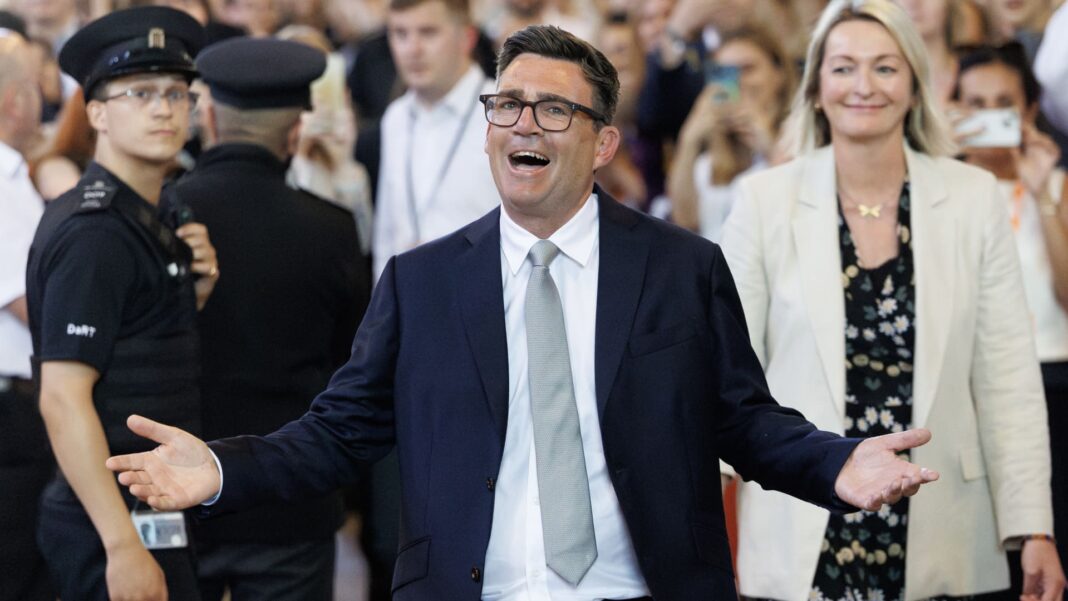
Andy Burnham, Labour MP for Makerfield, celebrates after his swearing-in at the Houses of Parliament on June 22, 2026 in London, England.
Dan Kitwood | Getty Images
Andy Burnham became the U.K.’s seventh prime minister in a decade on Monday, with investors and market watchers already questioning his policy agenda.
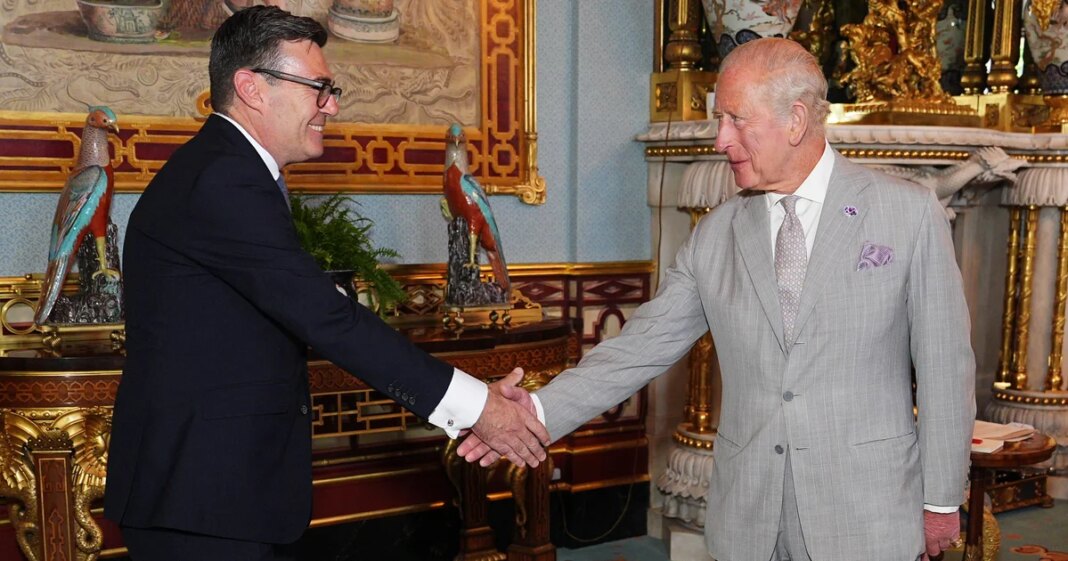
King Charles formally asked Burnham to form a government at Buckingham Palace earlier on Monday, which Burnham confirmed he has accepted.
“We will make this moment a circuit breaker for Britain, bringing forward a new political model and a new economic model,” Burnham said in his first speech as premier on Monday.
“[We will] build a new economy where we put life’s essentials back under stronger public control to make them affordable again, reindustrializing Britain using public procurement to back British industry,” he added.
New era for North Sea oil?
U.S. President Donald Trump has welcomed Burnham’s plan to fast-track oil and gas exploration in already-licensed fields in the North Sea.
Writing on Truth Social over the weekend, Trump called North Sea oil “invaluable,” adding it will take the U.K. from a “Poverty Stricken Disaster, to one of the Richest Countries anywhere in the World!”
The British economy has struggled for momentum in recent years. U.K. GDP is projected to grow by just 0.8% in 2026, following growth of 1.3% and 1% in 2025 and 2024, respectively. High energy costs have been highlighted as a key issue, piling pressure on policymakers to ramp up North Sea oil production even as Britain pushes ahead with its net-zero carbon goals.
Independent estimates collated by the U.K Parliament project that new drilling and favorable conditions could increase domestic production to a total of 7.5 billion barrels of oil equivalent.

Burnham replaces outgoing Starmer
Starmer announced last month that he would step down from his post, after a series of policy U-turns, scandals over staffing appointments and a dramatic loss in Britain’s local elections sparked calls for his resignation from within his own ranks. Starmer officially resigned earlier on Monday.
Burnham had no opponents in the race to lead the governing Labour Party.
He returned to parliament just weeks ago, after winning a by-election in Makerfield, a constituency in the north of England. Only sitting members of parliament can run to lead the Labour Party.
Before his return to Westminster, Burnham – nicknamed Labour’s “King in the North” – served as the Mayor of Greater Manchester, one of the U.K.’s largest metropolitan areas. Prior to his near-decade mayoral tenure, he was a Labour MP and held cabinet positions under prime ministers Tony Blair and Gordon Brown.
“I am ready,” Burnham told supporters on Friday as he officially became the leader of the Labour Party.
The prospect of Burnham, considered more left-leaning than Starmer, replacing the incumbent prime minister sent jitters through bond markets earlier this year. Investors in U.K. government bonds, known as gilts, appeared to be largely supportive of Starmer and his finance minister, Rachel Reeves, remaining in their roles, due to their commitment to rein in public borrowing and spending.
In his speech on Friday, Burnham promised to fix the “big things” such as social care policy, and criticized changes that occurred in Britain over the past few decades after “political power was centralized and economic power was privatized.”
Mike Bell, head of market strategy at RBC BlueBay Asset Management, told CNBC’s Squawk Box Europe on Monday that markets will be “relieved” that Burnham is set to select home secretary Shabana Mahmood as chancellor, rather than the more left-leaning Ed Miliband.
“But as soon as we shift away from people onto politics, the markets will put them under a microscope,” he added.
“Two months ago, UK markets recoiled at the prospect of new Labour leader Andy Burnham becoming prime minister,” James Smith, developed markets economist at ING, wrote in a note on Monday. “Today, his arrival in Downing Street has been met with little more than a shrug.”
“Risk premium in the bond markets looks contained. Most investors I speak to don’t expect him to rock the boat this year, even if there are concerns about the fiscal trajectory further ahead,” he added.