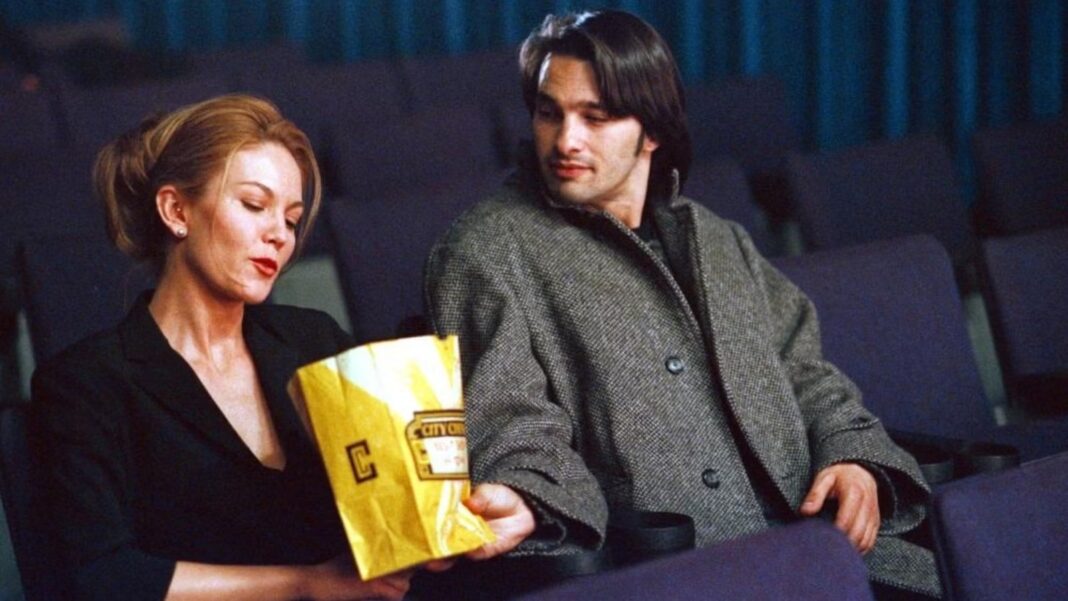
Erotic cinema feels absent from today’s movie landscape, which is probably why I keep going back to the 2000s. The decade struck a balance that Hollywood and international filmmakers rarely seem interested in anymore. Directors like Ang Lee, Park Chan-wook, François Ozon, Bernardo Bertolucci, and Luca Guadagnino didn’t make erotic movies simply to provoke audiences. They made lush romances, psychological thrillers, and gothic horror that just happened to treat sexuality as a natural part of being human.
Looking back, it’s no surprise that so many of the decade’s boldest movies came from filmmakers who weren’t afraid to let desire shape a story. I had a hard time picking the movies for this list. Mulholland Drive and Somersault came painfully close to making the final cut, and on another day, they probably would have. The ones that made the list, however, are unforgettable. Years later, I still think about Maggie Gyllenhaal’s fearless performance and the haunting final stretch of another film that I included.
Why You Should Trust Me: I’ve been covering film and television as a writer at MovieWeb for almost four years, reviewing everything from Hollywood blockbusters to international dramas to independent cinema. Over time, I’ve naturally gravitated toward filmmakers who trust their audiences and tell their stories through performance, atmosphere, and visual language. The movies on this list come from different countries, genres, and directors, but they all deserve praise.
‘Unfaithful’ (2002)
Adrian Lyne’s Return to the Genre He Invented
Adrian Lyne more or less drew the blueprint of modern erotic thrillers with Fatal Attraction and 9 1/2 Weeks. When he returned to the genre, he was less interested in shock and more interested in exploring guilt, longing, and the rippling effects of one impulsive decision. A seemingly content suburban marriage starts to unravel after one chance encounter spirals into an affair. Diane Lane’s Oscar-nominated performance is the reason Unfaithful works so well. She conveys excitement, shame, fear, and regret with the smallest shifts in expression, which makes the movie feel painfully intimate.
Watch This If: You enjoy slow-burning dramas where the tension comes from emotion. And, if you’ve watched Adrian Lyne’s earlier classics, this is the perfect companion piece.
Skip This If: You’re looking for a fast-paced thriller with constant surprises.
‘Thirst’ (2009)
Park Chan-wook’s Wildest Movie Is Also One of His Most Romantic

A devout Catholic priest volunteers for a medical experiment that goes wrong. He’s infected with a blood-borne condition that, in classic Park Chan-wook fashion, turns out to be vampirism. Also, his relationship with a woman from his past forces him to confront every rule he has followed for his entire life. Park Chan-wook brought the same morally tangled sensibility that made Oldboy and The Handmaiden so unforgettable, mixing real horror, gothic romance, and dark comedy into what could have easily just been a straightforward erotic drama. Thirst picked up the Jury Prize at Cannes because it’s unsettling and unexpectedly funny.
Watch This If: You love movies that refuse to stay inside one box. This one mixes eroticism with horror, guilt, and a real streak of dark humor.
Skip This If: You prefer that your horror and romance are kept separate. Thirst happily mixes the two, and the tonal shifts are part of what makes it such an outstanding watch.
‘Secretary’ (2002)
An Office Romance That Refused to Play It Safe

I honestly don’t think Secretary would have worked as well as it did without Maggie Gyllenhaal in the lead role. She brings so much vulnerability, humor, and confidence to Lee Holloway that the movie never becomes the one-note provocation people sometimes expect. Instead, Steven Shainberg approaches intimacy with surprising warmth, turning what could have been a gimmicky premise into a touching romance about self-acceptance and emotional connection. That’s why Secretary has aged better than so many early-2000s romance dramas.
Watch This If: You appreciate unconventional love stories. Come for the reputation, stay for one of Maggie Gyllenhaal’s finest performances.
Skip This If: A workplace setting feels too tricky a starting point. That’s a fair line to draw.
‘I Am Love’ (2009)
Luca Guadagnino’s Lush Portrait of a Woman Rediscovering Herself

Long before Call Me by Your Name and Challengers, Luca Guadagnino made I Am Love, and you can already see the brilliant filmmaker he would become. His camera lingers on architecture, food, clothing, landscapes, and stolen glances with the same care, making every frame feel elegant. Tilda Swinton anchors the entire story as the matriarch of a wealthy Milanese family whose carefully constructed existence starts to unravel after an unexpected connection pulls her toward a life she didn’t even know she was missing.
Watch This If: You love gorgeous production design wrapped around genuine emotional upheaval. If that sounds like your kind of evening, and if you don’t mind a movie taking its time to get where it’s going, you’re in for a treat.
Skip This If: A slow and deliberately paced European drama isn’t the mood you’re chasing tonight.
‘Swimming Pool’ (2003)
François Ozon’s Most Seductive Mystery

A British crime novelist heads to her publisher’s villa in the French countryside looking for nothing more than quiet and a change of scenery to finish her next book. That plan gets completely upended when the publisher’s uninhibited daughter shows up unannounced and refuses to leave. I’ve always found Swimming Pool impossible to categorize. On paper, it looks like an erotic thriller, but Ozon blurs the line between imagination and reality, and the story becomes a mystery. Every conversation feels loaded, every quiet glance seems to hit at another layer of suspense, and Ozon makes you constantly question what you’re watching.
Watch This If: You like psychological drama movies that leave room for interpretation. Half the fun comes after the credits, when you start replaying everything in your head.
Skip This If: Unresolved endings bother you, and you would prefer a movie that ties things up neatly.
‘The Dreamers’ (2003)
Bernardo Bertolucci’s Love Letter to Cinema

Whenever The Dreamers comes up, people usually focus on its reputation. I get it. However, reducing it to that does the movie a real disservice. More than anything, it’s a celebration of cinema itself. Bernardo Bertolucci fills every scene with references to the French New Wave, classic Hollywood, and the directors who shaped him, all while capturing the restless idealism of young people trying to figure out who they are. Michael Pitt, Eva Green, and Louis Garrel have remarkable chemistry, too.
Watch This If: You’re the kind of movie lover who enjoys spotting references to older classics. The more movies you’ve watched, the more rewarding The Dreamers becomes.
Skip This If: You’re looking for a tightly plotted drama. The Dreamers is about mood, conversation, and the intoxicating feeling of youthful discovery.
‘Match Point’ (2005)
Woody Allen’s Coldest, Most Calculating Film

In Match Point, Woody Allen trades his usual Manhattan neuroses for London high society, and the shift in setting comes with a real shift in tone too. The movie is colder and sharper than his previous films. What fascinates me is its unflinching views on ambition and privilege. Desire isn’t treated as something glamorous here. It’s just another force that pushes people toward choices they can never take back. Scarlett Johansson’s performance made her a go-to name for this kind of role for years afterward, and critics called this one of Allen’s boldest movies in decades.
Watch This If: You like character-driven thrillers laced with real consequence, moral rot, and a slow tightening sense of dread as things spiral further out of anyone’s control.
Skip This If: You’re not in the mood for a movie that ends up somewhere bleak.
‘Y Tu Mamá También’ (2001)
Alfonso Cuarón’s Road Trip Became a Coming-of-Age Landmark
Before Alfonso Cuarón won Oscars for Gravity and Roma, he made Y Tu Mamá También, and I still think it’s one of his greatest achievements. Every time I revisit it, I’m struck by how effortlessly it balances humor, melancholy, political commentary, and emotional honesty without ever feeling heavy-handed. It’s also one of those rare coming-of-age stories that get better with time. The first time I watched it, I focused on the adventure. Years later, I found myself paying more attention to the class divisions, the narration, and the quiet sense that every carefree moment is slipping away.
Watch This If: You’re drawn to movies that are just as interested in a country, a friendship, and the passage of time as they are in desire itself. Also, if you appreciate a story that sneaks up on you emotionally, then you’ll like this one.
Skip This If: You expect a straightforward comedy road trip movie. This one becomes increasingly reflective, and its emotional payoff hits hard.
‘Lust, Caution’ (2007)
Ang Lee’s Most Devastating Movie

If you look at a ranking of Ang Lee’s best movies, you would see Brokeback Mountain, Crouching Tiger, Hidden Dragon, and Life of Pi dominating the conversation. I’d argue that Lust, Caution deserves to sit alongside them. Set during the Japanese occupation of Shanghai, the movie is astonishing and restrained. Every glance and every pause carry enormous weight. Lee treats the espionage plot and the emotional one as equally high-stakes, so the tension never lets up even in the quieter stretches. That balance is a big part of why the movie landed an NC-17 rating in the U.S. and still walked away with the Golden Lion at the Venice Film Festival.
Watch This If: You want your desire wrapped up in real historical weight, espionage, and the constant threat of everything falling apart at any moment.
Skip This If: A longer, slower-burning runtime feels like more of a commitment than you’re up for right now. This one rewards patience.
‘Sex and Lucía’ (2001)
A Spanish Puzzle Box About Memory and Longing

Julio Medem has always approached storytelling differently, and Sex and Lucía is probably the best example. He doesn’t tell the story in chronological order; he scatters it in pieces and trusts you to sit in the confusion until it starts clicking into place. The movie moves between timelines as its protagonist tries to reconstruct what actually happened to the person she loved and lost. Half the satisfaction comes from realizing, after you’ve watched the movie, how carefully every clue was seeded early on. Also, the Mediterranean setting, the dreamlike cinematography, and Alberto Iglesias’ gorgeous score create a mood that’s difficult to shake long after you’re done.
Watch This If: You’re the kind of viewer who actually enjoys reassembling a timeline yourself instead of being spoon-fed one, and if you don’t mind a movie that asks you to trust it even when things temporarily stop making sense.
Skip This If: Non-linear storytelling tends to frustrate more than intrigue you. Or if you’d rather watch a love story that unfolds cleanly from point A to point B without doubling back on itself.
What’s the best erotic movie you’ve ever watched? Comment below!