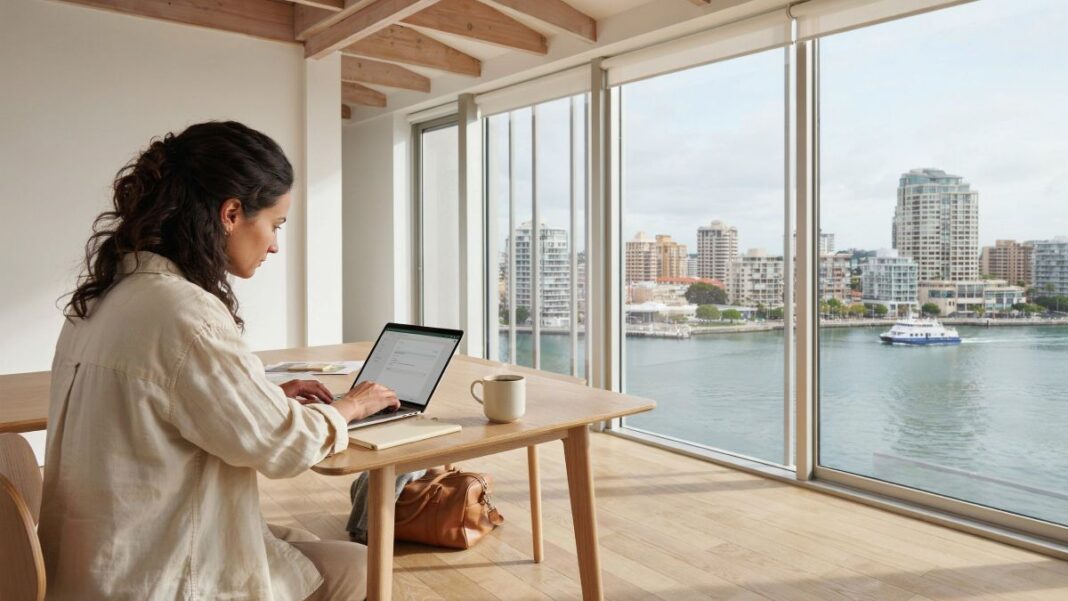

The rise of hybrid work models has permanently altered global travel, positioning Oceania cities at the forefront of the workation movement. Modern remote workers and business travellers increasingly demand specialised long-stay infrastructure, high-speed connectivity, and flexible corporate bleisure policies. As business and leisure blending stabilizes into a permanent travel segment, major urban centers across Australia, New Zealand, and the Pacific are restructuring accommodation and public services. This transition reflects a broader shift toward structured workplace flexibility, driving long-term economic strategy, urban tourism policies, and corporate travel management across Oceania’s key municipal hubs.
The Workation Maturity Curve: Strategic Infrastructure Evolution in Oceania
Advertisement
Advertisement
The transformation of business travel across Oceania has reached a critical structural milestone. Formerly treated as a transient post-pandemic adjustment, the practice of extending professional trips for personal extended stays—widely termed “bleisure” or “workations”—has matured into an established pillar of the region’s service and visitor economies. Corporate travel analytics indicate that business and leisure blending has permanently stabilized, requiring hotels, property developers, and urban planning authorities to restructure room inventories and public infrastructure for extended remote-working capabilities.
+———————————————————————————–+
| OCEANIA WORKATION MATURITY CURVE |
+———————————————————————————–+
Advertisement
Advertisement
| STAGE 1: AD-HOC ADOPTION (2020-2022) |
| * Unofficial trip extensions by employees |
Advertisement
Advertisement
| * Hotel Wi-Fi bottlenecking; basic desk setups |
| |
| STAGE 2: CORPORATE INTEGRATION (2023-2024) |
| * Formalisation of corporate bleisure and expense policies |
Advertisement
Advertisement
| * Growth of dual-purpose long-stay apartment units |
| |
| STAGE 3: INFRASTRUCTURE & POLICY MATURITY (2025-2026+) |
| * Municipal public Wi-Fi & precinct-wide smart connectivity |
| * Flexible corporate travel policies & automated expense splitting |
| * Specialized long-term digital nomad visas and local tax clarity |
Advertisement
Advertisement
+———————————————————————————–+
In urban centres such as Sydney, Melbourne, Brisbane, Auckland, and Wellington, municipal governments and tourism authorities are adapting to a workforce that prioritises mobility, work-life balance, and continuous digital access. The current landscape reflects a transition from basic hospitality offerings to fully integrated remote work infrastructure capable of supporting long-term stay corporate visitors and independent digital nomads.
Background: From Transient Stays to Long-Stay Workations
Historically, business travel in Oceania was defined by high-frequency, short-duration domestic and international transit. Executives and consultants relied on standard inner-city business hotels optimized for brief stays. However, as flexible working arrangements became institutionalized across public and private sectors, employee expectations evolved.
Corporate travelers began extending midweek business trips into weekend stays, leading to the rapid growth of extended-stay accommodation models. According to international tourism and transport benchmarks, the average length of stay for international business visitors added with leisure components in the Asia-Pacific region has increased markedly over pre-2020 averages. This structural pivot required municipal leaders to re-examine how public spaces, commercial precincts, and transport networks support extended, mobile productive activity.
Latest Official Developments and Government Initiatives
Advertisement
Advertisement
National and local administrative bodies across Australia and New Zealand have launched targeted initiatives aimed at supporting high-value extended-stay workers and business tourists.
Public Transport and Digital Infrastructure Upgrades
In New Zealand, Tourism New Zealand alongside local councils in Auckland and Wellington have prioritized digital connectivity and precinct integration. Urban development projects in Auckland’s Wynyard Quarter and Wellington’s central business district feature public-private investments in fiber-optic internet infrastructure, dedicated public co-working hubs, and integrated transit access tailored for extended visitors.
Similarly, in Australia, state agencies such as Destination NSW and Tourism and Events Queensland have updated their strategic frameworks to capture the growing bleisure travel market. Major metropolitan infrastructure programs have emphasized high-capacity public Wi-Fi networks, integrated multi-modal transit ticketing, and precinct-wide smart technology to support seamless digital connectivity.
+——————+———————————-+————————————+
| Jurisdiction | Public Lead Agency | Key Infrastructure Focus |
Advertisement
Advertisement
+——————+———————————-+————————————+
| Australia (NSW) | Destination NSW | Smart precinct digital connectivity|
| Australia (QLD) | Tourism and Events Queensland | Extended-stay regional hubs |
| New Zealand | Tourism New Zealand | Integrated public co-working zones |
| Pacific Hubs | South Pacific Tourism Org (SPTO) | Regional subsea fiber connectivity |
+——————+———————————-+————————————+
Advertisement
Advertisement
Pacific Island Nations Capitalising on Remote Mobility
In the broader Oceania region, island nations including Fiji and Vanuatu have expanded remote work policies and digital connectivity frameworks to attract extended-stay professionals. Fiji’s Ministry of Tourism and Civil Aviation, supported by regional telecommunication initiatives, has overseen significant subsea cable enhancements to ensure resilient, low-latency internet connectivity. These efforts are designed to ensure remote workers operating from coastal resorts or municipal centers in Suva and Nadi maintain high-speed connections to major financial hubs in Sydney, Singapore, and Tokyo.
Statistical Overview: The Growth of Extended Bleisure Stays
Official tourism statistics and industry travel management data confirm a permanent shift in how business trips are planned and executed.
Global and Regional Travel Trends
Data compiled by global travel management platforms and national statistical offices highlights key metrics driving the region’s workation economy:
Advertisement
Advertisement
- Trip Extension Rates: Over 65% of corporate travelers across major Asia-Pacific markets report extending business travel for leisure purposes at least once per year.
- Average Extension Duration: Business trip extensions now average between 2.3 to 3.5 additional nights, shifting standard 2-day business trips into multi-day hybrid stays.
- Hospitality Occupancy Impact: Major hotel operators, including Marriott International and Accor, report that extended-stay property formats and extended corporate bookings have generated a 20% increase in average stay length compared to traditional corporate travel patterns.
- Regional Growth in New Zealand and Australia: International visitor survey metrics highlight significant percentage increases in corporate travelers utilizing accrued annual leave or remote work days during business travel to Australia and New Zealand.
Key Metric Indicators (Regional Comparison):
• Extended Business Trips (% of total corporate trips): 68%
• Average Personal Extension Duration: 2.3 – 3.5 Days
• Average Stay Increase for Extended-Stay Properties: +20%
• Enterprise Employee Preference for Flexible Travel: 87%
Policy Implications and Corporate Frameworks
Advertisement
Advertisement
The institutionalization of extended workations has prompted significant policy adjustments across corporate travel governance, taxation, and labor law.
+———————————————————————————–+
| CORPORATE BLEISURE POLICY FRAMEWORK |
+———————————————————————————–+
| 1. Clear Expense Bifurcation |
| * Strict separation of corporate-covered days vs. employee-paid extensions |
Advertisement
Advertisement
| |
| 2. Duty of Care & Risk Management |
| * Delineated insurance coverage periods for work days vs. personal time |
| |
| 3. Tax and Legal Compliance |
| * Strict monitoring of host-nation stay limits (e.g., 183-day tax residency rule)|
Advertisement
Advertisement
| * Avoidance of Permanent Establishment (PE) risks for remote employers |
+———————————————————————————–+
Expense Bifurcation and Compliance
As organizations formalize their flexible corporate travel policy guidelines, finance and human resources departments require precise mechanisms to separate business expenses from personal leisure costs. Automated expense management systems now integrate AI-driven categorisation to ensure compliance with fringe benefits tax (FBT) rules in Australia and New Zealand.
Key Regulatory Rule: Under corporate travel policies, primary travel costs (such as round-trip flights) remain tax-deductible for employers provided the primary purpose of the trip remains business-related. However, additional accommodation, local transit, and daily stipends incurred during personal extension days must be individually funded by the employee to prevent tax non-compliance.
Duty of Care and Employer Liability
Advertisement
Advertisement
Employer duty of care responsibilities present complex legal questions during extended workation stays. Corporate risk management guidelines dictate that employer-provided travel insurance covers workers during official business days and scheduled duties. For personal leisure extensions, employees are required to secure secondary travel insurance riders or personal policy extensions to cover medical emergencies, transit delays, or leisure activities.
Industry Impact: Hotel Restructuring and Urban Real Estate
The real estate and hospitality sectors across Oceania’s principal cities have responded by restructuring assets to cater directly to extended-stay remote workers.
+———————–+———————————-+———————————–+
| Hospitality Model | Core Target Audience | Infrastructure Features |
+———————–+———————————-+———————————–+
Advertisement
Advertisement
| Traditional Hotel | Short-stay corporate executive | In-room desk, basic Wi-Fi |
| Hybrid Extended-Stay | Mid-to-long stay workationers | Ergo desks, fiber Wi-Fi, kitchen |
| Co-Living Apartments | Long-stay digital nomads | Shared co-working, community spaces|
+———————–+———————————-+———————————–+
Hotel Room Redesign and Extended-Stay Infrastructure
Hospitality brands are actively retrofitting traditional guest rooms into dual-purpose living and working suites. Key structural modifications include:
Advertisement
Advertisement
- Ergonomic Workstations: Replacing small vanity desks with height-adjustable ergonomic workstations, task lighting, and universal charging stations.
- Dedicated High-Speed Connectivity: Installing dedicated access points in individual rooms to guarantee high bandwidth for uninterrupted videoconferencing.
- Kitchenettes and Laundry: Expanding long-stay apartment-style suites equipped with full kitchen facilities and laundry amenities to support multi-week stays.
Integration of Co-Working Spaces
Leading hoteliers in Sydney and Melbourne have converted excess lobby and conference space into communal co-working lounges. These spaces offer tiered access, allowing hotel guests to utilize private phone booths, high-speed printing, and reservable meeting rooms. In many cases, hotels collaborate with established co-working operators to provide seamless pass-access to nearby corporate office facilities.
Economic Implications for Oceania Municipalities
The growth of extended workations provides a high-yield economic contribution to municipal economies throughout Oceania.
Municipal Economic Value Creation:
[Corporate Travel] —> [Extended Stay (2-4 Days)] —> [Increased Local Spend]
Advertisement
Advertisement
|
+————————————————————–+
|–> Direct Hospitality Revenue (Midweek to Weekend Smoothing)
|–> Local Retail, Dining, & Cultural Sector Injection
|–> De-seasonalisation of Regional Tourism Hubs
Off-Peak Revenue Stabilization
Advertisement
Advertisement
Traditionally, urban hoteliers faced lower occupancy rates during weekends, while leisure resorts experienced lower midweek demand. The blending of work and leisure helps bridge this gap. Extended corporate stays smooth out weekly occupancy fluctuations, sustaining steady revenue per available room (RevPAR) across municipal accommodation sectors.
Direct Local Economic Injection
Extended-stay visitors contribute directly to local economies beyond basic room night expenditure. Official economic impact assessments note that remote workers spending extra days in host cities generate significant secondary expenditure across food and beverage, retail, cultural institutions, and local transport networks. This spending pattern helps sustain local employment in hospitality and creative industries year-round.
Tourism, Business, and Public Impact
The rise of the long-stay remote worker is reshaping municipal tourism branding and local community dynamics across major Oceania destinations.
Shift in National Tourism Marketing Strategies
Advertisement
Advertisement
Tourism boards across the South Pacific are shifting marketing budgets toward capturing higher-value, longer-stay visitors rather than short-term high-density tour groups. Campaigns launched by state and national tourism organizations highlight remote working capabilities, high living standards, safety, and outdoor lifestyle amenities. The messaging frames metropolitan destinations not merely as places to visit, but as optimal operational bases for global professionals.
Public Infrastructure and Urban Livability
The influx of mobile professionals into urban precincts has encouraged local councils to invest in general urban livability. Upgrades to public parks with charging stations, expanded bike paths, public transit electrification, and vibrant pedestrian precincts serve dual purposes: enhancing everyday quality of life for residents while providing attractive environments for extended-stay international workers.
Expert and Official Perspectives
Official statements from government representatives and hospitality leadership reflect the strategic importance of long-stay corporate travel infrastructure.
Tourism and Commerce Leadership
Advertisement
Advertisement
Industry leaders note that corporate travel policies must align with modern workforce expectations to retain top talent. Representatives from Australian and New Zealand tourism industry bodies have repeatedly emphasized that flexible work travel options enhance employee satisfaction while maximizing the economic returns of business travel programs.
Municipal Planning Authorities
Urban planning authorities in cities like Brisbane and Auckland highlight that long-stay infrastructure investments build long-term economic resilience. By cultivating connected, walkable, and digitally advanced urban precincts, municipal governments ensure their local economies remain competitive in attracting global talent and international business investment.
Future Outlook: Sustaining Long-Stay Workation Infrastructure
As Oceania cities look ahead, the workation ecosystem will continue to evolve through technological integration, formalised regulatory frameworks, and sustainable urban development.
+———————————————————————————–+
Advertisement
Advertisement
| FUTURE OUTLOOK & ROADMAP |
+———————————————————————————–+
| SHORT-TERM (1-2 YEARS) |
| * Expansion of automated corporate travel platform expense splitting |
| * Standardization of hybrid extended-stay hotel room designs |
| |
Advertisement
Advertisement
| MEDIUM-TERM (3-5 YEARS) |
| * Municipal rollouts of 6G public connectivity in business-tourism districts |
| * Harmonization of Pacific-wide digital nomad visas and tax compliance protocols |
+———————————————————————————–+
Technological Integration and Automation
The next phase of infrastructure development will involve deeper integration of smart city technology and travel management automation. Corporate booking portals will increasingly features integrated tools that calculate real-time tax exposure, automate dual-invoice splitting between employers and employees, and offer verified eco-friendly extended accommodation choices.
Advertisement
Advertisement
Sustainable and Equitable Tourism Growth
Ensuring that extended workations benefit host communities without placing upward pressure on local housing markets remains a priority for regional urban planners. Through balanced zoning regulations and dedicated extended-stay developments, Oceania municipalities aim to maintain an equitable balance between supporting remote workers and preserving affordable housing for resident populations.