The order also opens the door for more retired medical workers to help give shots. Retired doctors, registered nurses, licensed practical nurses and nurse practitioners can join vaccination efforts run by state or local health departments, according to the order.
Those workers must hold New York licenses in good standing. The change lets them help even if their state registrations are not current, without facing civil or criminal penalties for that lapse.
The extension follows the death of a child in Lewis County, which officials called New York’s first known measles-associated death in more than 30 years.
That order directed state agencies to help local governments and eased purchasing rules so officials could obtain supplies and services without the usual steps.
The rules also expanded who could give the measles, mumps, and rubella vaccine, known as MMR. Certain emergency medical workers and midwives could give shots under set conditions, while pharmacists could vaccinate children ages 2 and older.
Nurses also gained more authority to order measles tests. All MMR shots must be reported to the proper immunization registry within 72 hours, but patients must still consent to vaccination, under the original order.
Wednesday’s order keeps those earlier measures in place through Dec. 4.
Risks and Symptoms
Measles spreads through the air and can infect about 90 percent of people who lack immunity and are exposed.
The virus can cause pneumonia, brain swelling, and lasting immune system harm, health officials have said.
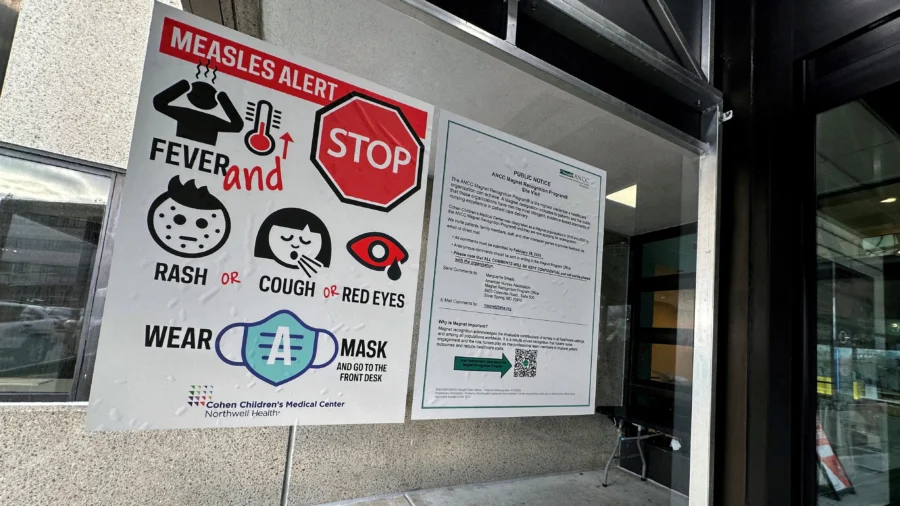
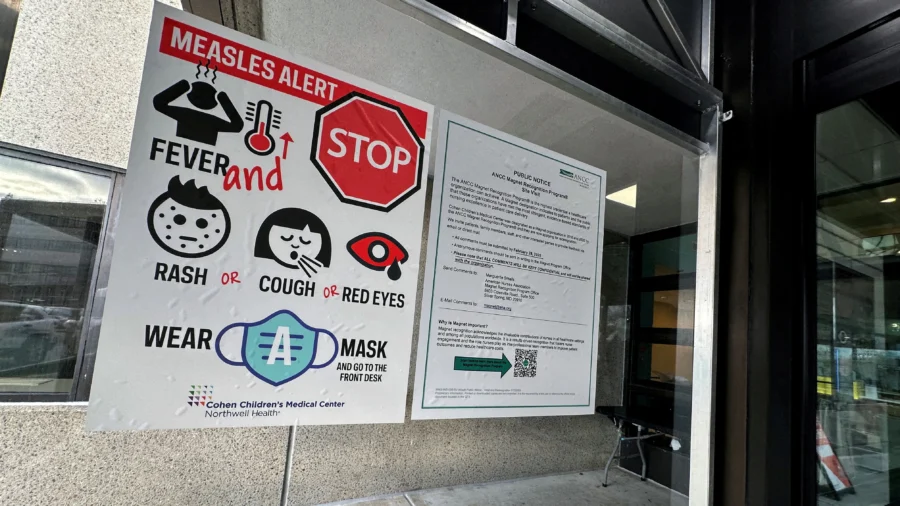
One MMR dose is 93 percent effective against measles, while two doses provide 97 percent protection. Symptoms include fever, cough, runny nose, and red, watery eyes, followed by a rash that often starts on the face and spreads downward.
People who think they have measles should call before going to a clinic or emergency room. Parents unsure about their children’s shots should contact a health care provider or local health department, state and county health officials said.