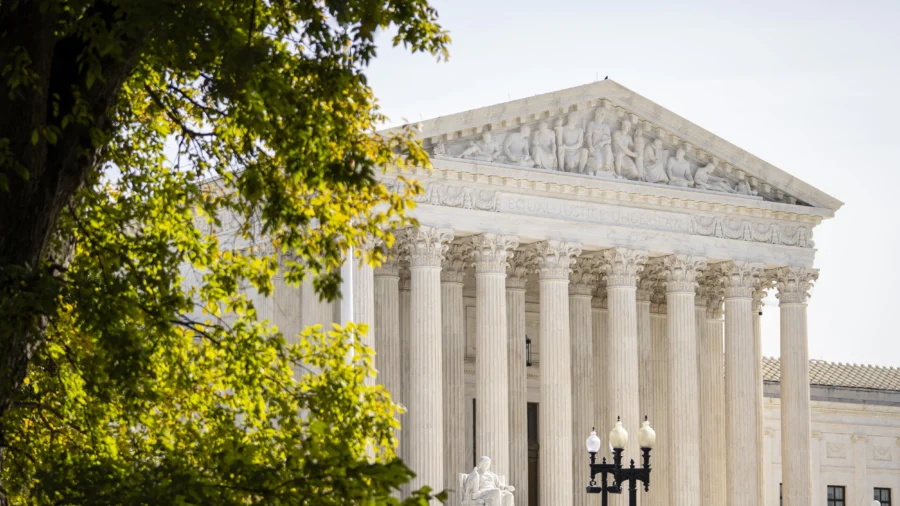
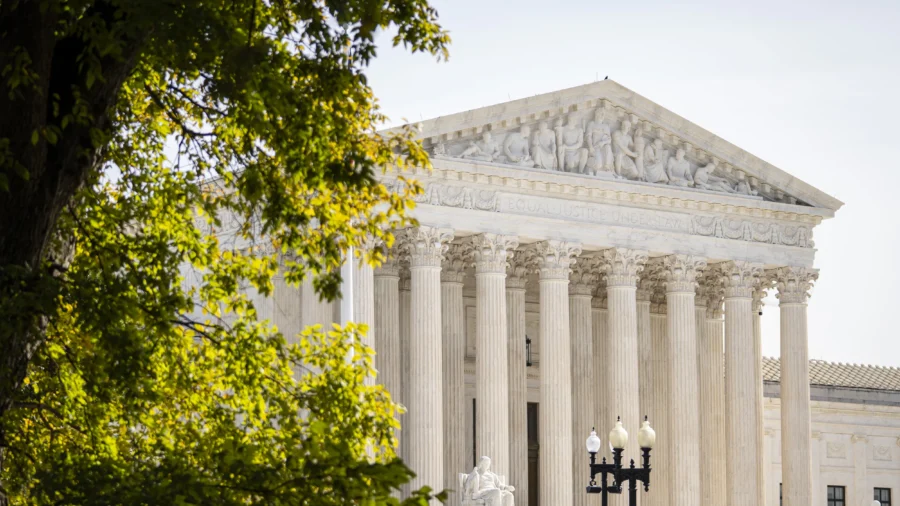
The Supreme Court on Nov. 16 declined to hear the Trump administration’s appeal of a ruling that blocked its effort to terminate federal grants that the administration characterized as supporting diversity, equity, and inclusion (DEI) programs.
The decision leaves in place a lower court order that reinstated funding for a class of University of California researchers.
In June 2025, Judge Rita Lin of the U.S. District Court for the Northern District of California issued a preliminary injunction ordering federal agencies to halt further terminations for affected University of California researchers, holding that the DEI-related cuts likely amounted to unconstitutional viewpoint discrimination under the Constitution’s First Amendment. The U.S. Court of Appeals for the Ninth Circuit affirmed her ruling in part, and the Trump administration appealed.
The grant cuts, made by federal agencies including the National Science Foundation and National Endowment for the Humanities, are part of President Donald Trump’s effort to curtail government support for research that the administration regards as promoting discrimination or gender ideology.
Trump signed executive orders in January 2025 targeting DEI and gender ideology, after which the foundation and the endowment cut off grants for researchers at the University of California system.
“The government can, without violating the Constitution, selectively fund a program to encourage certain activities it believes to be in the public interest, without at the same time funding an alternative program,” Sauer said, quoting Rust v. Sullivan (1991).
“In doing so, ‘the Government has not discriminated on the basis of viewpoint; it has merely chosen to fund one activity to the exclusion of the other,’” he said, citing another precedent that quoted Rust.
The Supreme Court has held that “ideologically driven attempts to suppress a particular point of view are presumptively unconstitutional in funding, as in other contexts,” the brief said.
In this case, federal agencies allegedly identified grant proposals that they believe reflect what the brief called “dangerous ideas” based on keywords in their titles and then cut off funding.
The brief said the government has not cited any case in which any court has held that the president and federal agencies are allowed to end grants awarded through a merit-based competitive process on the basis of the perceived viewpoint of the research.
Erwin Chemerinsky, dean of the University of California–Berkeley School of Law, and counsel for the researchers, hailed the new ruling, which he said means that the grants that were cut off based on the research’s perceived viewpoint must continue to be restored.
“I am obviously delighted that the court denied [the Trump administration’s petition],” Chemerinsky said.
A U.S. Department of Justice spokesperson said the department will continue to litigate against the preliminary injunction that prevents the cancellation of certain federal grants that support DEI initiatives within the University of California system.
“The Department will continue to advocate for the Executive Branch’s lawful authority to administer federal funding programs and for the termination of taxpayer-funded DEI initiatives,” the spokesperson told The Epoch Times.
Reuters contributed to this report.