Published on August 19, 2026 |
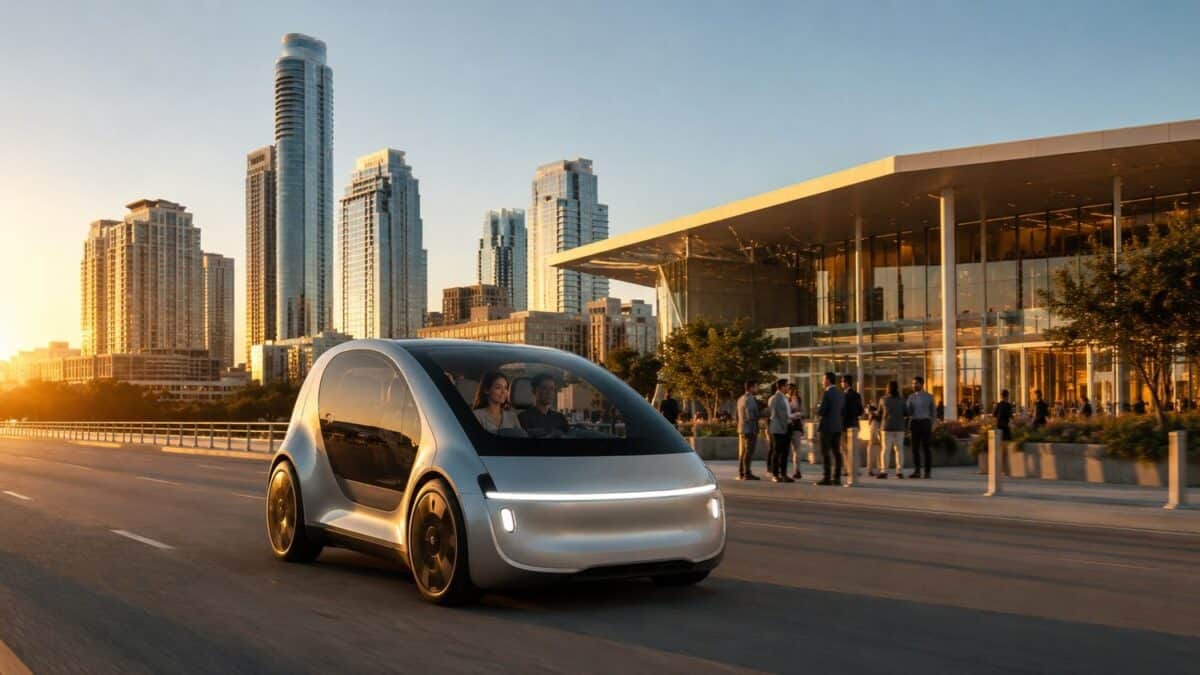
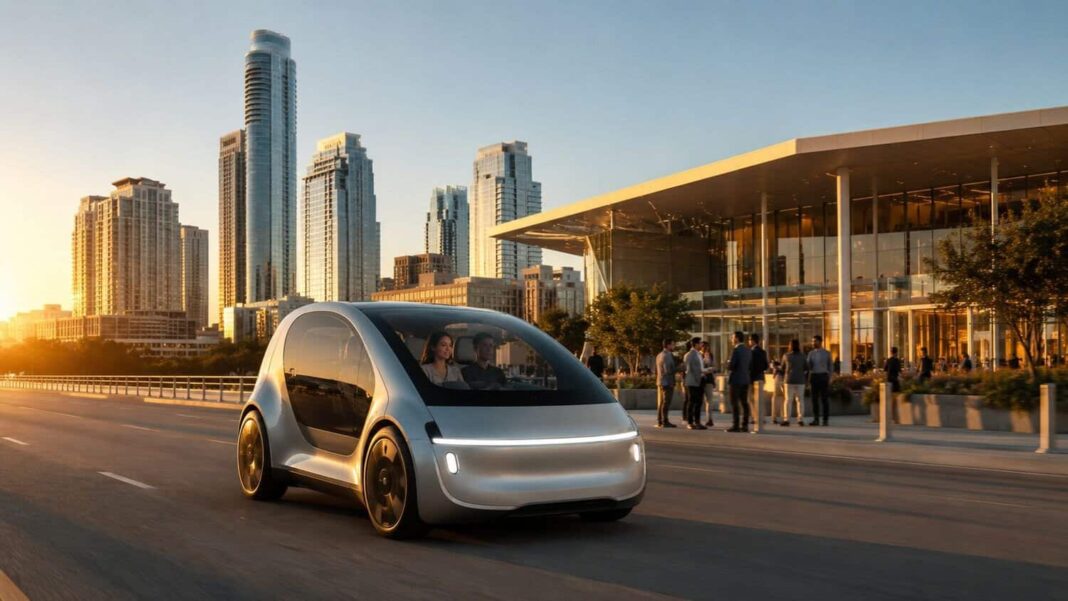
Image generated with Ai
With Tesla planning to debut their new Cybercab in Austin, Texas in 2026, the Texas capital has gained a new powerful map point for inventive technology tourism. The event will showcase Austinites’ enthusiastic embrace of new technologies while simultaneously enabling the promotion of business travel combined with the transport of the future. Tesla has said that 5 lucky winners (selected through a sweepstake running from August 17 to August 23) will get the opportunity for a free “ride” if they pay their own travel. Event attendees will be notified on August 25. Long before the event, Texas has been one of the top destinations for travel in the US. Facilitating traffic in and out of hotels and accommodations, that includes hosting tournaments for massive tech-based business meetings is already one of the bigger economic players in Austin.
Austin Secures a New Technology-Tourism Moment
Austin has spent decades building an international identity around music, creativity, entrepreneurship and technology. The Cybercab launch adds autonomous mobility to that destination story.
Tesla’s decision to stage the event at its Austin site places the city at the centre of a product launch with international relevance. The event concerns more than a new vehicle. It touches on how people may travel through cities, reach hotels, connect with transport hubs and experience destinations.
That makes the launch relevant to global travel journalism. Autonomous taxis could eventually influence airport transfers, corporate journeys, urban sightseeing and transport between visitor districts. However, those effects will depend on regulation, network coverage, vehicle availability, accessibility and public confidence.
Advertisement
Advertisement
The immediate tourism impact should not be exaggerated. Tesla has announced five sweepstake winners, but it has not published the complete guest list or projected attendance. No official estimate has been released for hotel nights, visitor expenditure or additional air traffic created by the event.
The strongest confirmed outcome is visibility. Austin will host an internationally watched mobility event linked to one of the world’s most recognisable electric-vehicle companies. That exposure reinforces the city’s appeal to technology professionals, investors, journalists and business travellers.
What Tesla Has Officially Announced
According to Tesla’s official Cybercab event and sweepstake rules, eligible participants can enter by completing Robotaxi rides between 17 and 23 August 2026. Every completed journey produces one entry. Cancelled rides do not count.
The promotion began at 7.37pm Central Time on 17 August and is due to close at 11.59pm on 23 August. Five winners are scheduled to be selected randomly and contacted by email on 25 August.
The prize provides the right to attend the Cybercab launch event in Austin. It does not provide a complimentary trip to the city.
Tesla states that transportation is the winner’s responsibility. The company also places taxes and other expenses on the recipients. This means winners travelling from another state may need to arrange their own flights, accommodation, meals, airport transfers, local transport and insurance.
Each selected participant has 24 hours after notification to claim the prize. Tesla can approach an alternative entrant if a winner cannot be contacted, misses the deadline or is unable to attend.
The company also reserves the right to change or cancel the event’s date, time or location. That condition is important for visitors considering non-refundable bookings.
A free postal entry route is available. Therefore, taking a paid Robotaxi journey is not the only way to participate. The rules state that no purchase is necessary and that payment does not increase a participant’s chances of winning.
Cybercab Sweepstakes at a Glance
| Event detail | Confirmed information | Travel relevance |
|---|---|---|
| Destination | Tesla’s Austin site, Texas | Positions Austin as the host destination |
| Entry period | 17–23 August 2026 | Creates a short period of increased Robotaxi interest |
| Ride entry | One entry for every completed ride | Connects everyday transport with event access |
| Free entry | Postal participation is available | A purchase is not required |
| Winners | Five | Direct prize-led visitor numbers are limited |
| Notification | 25 August 2026 | Leaves little time for travel arrangements |
| Claim period | 24 hours | Winners must respond and plan quickly |
| Prize | Right to attend the launch | Does not include a complete travel package |
| Transport costs | Paid by each winner | Flights and ground travel remain personal expenses |
| Other expenses | Winner’s responsibility | Accommodation, meals and taxes may apply |
| Eligibility | Adult permanent US residents who meet the rules | International visitors cannot enter |
| Event changes | Tesla may alter or cancel arrangements | Flexible bookings may be important |
Austin Technology-Event Tourism Builds on a Large Visitor Economy
The Cybercab launch arrives in a city with an established tourism and hospitality base.
Visit Austin, the city’s official destination marketing organisation, reported that Austin welcomed 30 million visitors in 2024. Visitor spending produced an estimated economic impact of US$11.1 billion, while the hospitality and tourism industry supported approximately 148,000 jobs.
These figures cover the wider visitor economy. They must not be presented as benefits created by Tesla or the Cybercab launch. Instead, they show that Austin already has the accommodation, dining, event and transport sectors required to receive large volumes of travellers.
Austin also hosted 21.76 million airport passengers during 2024, according to the tourism organisation’s annual meeting information. That scale of connectivity matters for business events. Product launches gain wider destination value when invited participants, journalists and commercial partners can access the host city efficiently.
Technology events can complement Austin’s existing leisure tourism. Visitors arriving for corporate reasons may extend their stays to experience music venues, local food, cultural districts, outdoor spaces and surrounding areas.
This practice, often described as combining business travel with leisure time, can distribute event expenditure across a broader range of local companies. Yet no official information confirms how many Cybercab guests will extend their visits.
Austin’s Tourism Performance in Official Context
| Official indicator | Reported period | Result | Institution |
|---|---|---|---|
| Visitors to Austin | 2024 | 30 million | Visit Austin |
| Visitor-generated economic impact | 2024 | US$11.1 billion | Visit Austin |
| Hospitality and tourism jobs supported | 2024 | 148,000 | Visit Austin |
| Airport passengers | 2024 | 21.76 million | Visit Austin |
| Austin airport passenger traffic | 2025 | 21,666,852 | Austin-Bergstrom International Airport |
| Change in airport traffic | 2025 versus 2024 | Down 0.44% | Austin-Bergstrom International Airport |
| Airport passengers | June 2026 | 2,102,853 | Austin-Bergstrom International Airport |
| Change in June traffic | June 2026 versus June 2025 | Up approximately 4.4% | Austin-Bergstrom International Airport |
| Citywide hotel supply | February 2026 | About 51,000 rooms | Visit Austin |
| Downtown hotel supply | February 2026 | About 15,000 rooms | Visit Austin |
The figures demonstrate scale but also show why careful interpretation is required. Austin’s tourism economy is large enough to absorb specialist events, while monthly and annual travel demand can move in different directions.
Austin’s Technology Identity Creates a Natural Event Platform
Austin’s tourism brand has traditionally drawn strength from live music, festivals, food, film and outdoor experiences. Technology now supplies another layer.
The region supports a large network of technology companies, start-ups, universities, research organisations and investors. That ecosystem makes Austin a logical setting for product launches and corporate gatherings.
Tesla’s presence gives the city a distinctive industrial and mobility connection. Cybercab is associated with vehicle manufacturing, artificial intelligence, autonomous driving and ride-hailing. An event combining those subjects can attract audiences beyond conventional car enthusiasts.
Potential professional visitor groups include:
- Autonomous-vehicle specialists
- Artificial-intelligence researchers
- Fleet and mobility executives
- Transport planners
- Investors and analysts
- Automotive suppliers
- Digital-platform companies
- Event organisers
- Technology journalists
- Travel-management professionals
Not all these groups have been confirmed as event attendees. They represent the broader markets to which an Austin-based Cybercab launch may appeal.
For destination marketers, this is significant. A city gains more resilient tourism demand when it serves several visitor segments. Austin can attract leisure travellers, festival audiences, convention delegates, sports visitors and corporate guests. Mobility innovation provides another reason for professional audiences to pay attention.
From Robotaxi Journeys to Experiential Event Marketing
Tesla’s sweepstake links a transport service with admission to an exclusive event. This turns the journey into both a mobility product and an entry mechanism.
Travel companies have long used loyalty rewards, prize draws and experiential benefits. Airlines offer flights or upgrades. Hotels provide stays or status benefits. Rail companies use ticket promotions. Attractions offer private access or behind-the-scenes experiences.
Tesla applies a similar method to Robotaxi rides. Every completed journey during the promotional period creates an additional sweepstake entry. This may encourage eligible customers to try the service or use it more frequently.
The promotion also creates a story around access. Rather than selling event tickets to the public, Tesla is offering five customers the opportunity to enter an exclusive environment.
For tourism marketers, experiential access can be powerful because it connects a physical journey with a memorable event. It may encourage social sharing and media interest.
Nevertheless, the rules also allow postal entry. Accurate coverage must not suggest that passengers can enter only by purchasing rides. It should also avoid claiming that the campaign has produced a confirmed tourism surge because Tesla has not released entry totals or visitor data.
The Launch Supports Austin’s Business-Events Profile
Product launches are a specialised part of the meetings and events economy. They require venues, technical services, security, transport, hospitality, communications and media support.
Austin has experience in serving these requirements through its hotels, production companies, restaurants, creative businesses and event professionals. A globally visible Cybercab event can demonstrate these capabilities even if attendance is controlled.
Visit Austin reported that the meetings sector contributes more than US$700 million in annual economic impact to the city. This wider figure is not a Cybercab estimate. It shows why meetings and corporate gatherings matter to Austin’s tourism model.
Technology events can help fill rooms outside traditional leisure peaks. They can also attract visitors with relatively high daily spending because companies often pay for accommodation, dining, transport and professional services.
The Cybercab event may support local commercial activity through:
- Guest accommodation
- Event catering
- Audio-visual production
- Temporary staffing
- Security services
- Local transportation
- Restaurant spending
- Media production
- Corporate hospitality
- Event logistics
Tesla has not disclosed which suppliers are involved. These categories should therefore be treated as standard event-economy opportunities rather than confirmed contracts.
Austin’s Hotel Sector Has Room to Serve Specialist Events
Visit Austin recorded approximately 51,000 hotel rooms citywide in February 2026, including about 15,000 rooms in the downtown area.
The organisation said Austin’s total market supply expanded by 51% between 2015 and 2025. Downtown room capacity rose by 77% during the same period.
Hotels under construction were expected to lift the citywide total to 52,652 rooms by the end of 2026. Downtown inventory was projected to reach 15,984 rooms.
This expansion supports Austin’s ability to serve business events and major leisure periods. It also increases competition among hotels for group bookings, corporate accounts and high-value events.
A technology launch can benefit luxury properties, select-service hotels, extended-stay accommodation and serviced apartments. Different attendees have different requirements. Corporate leaders may favour premium properties, while technical teams and contractors may need longer stays.
The five sweepstake winners will make their own arrangements because Tesla is not covering transport. The official rules do not say whether accommodation is included. Travellers should not assume that it is.
The wider event guest list remains unknown. Consequently, no credible forecast can be made about occupancy, average daily rates or room-night demand directly associated with the launch.
Airport Connectivity Supports Technology-Led Travel
Austin-Bergstrom International Airport is the principal aviation gateway for the destination. It handled 21,666,852 passengers during 2025, according to the airport’s official year-end report. That represented a decline of 0.44% from 2024.
The small annual reduction did not remove Austin’s status as a major air market. Several carriers recorded growth during the year, including Delta Air Lines, United Airlines, British Airways, Aeromexico, Lufthansa, KLM and Copa Airlines.
Passenger activity strengthened in parts of 2026. June set a monthly airport record with 2,102,853 arriving and departing passengers. That total was approximately 4.4% higher than in June 2025.
The official Austin-Bergstrom airport activity reports allow travellers and industry professionals to follow monthly traffic performance.
Austin’s air links help bring domestic and international delegates into the city. Direct international services also improve its ability to compete for global business gatherings.
The sweepstake itself is restricted to eligible US permanent residents physically located in an eligible jurisdiction when entering. International travellers cannot enter. However, that restriction does not prevent the wider Cybercab launch from attracting international media or invited industry guests.
No official passenger forecast has been issued for the launch. It would therefore be misleading to connect a particular rise in airport traffic directly to the event.
Aviation Developments Expand Austin’s International Reach
Austin’s global accessibility is continuing to develop. The airport’s 2025 traffic figures showed passengers travelling with British Airways, Lufthansa, KLM, Air Canada, Aeromexico, Copa Airlines, VivaAerobus and other operators.
In July 2026, Southwest Airlines announced a new nonstop international service connecting Austin with San José, Costa Rica. Delta later announced Austin’s first nonstop service to Paris-Charles de Gaulle, planned as a seasonal daily route from March 2027.
These routes are not part of the Cybercab event. They nevertheless contribute to the long-term environment in which Austin technology-event tourism can grow.
Direct international air services reduce the need for connecting flights. This can make Austin more attractive to conference planners, investors and companies comparing destinations for global events.
Airlines benefit when business events create concentrated travel demand. Premium cabins, flexible tickets and loyalty traffic can be particularly important in corporate markets.
However, route success depends on year-round demand rather than a single launch. Austin must continue attracting leisure travellers, business passengers, conventions and residents to sustain connectivity.
Airport Expansion Prepares Austin for Future Demand
Austin-Bergstrom is undertaking a multiyear expansion programme known as Journey With AUS. The city has described the programme as an estimated US$5 billion investment in airport modernisation and capacity.
The development is intended to transform Austin-Bergstrom from a medium-sized airport into a larger facility capable of serving future passenger and airline demand.
Airport growth matters for major events because congestion can weaken the visitor experience. Long queues, limited gates, crowded roadways and baggage delays may affect how delegates judge a destination.
Infrastructure improvements can strengthen:
- Terminal capacity
- Passenger processing
- Airline operations
- Baggage movement
- Gate availability
- Ground transport
- International connectivity
- Accessibility
- Retail and dining provision
Construction can also create temporary disruption. Visitors should check current airport guidance before travelling, particularly during busy periods.
The Cybercab launch does not depend on the completion of the whole airport programme. The investment instead demonstrates Austin’s long-term preparation for continued aviation and visitor demand.
Autonomous Mobility Has Direct Tourism Relevance
Cybercab is designed for autonomous ride-hailing. If deployed at scale, this type of vehicle could influence how visitors navigate unfamiliar cities.
Tourists commonly need transport between airports, hotels, event venues, restaurants, shopping areas and attractions. A reliable autonomous taxi could provide an additional option for those who do not want to rent a vehicle or understand a local public-transport system.
Potential tourism applications include:
- Airport-to-hotel transfers
- Hotel-to-convention journeys
- Evening travel after events
- Direct trips between visitor districts
- Transport for travellers unfamiliar with local roads
- App-based booking and payment
- Late-night mobility where services are available
- Connections beyond fixed public-transport routes
These are possible applications, not confirmed services promised by Tesla for every destination. Cybercab’s practical value will depend on deployment areas, operating hours, fares, fleet size, waiting times and local permissions.
It will also depend on whether the vehicles can handle common visitor requirements, including luggage, family groups and mobility equipment.
Regulation Will Shape the Visitor Experience
Texas law gives the state a central role in the regulation of autonomous vehicles. Austin cannot independently create a completely separate citywide regulatory system for the technology.
The City of Austin’s autonomous-vehicle guidance explains that the Texas Department of Motor Vehicles has authority over Level 4 and Level 5 autonomous operations under legislation passed in 2025.
Its responsibilities include authorising operations, setting safety and insurance standards and enforcing compliance. Austin continues to work with the state and autonomous-vehicle companies as services enter the local market.
The city also maintains a documented incident dashboard using reports received by municipal departments and Austin 3-1-1. Austin warns that these reports are not validated and may not include every incident.
This distinction matters. Social-media posts may generate strong reactions, but official reporting must separate verified collision information from unconfirmed public reports.
For travellers, the regulatory framework affects confidence. Visitors need to know who oversees the service, what happens during a technical interruption and how support can be contacted.
Safety Will Determine Tourism Adoption
A new mobility service can attract curiosity, but tourism adoption depends on trust.
Visitors may be less familiar with local streets, emergency procedures and transport rules than residents. An autonomous ride must therefore provide simple guidance.
Tesla says Robotaxi passengers can request assistance through the vehicle touchscreen or app. Riders can also choose a pull-over function, allowing the vehicle to stop at a safe location. Emergency situations require contact with 911.
For tourists, essential safety information includes:
- How to identify the correct vehicle
- How to unlock and enter it
- How to confirm the route
- How to contact support
- How to stop the journey
- What to do during a collision
- Where the vehicle is permitted to operate
- Whether passengers can change destinations
- What happens if a phone loses power or connectivity
The launch event may increase public awareness of Cybercab, but only sustained operational performance can establish visitor confidence.
Tourism businesses will also need clear information before recommending autonomous services to guests.
Accessibility Remains a Critical Travel Question
Accessibility is one of the most important tests for any future visitor-transport system.
A driverless vehicle may offer greater independence to some passengers. It may remove the need to communicate directions verbally. App-based climate and journey controls may also support a more personalised experience.
At the same time, the absence of a driver can create challenges for travellers who need help entering the vehicle, loading luggage or responding to an unexpected stop.
Important questions include:
- Can wheelchair users board easily?
- Is mobility equipment accommodated?
- Are controls accessible to passengers with limited reach?
- Does the app support screen readers?
- Are audio and visual journey alerts available?
- Can remote staff assist passengers with hearing difficulties?
- Is there space for large suitcases?
- Can older travellers obtain simple human support?
Tesla’s sweepstake rules do not answer these questions. Tourism reporting should therefore avoid declaring Cybercab universally accessible until detailed specifications and operating procedures are available.
International Visitors Are Excluded From the Promotion
The sweepstake is open only to eligible permanent residents of the 50 US states and Washington, DC, who are physically located within the permitted area at entry.
Participants must have reached the age of majority in their jurisdiction. That is generally 18, although the threshold is 19 in Alabama and Nebraska and 21 in Mississippi.
Residents of US territories are excluded. International tourists are also unable to enter, even if they are visiting Austin during the promotional period.
This restriction limits the promotion’s direct value as an international tourism campaign. The competition is designed for a domestic audience.
However, the launch can still create global destination visibility. International news coverage may show Austin as a centre for autonomous transport and technology development.
That distinction is crucial. The sweepstake has a domestic participation base, while the event itself has an international communications reach.
Winners Face Real Travel Costs
The most important practical issue for winners is that event access does not equal a free holiday.
Tesla places transportation costs entirely on each recipient. A winner travelling from another state may need to purchase a last-minute airfare or make a long road journey.
Other possible expenses include:
- Hotel accommodation
- Airport parking
- Ground transport
- Meals
- Travel insurance
- Baggage charges
- Local taxes
- Personal incidentals
- Changes to existing bookings
The rules value the items given to each attendee at US$25. They do not provide a cash alternative or make the prize transferable.
Winners have only 24 hours after notification to claim their places. This creates a compressed planning period.
Travellers should review flexible booking options. Tesla reserves the right to change the event’s date, time or location. The company also disclaims responsibility when a winner cannot attend for reasons outside its control.
These conditions should appear prominently in any consumer-focused report about the promotion.
Hotels and Restaurants Could Benefit From Event Visitors
Events generate spending beyond their venues. Guests may book rooms, eat locally, use transport and visit nearby attractions.
Austin has a broad hospitality market capable of serving technology-event visitors. Downtown hotels provide access to restaurants, nightlife and business districts, while properties near the airport and Tesla site may appeal to guests prioritising convenience.
Restaurants may benefit from pre-event meetings, corporate dinners and informal networking. Cafés and bars may receive additional business from journalists, production teams and delegates.
Local transport operators could serve visitors travelling outside Robotaxi coverage or carrying luggage.
The size of any benefit remains unmeasured. Tesla has not released attendance figures, hotel partnerships or visitor-spending forecasts.
It is credible to identify the sectors that normally benefit from events. It is not credible to claim a confirmed financial windfall without evidence.
Tour Operators Can Develop an Innovation-Led Austin Narrative
Traditional city tours focus on history, architecture, culture and food. Austin’s technology story offers another layer for specialist groups.
Travel planners could combine recognised visitor experiences with approved technology and business locations. Possible itinerary themes include entrepreneurship, university research, electric mobility, creative industries and urban development.
Any tour involving private industrial sites would require permission. The Tesla factory should not be described as a public tourist attraction unless official visitor access is offered.
Tour operators can still use the wider innovation narrative responsibly. They may connect conferences with cultural districts, local restaurants, live music venues and regional excursions.
This approach can encourage delegates to stay longer and spread spending across more businesses.
The Cybercab launch strengthens the story, but it does not automatically create a factory-tour product.
Local Businesses Gain Visibility From Austin’s Global Exposure
Destination exposure is not limited to direct event attendance. International coverage can introduce Austin’s hotels, restaurants and attractions to audiences who have not considered the city before.
This is particularly valuable when a news event aligns with the destination’s existing identity. Austin already has strong associations with creativity and technology. Cybercab adds a futuristic mobility element without requiring a complete redefinition of the city.
Local companies may benefit through:
- Increased destination searches
- Future corporate enquiries
- Media visits
- Conference interest
- Supplier opportunities
- Restaurant bookings
- Hotel demand
- Extended delegate stays
These outcomes cannot be guaranteed or quantified from the available evidence. Their importance lies in long-term destination positioning rather than an immediate visitor count.
Government Tourism Programmes Support Event Development
Texas uses several programmes to strengthen tourism and attract events. The Office of the Governor operates Travel Texas and administers tourism research, marketing and industry-development initiatives.
Official state figures show that Texas welcomed 62 million travellers from outside the state in 2024. More than 67 million overnight trips were also made by Texas residents within the state.
Visitor spending reached US$97.5 billion. The wider economic impact was estimated at US$199.5 billion, while travel and tourism supported 1.3 million jobs and produced US$9.2 billion in state and local taxes.
These are statewide figures. They must not be presented as Austin-only results or as benefits of the Cybercab event.
Texas also operates an Event Trust Funds programme. It can help eligible communities cover certain costs associated with qualified events when the required process and tax conditions are satisfied.
There is no official confirmation in the reviewed material that the Cybercab launch receives such support. The programme is relevant as background to the state’s wider strategy for attracting significant events.
Austin’s Convention Infrastructure Is Changing
Austin is rebuilding and expanding its convention centre through the UnconventionalATX project.
City material describes a planned increase in rentable space from approximately 365,000 square feet to 620,000 square feet. Completion is expected in 2029.
The project is designed to allow Austin to host larger gatherings and several events simultaneously. It is expected to improve visitor spending and hotel occupancy-tax generation.
Official projections have placed the expanded centre’s annual economic impact above US$700 million. Those projections concern the completed convention-centre development, not the Cybercab launch.
The new facility is also intended to achieve zero-carbon certification. This supports Austin’s effort to combine event growth with stronger environmental performance.
Cybercab’s launch at Tesla’s own site does not rely on the convention centre. Yet both developments support a broader message: Austin is investing in its capacity to attract future-facing business events.
Sustainability Creates Opportunity and Scrutiny
Cybercab is an electric vehicle intended for shared autonomous mobility. That creates a potential connection with lower-emission destination transport.
Electric vehicles do not produce tailpipe emissions. When they replace petrol or diesel journeys, they can improve local air quality.
The wider environmental impact is more complex. It depends on the electricity supply, battery production, vehicle life, occupancy and the distance travelled without passengers.
Autonomous fleets could reduce private-car dependence if they complement public transport. They could also increase congestion if large numbers of empty vehicles circulate while waiting for customers.
Tourism organisations should therefore avoid simple claims that driverless electric taxis are automatically sustainable.
Credible assessment should consider:
- Energy sources
- Passenger occupancy
- Empty repositioning
- Links with public transport
- Road congestion
- Vehicle manufacturing
- Battery recycling
- Accessibility
- Pricing
- Urban land use
Austin’s technology-event profile will be stronger when innovation is assessed transparently rather than promoted without scrutiny.
What Airlines and Airports Should Watch
Airlines should monitor whether technology events produce repeatable demand rather than a single increase around launch dates.
Austin’s corporate market can support premium travel, flexible fares and loyalty activity. International routes can benefit when technology companies bring executives and suppliers into the city.
Airports should consider how autonomous vehicles interact with existing ground transport. Important issues include:
- Pick-up and drop-off zones
- Passenger identification
- Kerbside congestion
- Commercial permits
- Accessibility
- Emergency response
- Data sharing
- Luggage handling
- Integration with terminals
Tesla has not announced Cybercab service at Austin-Bergstrom in connection with the launch. Any suggestion that event visitors will use Cybercab for airport transfers should therefore be framed as a possible future application, not a current promise.
What Hotels Should Watch
Hotels may eventually integrate autonomous transport into guest services if networks become widely available.
Potential functions include pre-booked transfers, direct venue journeys and transport links shown inside hotel apps. Properties may also create designated autonomous-vehicle loading areas.
Before recommending a service, hotels will need clear information about:
- Operating zones
- Passenger support
- Insurance
- Accessibility
- Luggage capacity
- Child-travel rules
- Cleaning fees
- Cancellation policies
- Emergency procedures
For the immediate event, hotels should focus on verified bookings rather than assuming a citywide surge. Only five public sweepstake places have been announced.
What Travellers Need to Know
Travellers interested in the sweepstake should read the complete rules before entering.
The core points are simple:
- The promotion runs from 17 to 23 August 2026.
- Completed Robotaxi rides earn entries.
- Cancelled rides do not earn entries.
- Postal entry is available without purchase.
- Entrants must satisfy US residency, location and age rules.
- Five winners are due to be selected.
- Notification is scheduled for 25 August.
- Winners have 24 hours to claim.
- Transportation is not included.
- Additional expenses remain the winner’s responsibility.
- The prize cannot be transferred.
- Tesla may alter or cancel the event arrangements.
Anyone selected should confirm the event details before paying for flights or accommodation. Flexible and refundable bookings may reduce financial exposure.
Economic Impact Must Be Reported Carefully
The headline reflects rising attention around Austin technology-event tourism, not a measured increase in visitor numbers caused by Cybercab.
No official institution has published an economic-impact assessment for the launch. Tesla has not disclosed total attendance, supplier spending, occupied hotel rooms or guest origin markets.
A responsible economic analysis can identify how events usually distribute money. It cannot assign a figure without data.
Potential direct spending includes accommodation, meals, transport and event operations. Indirect effects can arise when local suppliers purchase goods and services. Induced effects occur when workers spend income supported by that activity.
These categories require formal modelling. Until such research appears, the event’s economic impact should remain unquantified.
The reliable conclusion is that the launch provides destination exposure and a specialist business-event opportunity within an already substantial tourism economy.
Employment Effects Are Broader Than the Launch
Austin’s hospitality and tourism industry supported approximately 148,000 jobs in 2024, according to Visit Austin.
These jobs span hotels, restaurants, entertainment, attractions, aviation, transport and event services.
A single product launch may create temporary assignments or supplier work, but no official employment figure has been issued for Cybercab.
The longer-term mobility sector could support jobs in fleet maintenance, software, remote assistance, cleaning, charging, safety, customer support and infrastructure. Automation could also change some conventional driving roles.
No credible conclusion about net employment can be drawn from the event announcement alone.
Travel-sector reporting should distinguish three separate issues:
- Existing tourism employment in Austin
- Temporary work associated with the launch
- Long-term labour changes created by autonomous mobility
Only the first currently has a published city-level figure in the available official material.
Austin’s Future Outlook Rests on Confirmed Infrastructure
Austin’s long-term opportunity is supported by official developments already under way.
The airport is expanding through Journey With AUS. Hotel capacity is increasing. The convention centre is being rebuilt. Airlines are adding or announcing international routes. The city continues working with state authorities and autonomous-mobility companies.
Tesla reported in its second-quarter 2026 update that Cybercab production had started. Engineering tests of production vehicles had also begun on public roads, and employee journeys had taken place on the Texas factory campus.
The company said Austin’s unsupervised Robotaxi operating area had expanded. These developments provide the operational background for the launch.
They do not establish a timetable for universal Cybercab access across Austin. They also do not confirm airport service, tourism partnerships or international deployment.
The official outlook supports continued growth in Austin’s technology and event capabilities. It does not justify forecasts beyond published programmes.
Why the Cybercab Launch Matters to Global Tourism
Tourism depends on movement. Any technology designed to change urban mobility deserves attention from the sector.
Cybercab could eventually influence how visitors plan airport transfers, reach attractions and move through unfamiliar cities. It may also affect taxi companies, rental agencies, public transport and hotel concierge services.
Austin’s role as the launch location adds destination significance. The city is not merely appearing in the background of a corporate announcement. It is serving as the operational setting for an autonomous-mobility development.
That relationship strengthens Austin technology-event tourism. It connects the city’s visitor economy with advanced manufacturing, artificial intelligence and next-generation transport.
The immediate effect is primarily reputational. The longer-term effect will depend on verified deployment, public acceptance, safety performance and the ability to serve real traveller needs.
Conclusion
Austin’s cybertaxi service launch has started a new chapter for Austin’s technology-driven tourism. It links Austin’s visitor economy, and its innovation with the rapidly changing global economy. Tesla’s giveaway offers 5 winners the chance to attend the event, but they must pay for their travel and associated excursions. This development has the potential to create a positive reputation for Austin’s innovation and draw more focus on hotels, airlines, and restaurants. It also draws focus on the suppliers for events. Despite the positive outlook, there has been no record of an official visitor surge or economic boon. The positive outlook is driven by Austin’s large tourism sector, growing airport, and increasing hotel supply as well as its booming tech sector. The positive outlook is also due to safe deployment, accessibility, adequate regulation, and confirmed transport partnerships for visitors.
Advertisement
Advertisement