One of the UK’s biggest defence contractors has blamed Brexit and Covid among a catalogue of problems to beset an important contract for the Royal Navy, which led its annual profits to plunge.
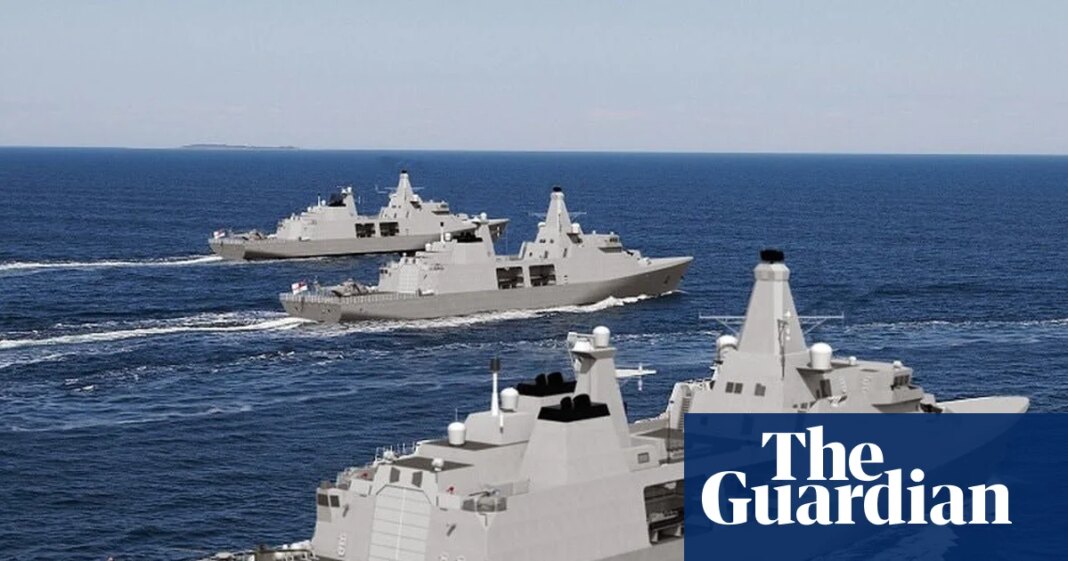
Profits at Babcock International fell by almost a fifth in the year to the end of March, as the firm reported a £140m charge on its contract to build five Type 31 frigates for the Royal Navy.
The company, which reported a 19% fall in underlying operating profits to £293.3m, said the contract it won in 2019 only had “certain escalation clauses” to protect it from cost increases related to building the frigates.
“It provided limited protection from the macroeconomic changes of recent years relating to Brexit, Covid, raw material prices and UK labour shortages, which have significantly increased our costs,” the company said. “This has resulted in the contract being loss-making, together with increases in estimated costs due to the maturing of the design and the forecast cost of labour.”
The company had to make late-stage changes to the designs of the first two ships in the five-ship fleet.
Shares in the company fell more than 3% on Monday morning.
Defence contractors have been waiting for the government to publish its long-awaited defence investment plan. Earlier this month, the defence secretary, John Healey, resigned amid a row with Keir Starmer over the plan.
But Babcock said: “While some governments are balancing these priorities against fiscal constraints, as reflected in the delayed publication of the UK’s defence investment plan, the long-term trend remains clear.
“Demand is increasingly structural, driven by the need for more advanced, adaptable and integrated capability.”
Babcock published an “illustrative” scenario of the impact on the costs to build the frigates if there are changes to its current estimates. The company said that a 10% increase, or decrease, in the estimated production hours would increase, or decrease, its losses by £29m.
A six-month delay to its production schedule would increase the loss on the contract by £15m. And a 10% increase, or decrease, in the average labour rate would increase, or decrease, the loss by £34m.
Babcock said that its operations in the nuclear and aviation sectors had performed strongly and that, setting aside the loss-making Type 31 contract, the company increased operating profits by 19% to £433m.
“Against an increasingly uncertain geopolitical backdrop, Babcock has delivered continued strategic and operational progress,” said David Lockwood, chief executive at Babcock, who is to leave the business at the end of the year.
“We achieved strong underlying growth, improved margins and robust cash generation, while securing important contract wins that further strengthen our position in defence and nuclear markets, where long-term demand is increasingly structural.”
Babcock has £9.8bn in forward contracts, down from £10.4bn a year ago, with new wins including an expansion of its partnership with HII, the largest military shipbuilder in the US, to include a nuclear submarine programme.
Aarin Chiekrie, an analyst at Hargreaves Lansdown, said Babcock played down the long-term impact of the frigate contract, and added: “Governments around the globe are becoming more focused on improving their defensive capabilities, and Babcock looks well placed to benefit from this long tailwind and capture some of this extra spending.”