Spain has been warned that its irregular migrant amnesty risks repeating a migration crisis similar to that seen in 2015. Sweden‘s Prime Minister, Ulf Kristersson, said the Spanish government’s plan was a “very bad idea” and it had caused a “pretty big outcry” at a recent meeting of EU leaders.
The Spanish government’s amnesty is for immigrants without residency permits who could prove they were living in the country for at least five months and arrived before January 1 this year. More than one million people applied before the deadline ended in July.
The influx sparked a diplomatic row between Spain and Italy as Madrid on Saturday announced border controls on Italian travellers in response to Rome’s decision to impose sanctions on visitors from Spain.
Leaders have criticised Spanish Prime Minister Pedro Sanchez for policies they suggested were responsible for the sudden arrival of 72,000 migrants from Morocco.
Most of the migrants have since returned, but more than 80 died, including some who drowned or were trampled in a stampede to cross a breakwater barrier.
Mr Kristersson told the Financial Times: “It symbolises that we still have to be very, very careful not to act in a way that could even come close to what happened in 2015.”
Sweden’s PM, commenting on the EU leaders’ meeting, added: “I think Spain got the message . . . but it shows the vulnerability.”
He said Spain’s amnesty created a possibility for migrants to travel across the 27-member bloc, which operates a visa-free travel area known as Schengen.
The Swedish centre-right leader, who is seeking re-election in September, said the possible movement of migrants from southern Europe to northern EU member states would be “specifically damaging”.
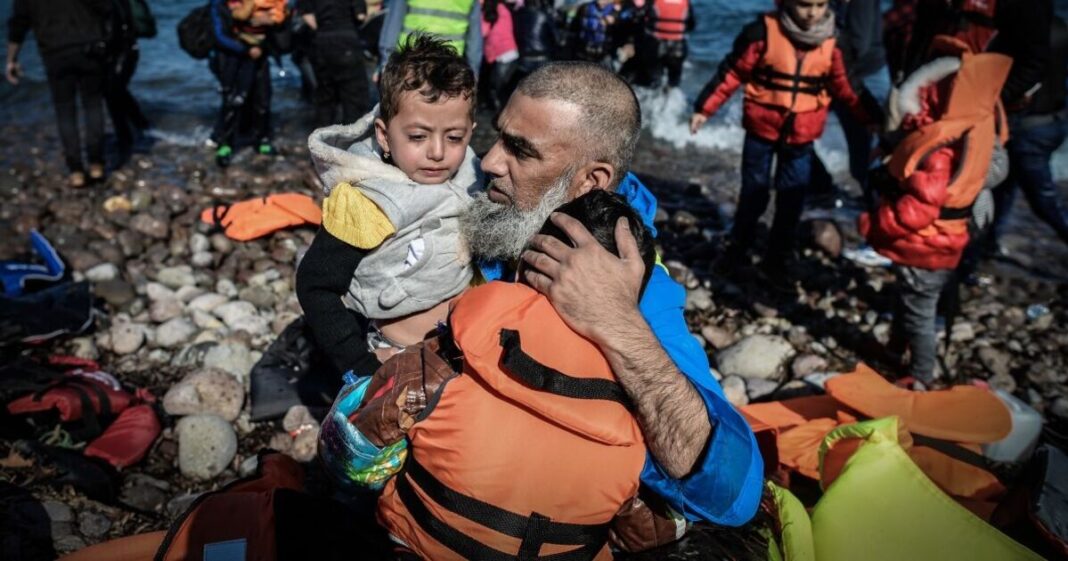
More than 1.3 million people arrived in Europe in 2015. Most were fleeing war and poverty in countries including Iraq, Syria and Afghanistan. Thousands died trying to reach Europe, with hundreds drowning in the Mediterranean.
Mr Sánchez said the amnesty is “an act of justice and a necessity”. He argued that those already living and working in Spain should “do so under equal conditions” and pay taxes.
With its ageing population, Spain needs more workers to maintain its growing economy and contribute to social security. Madrid insisted that its policy has the support of trade unions and businesses.
The granting of amnesty to migrants living in Spain without authorisation has taken place six times between 1986 and 2005.