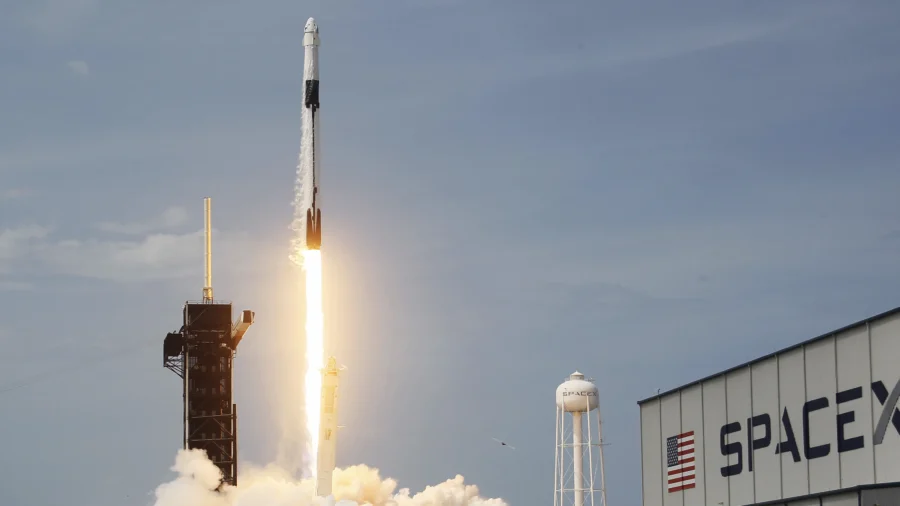
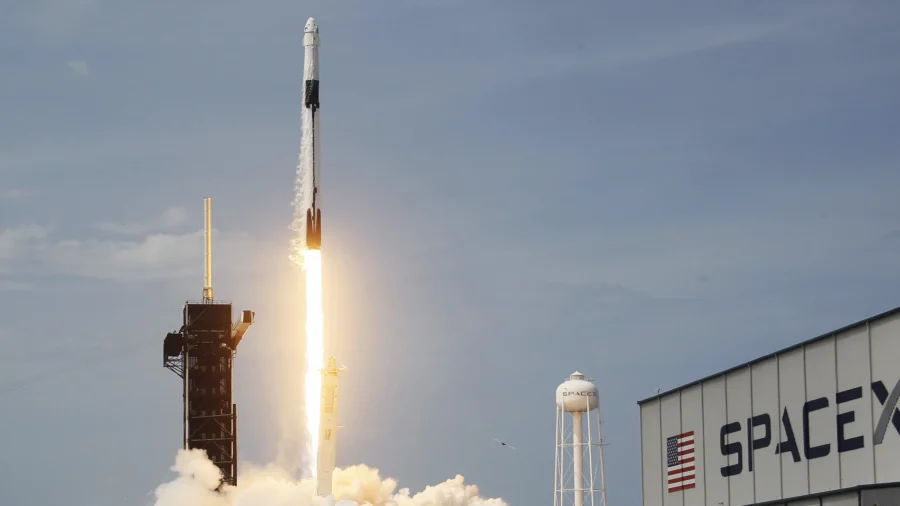
Federal regulators have authorized SpaceX to deploy up to 1 million satellites as data centers in orbit, paving the way to move some of the nation’s artificial intelligence computing infrastructure beyond Earth.
The Federal Communications Commission (FCC) said Wednesday that the decision marks its first authorization of a constellation of space-based data centers.
The system, dubbed Starmind, would process large amounts of data for use on Earth as demand for AI computing rapidly grows.
FCC Chairman Brendan Carr said the approval was a critical step in securing the United States’ leadership in developing advanced AI.
“By moving compute capacity beyond Earth, SpaceX and the many competitors working on their own orbital data centers are meeting the moment,” Carr said.
“This is the kind of American ingenuity that can unite our strengths in space and advanced technology, reinforce our economic leadership, and expand prosperity here at home.”
SpaceX CEO Elon Musk welcomed the approval. “This will be a great asset to America and the world,” he wrote on X.
The FCC said the authorization also permits the radiofrequency links that operators need for backup and emergency telemetry, tracking, and command across the satellite system.
Moving Data Centers Into Space
On Jan. 30, SpaceX submitted the proposal for a network of computing satellites that would harness power from sunlight and release waste heat into space through radiators.
The company described it as the “first step towards becoming a Kardashev II-level civilization—one that can harness the Sun’s full power.”
A Kardashev II civilization is advanced enough to capture and use all the energy its star gives off, on a scale proposed by Soviet astronomer Nikolai Kardashev in 1964 for ranking civilizations by how much energy they can use.
The proposal’s appeal lies partly in avoiding constraints faced by ground-based data centers, including access to land, electricity, and, for some cooling systems, water.
In its updated outlook, the International Energy Agency (IEA) projects that global data center electricity consumption will roughly double from 485 terawatt-hours in 2025 to about 950 terawatt-hours in 2030. That is comparable to approximately 3 percent of worldwide electricity demand.
The IEA has also identified obstacles to expansion, including energy equipment bottlenecks, semiconductor supply constraints and community concerns about affordability and environmental effects.
Some developers in the United States are pushing forward projects with on-site natural gas-based power generation because of slow connections to electricity grids, according to the agency.
SpaceX Expands Computing Capacity on Earth
While pursuing the orbital project, SpaceX continues to invest in data centers on Earth.
The projects include a supercomputer campus at Starbase in South Texas, estimated to cost more than $24 billion, and a roughly $50 billion campus in Cochise County, Arizona.
SpaceX said the projects would benefit surrounding communities by creating jobs and building new power generation and water supply networks.
“The facility will generate its own electricity without drawing power from the public grid,” SpaceX said of the Texas data center, which will sit on 444 acres of Starbase-controlled land near the Port of Brownsville and the city’s landfill.
As part of the Texas project, SpaceX would dedicate up to $220 million to fill a funding gap in Brownsville’s water and wastewater infrastructure. Relying on traditional public financing to close the gap would have cost ratepayers $370 million over 25 years, including interest, the company said.
In Arizona, SpaceX is working with local electric cooperatives to win approval for a power project it said would use existing renewable resources and potentially lower cooperative members’ electricity bills by as much as 20 percent.