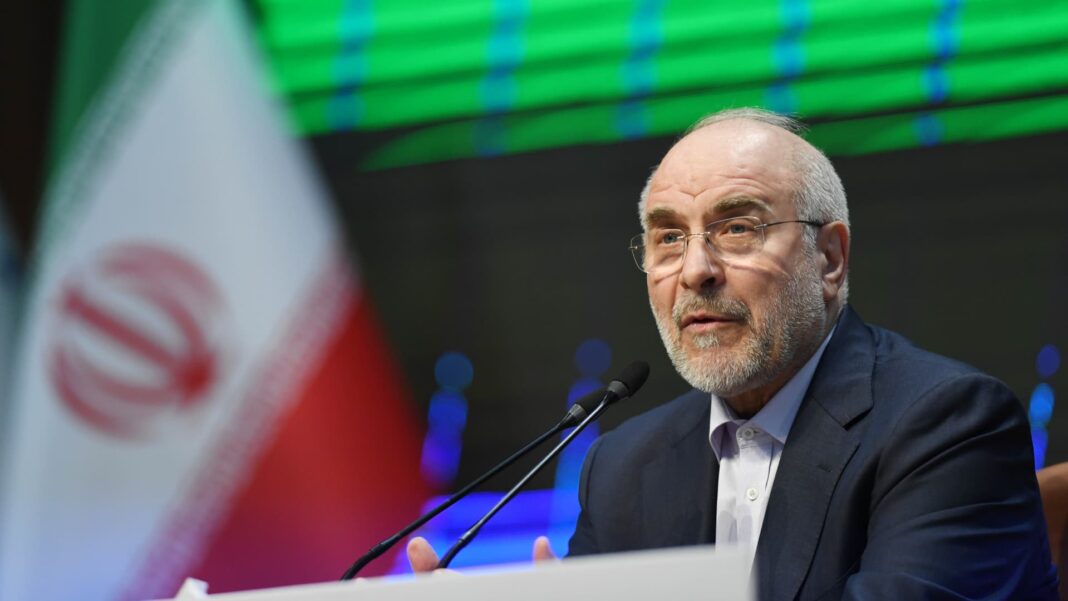
Iranian Parliament Speaker Mohammad Bagher Ghalibaf speaks at a press conference in Tehran, Iran, Dec. 2, 2025.
Shadati | Xinhua News Agency | Getty Images
The speaker of Iran’s parliament on Thursday called into question U.S. claims that the Islamic Republic’s unfrozen assets will be used to purchase U.S. agricultural products.
The retort by Mohammad Bagher Ghalibaf came after days of statements by President Donald Trump and Treasury Secretary Scott Bessent that a temporary peace deal that will lead to unfreezing Iranian assets will be a boon to U.S. farmers.
The comment came as Trump is facing criticism from some Republican lawmakers over his handling of the war against Iran and the memorandum of understanding that has paused it to allow for peace talks.
“America falsely claims our unfrozen assets will buy their agriculture. Interesting,” Ghalibaf wrote in a post on X.
“The only crop we’re harvesting is what you planted: decades of mistrust,” Ghalibaf wrote. “It’s organic, abundant, and homegrown. But apparently the US only exports GMO soybeans, broken promises and trash talks.”
CNBC has requested comment from the White House on Ghalibaf’s tweet.
Trump, in a social media post on Tuesday, wrote: “The Money and/or Sanctions that the U.S. Treasury is releasing goes into escrow, controlled by the U.S.A., and will be used for the purchase of food and medical supplies, exclusively from the United States, including Corn, Wheat, and Soybeans from our great American Farmers.”
Bessent, during an interview on Wednesday with CNBC’s “Squawk Box,” echoed that claim, saying the Treasury Department will oversee Iranian funds when they are released.
“A very large percentage of it will go to buy U.S. foodstuffs and medicines,” Bessent said.
Iran has repeatedly denied those claims.
Earlier this week, Iranian Foreign Ministry spokesman Esmail Baghaei said that any agricultural purchases would be based on “prices and quality,” not on conditions imposed by the U.S., The Associated Press reported.
“It is interesting that the philosophy and goal of the war, which was the destruction of the Iranian civilization and the collapse of Iran, has become enriching American farmers,” Baghaei said.
On Thursday, United Kingdom Maritime Trade Operations, a British maritime security alert service, in a post on X said a cargo vessel passing through the Strait of Hormuz near the coast of Oman had been hit “by an unknown projectile” on its starboard side, “causing damage to the bridge.”
The ship reported no casualties and no environmental impact, according to UKMTO.
Also on Thursday, The Wall Street Journal reported Iran is pushing to earn billions of dollars from charging for security, safety and environmental services in the Strait of Hormuz.
The newspaper said Iran is promoting that idea by suggesting its Persian Gulf neighbors share in revenue from such services.
Secretary of State Marco Rubio and Trump have flatly rejected the idea of ships passing through the strait being subject to tolls or fees.
The Strait of Hormuz is the world’s most sensitive chokepoint for the shipment of oil. Twenty percent of the oil that the world consumes passed through the strait before the U.S. and Israel began their war against Iran in late February.
Under the 60-day agreement that paused that war, Iran cannot impose tolls on ships in the strait during that time.