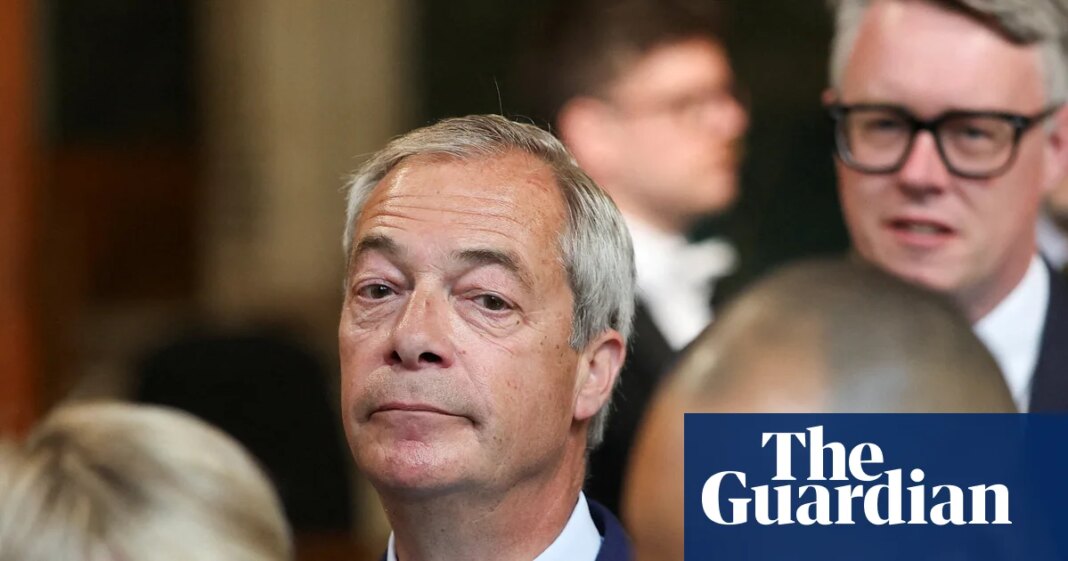
Labour has reported the alleged hacking of Nigel Farage’s phone to police and government cybersecurity officials after the Reform UK leader failed to do so himself.
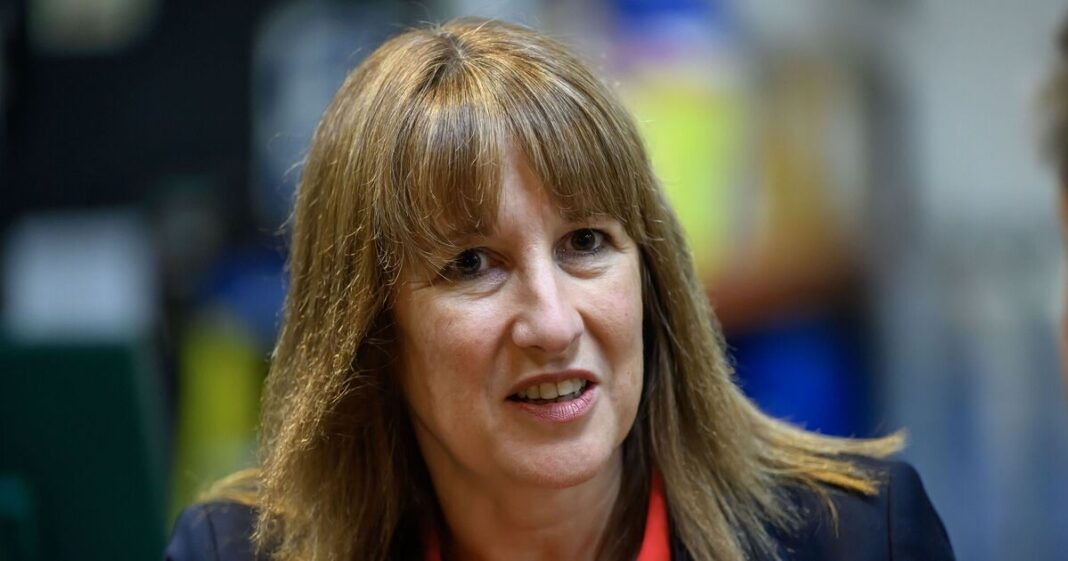
The Labour chair, Anna Turley, has asked the Metropolitan police and the National Cyber Security Centre (NCSC) to investigate Farage’s claims that his phone was compromised by hostile actors linked to Russia.
Reform has suggested the Guardian’s revelation that Farage was given a £5m gift from the Thailand-based cryptocurrency billionaire Christopher Harborne originated from material leaked from his phone, email and bank accounts. The party said last weekend it believed his information had been obtained by “hostile actors, almost certainly linked to Moscow”.
Reform said it had reported the matter to “the relevant authorities”, without specifying which ones. Labour challenged the party to refer the case to the NCSC, but it is understood that had not happened by Thursday afternoon.
Farage is also understood not to have reported the matter to the Met, which is now considering reaching out to him to ask if he wants to do so. Labour’s contact with the force does not constitute a formal crime report, so it is unlikely the Met will begin an investigation on that basis.
In a letter to Farage, Turley said: “Quite apart from the implications for you personally, the alleged crime is an incredibly serious one, with potential wider implications for Britain’s national security, the integrity of our politics and public confidence in our democratic system.”
She added: “I have therefore today contacted the National Cyber Security Centre and the Metropolitan police to ensure that the suspicions you and Reform UK have publicly raised are investigated properly.”
A Reform spokesperson said: “It has been reported to the relevant authorities. It would be inappropriate to comment further while investigations are ongoing.”
The Met has been contacted for comment. An NCSC spokesperson said: “We stand ready to support with any suspected cyber incident that is reported to us.
“Defending democracy is always our priority and we provide a range of expert guidance, support and active cyber defence services to help protect individuals from online attacks.”
The Guardian revealed last month that Harborne gave Farage £5m in 2024, shortly before the Reform leader announced he would stand for parliament, despite previously saying he would not do so.
Parliamentary rules state that MPs should declare any gifts received in the 12 months before taking office, depending on whether it was for political or personal purposes.
Farage initially claimed Harborne had given him the money to cover his security costs, before later saying it was a “reward” for his years of campaigning for Brexit.
Since entering parliament, Farage has advocated positions that would benefit the commercial interests of the cryptocurrency industry, including allowing people to pay taxes with digital currency.
While Farage continues to face questions about why he did not declare the donation, Reform sources have claimed the Guardian’s story originated with a hack by Russian spies.
A party source told the Mail on Sunday that Farage had submitted his phone for forensic analysis by counterespionage experts, who concluded it had been compromised through a “spear phishing” attack.
The Guardian described as “absurd” suggestions that its reporting was based on material obtained through a Russian hack, calling Farage’s claim “an attempt to deflect attention from legitimate scrutiny of his financial affairs”.
Kevin Hollinrake, the Conservative party chair, told the Guardian this week that Farage had spent years “making excuses for [Vladimir] Putin” but was now “playing the Russia card” when confronted with questions over his donations.
The Reform leader is also facing questions over whether he should have paid tax on the donation.
Phil Brickell, the Labour chair of the anti-corruption all-party parliamentary group, and Lloyd Hatton, a Labour MP on the public accounts committee, have written to HMRC urging officials to examine whether Farage owed tax on the money.
Their intervention follows an assessment by the tax expert Dan Neidle, who said Farage could be liable if the money was provided in return for work carried out for Harborne, or as an incentive to stand for parliament.
Neidle concluded, however, that this was unlikely to be the case and that Farage “probably doesn’t owe tax” on the gift.