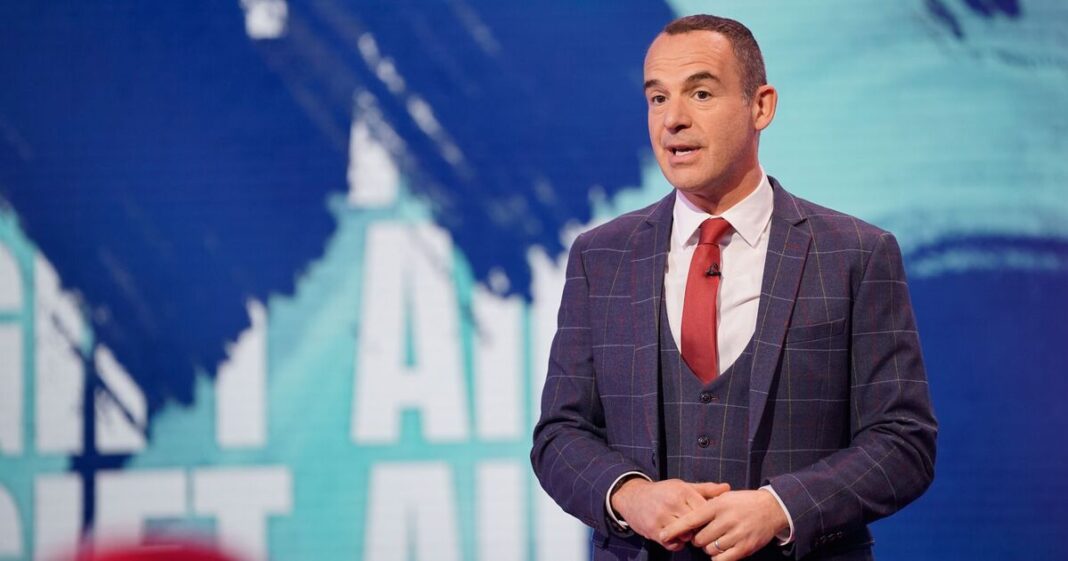

Martin Lewis shared insight into the January price cap (Image: Getty Images)
Households fear the UK may have reached “breaking point” as Money Saving Expert founder Martin Lewis delivered fresh insights into the biggest rise in four years.
Although the new Energy Price Cap was announced on October 1 where it rose by 3.6%, homes across the country are set for a further increase as much as 16% in January 2027. The increase, predicted by the consultancy Cornwall Insight, would impact millions of households on standard variable tariffs.
This could see a typical dual-fuel household paying by Direct Debit fork out a whopping £1,999 a year. Major supplies like E.ON Next and British Gas have projected even higher averages between £2,065 and £2,080, Cornwall Insights reports.
Now Martin Lewis shared insight into the January Energy Price Cap where X commentators now fear the UK may have reached “breaking point” as a result of the crippling increases.
The 54-year-old wrote to his 3.2 million followers: “The news over the weekend is cementing the likelihood of around 20% or bigger rises in the energy Price Cap in January.”
The news over the weekend is cementing the liklihood of around 20% or bigger rises in the energy Price Cap in January. The graph shows UK natural gas prices (which strongly feeds into to our elec price too) peaking again over the latest salvos in the Middle East and Ukraine conflicts.The dotted line and shaded area I’ve added into this Trading Economics graph show the assessment period for the Jan Cap (19 Aug to 17 nov). It’s averaged over that period, so we’re now over half way through, and each high day bakes the average in higher.
— Martin Lewis (@MartinSLewis) October 12, 2026
He continued: “The graph shows UK natural gas prices (which strongly feeds into to our electricity price too) peaking again over the latest salvos in the Middle East and Ukraine conflicts.
“The dotted line and shaded area I’ve added into this Trading Economics graph show the assessment period for the January Cap (19 August to 17 November).
“It’s averaged over that period, so we’re now over half way through, and each high day bakes the average in higher.”
In the graph, from the Trading Economics, it shows a steady rise between May and June before a slight dip in July.
A month later in August, the forecast rises again, then by September it completely shots up over £204.07/thm.
Many British followers shared their concern as the post racked up 150,100 views in over 24 hours.
One wrote: “Now compare it to the rest of the world! We [are] getting absolutely mugged off.”
Another chimed in: “Please stop calling it a Price Cap, it’s anything but that.” While a third commented: “So if you’re already on £300PCM you’ll be at £360PCM from January… The UK is absolutely fried!”
And a fourth posted: “Martin this cannot happen. The British public are well past breaking point.”
When will the next Price Cap change?
The Energy Price Cap rose by a staggering 3.6% from £1,663 a year to £1,723 a year for a typical use household paying by Direct Debit. Although the rates are capped, it does still mean you pay more for using more energy.
Each Price Cap only lasts three months, so the next change is due January 1, 2027. It’s predicted to rise again due to the ongoing conflict in the Middle East.
The average price of the Cap, based on typical use, has fluctuated since it was first introduced in 2019. No one paid the full amount under the Price Cap between October 2022 and June 2023, as prices were discounted under the Energy Price Guarantee (EPG) scheme.
How can I keep bills down?
Adjust boiler flow temperature: If you have a combi boiler, turning down the flow temperature to between 55°C and 60°C can save you around 10% to 15% on gas.
Draught-proof your home: Seal gaps around windows, doors, keyholes, and letterboxes to stop heat from escaping.
Use radiator reflector foil: Place foil panels behind radiators on external walls to reflect heat back into your rooms.
Lower your thermostat: Turning down your thermostat by just 1°C can save you around £90 to £100 per year.