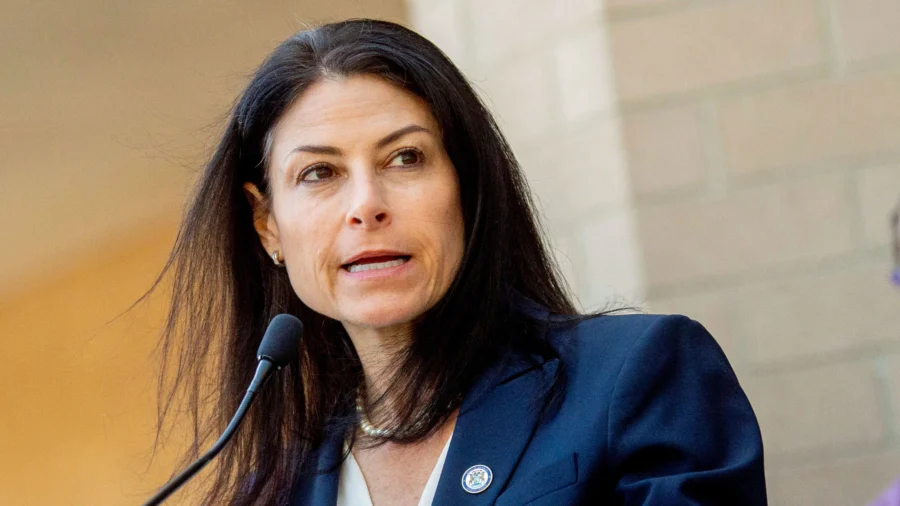
Michigan attorney general Dana Nessel on April 19 rejected the Department of Justice’s (DOJ) request to turn over 2024 election ballots and other voting materials from Wayne County.
The department said the request was intended to ensure that “federal election laws were not violated in the November 2024 election,” as it noted convictions of election fraud in Wayne County, citing three state-level prosecutions tied to voter fraud during the 2020 election.
In a joint statement with Michigan Gov. Gretchen Whitmer and Secretary of State Jocelyn Benson, Nessel said the highlighted convictions show Michigan’s safeguards are working and that voter fraud cases are “rare and addressed” in the state.
“This request is as absurd as it is baseless,” Nessel said in the statement. “If this administration wants to bring this circus to our state, my office is prepared to protect the people’s right to vote.”
The state attorney general emphasized that in each case cited by the DOJ, the criminal conduct was flagged by local election officials, and only one involved a fraudulent vote.
“In Wayne County, 878,102 people voted in the November 3, 2020, general election out of 1,406,355 registered voters. The three defendants represent an infinitesimal percentage of these voters,” she said.
“The prosecutions are hardly representative of a ‘history’ of fraudulent voting in Wayne County.”
The Epoch Times has reached out to the DOJ for comment but did not receive a response by the time of publication.
In February, the DOJ filed lawsuits against five states—Utah, Oklahoma, Kentucky, West Virginia, and New Jersey—alleging they violated federal laws by failing to provide voting records that the department said were necessary to determine the states’ compliance with election laws.
The department said the U.S. attorney general had congressional authority under the Civil Rights Act to request election records from states to check for improper voter registrations.
Drummond said the state has agreed to provide its computerized voter registration lists to the DOJ under a settlement that ensures the data is being handled in accordance with the Privacy Act.