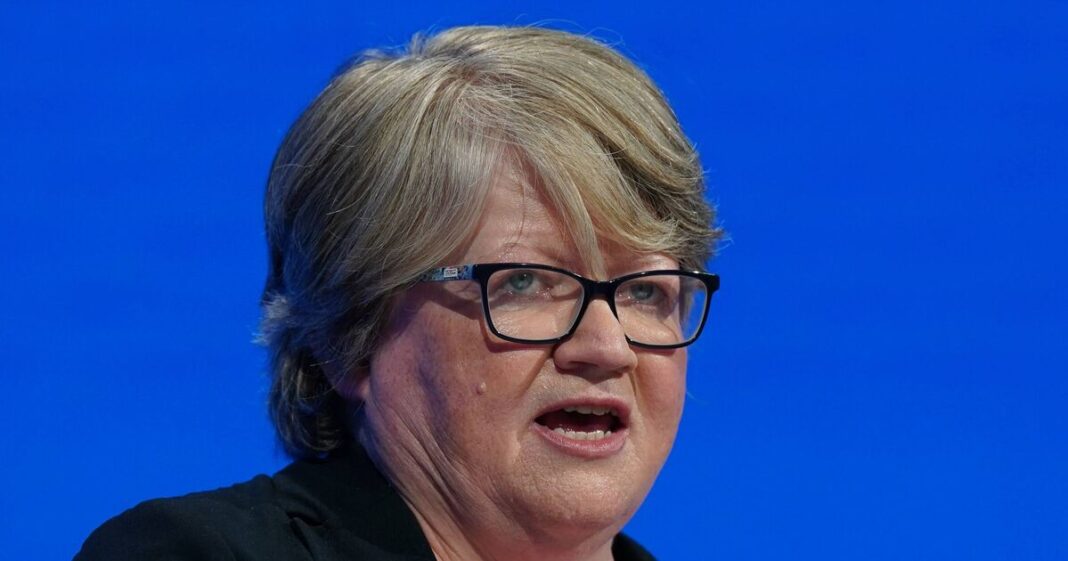

Baroness Therese Coffey (Image: Ian Forsyth, Getty Images)
The pensions triple lock should “probably” be scrapped, a senior Tory former cabinet minister has declared. Baroness Therese Coffey, who served as work and pensions secretary from 2019 to 2022, said the guaranteed 2.5% annual rise “probably seemed the right thing” when it was first introduced, but hinted it was time for a rethink.
Lady Coffey, who also held the position of deputy prime minister, said she would favour “some kind of double lock” as an alternative. The pensions triple lock was brought in by the Conservative-Liberal Democrat coalition government in 2010, guaranteeing that the state pension rises each year in line with either inflation, wage growth or 2.5% – whichever figure is greatest.
Speaking in the House of Lords on Friday, Lady Coffey said: “I think sometimes the triple lock gets blamed for a lot of things. To some extent, I would actually probably prefer some kind of double lock.
“The 2.5% probably seemed the right thing at the time in order to achieve the policy outcome of getting pensions as a proportion of earnings up more quickly and it’s achieved that, I think, by and large.”
The triple lock has faced growing scrutiny in recent months amid mounting concerns over its cost. Lord Jim O’Neill, a close ally of Andy Burnham, suggested the bond markets would “respond favourably” to a Government that takes “credible action to deal with the excesses of the triple lock or the excesses of welfare spending”.

Prime Minister Andy Burnham (Image: Anadolu, Anadolu via Getty Images)
Former NatWest chairman Sir Howard Davies also warned that the country “can’t afford it” and that the Government’s credibility will be “on the rack” if action is not taken. Lady Coffey’s remarks formed part of a debate on a committee report examining Britain’s readiness for an ageing population, with peers from across the chamber calling for the triple lock to be scrapped.
Fellow Conservative peer Lord Tugendhat described it as “much needed” when first introduced, but argued it should now be replaced “without further ado”, while crossbench peer Lord Turnbull, the former head of the civil service, branded the existing system “frankly idiotic”.
He said: “We have a chaotic system generating random windfall gains, and they are always gains, according to the movement of earnings prices in particular years. The OBR has estimated that this could cost an extra 2% of GDP.”
Former Labour home secretary Lord Reid of Cardowan called on the report to “more forthrightly consider and challenge the triple lock”. However, Conservative former Welsh secretary Lord Redwood maintained that scrapping it would be a “great pity”, arguing it had played a crucial role in reducing pensioner poverty.
Labour peer Lord Liddle, who introduced the report, admitted feeling “a little guilty” that it “didn’t directly address the triple lock question”, acknowledging it is “obvious” that the matter requires closer scrutiny. He also described Britain as “woefully unprepared for the future” in the face of an ageing society.
“The lack of any published strategy on ageing is a worrying indication that the Government would prefer not to face up to these challenges as an immediate question, and that the UK is therefore woefully unprepared for the future,” he warned.
In response to the debate, Treasury minister Lord Pitt-Watson confirmed that the triple lock formed part of Labour’s manifesto pledges, stating that “until the end of this Parliament, the triple lock remains”.