President Donald Trump on Sept. 14 said Russia and Ukraine have agreed to stop attacking energy targets, coming as diesel prices have soared in recent weeks.
“Ukraine has agreed not to hit Russian Energy targets. Russia has agreed to do, likewise! The World’s Diesel price rise is mostly caused by the Russia/Ukraine War, not Iran,” he wrote in a Sept. 14 Truth Social post.
Increasingly, Kyiv has targeted Russia’s oil and gas industry with long-range drone attacks, saying they block Moscow’s capacity to fund the war that erupted in February 2022.
The comment from Trump on Sept. 14 follows public requests that he made to Ukrainian President Volodymyr Zelenskyy to stop the attacks on Russian energy facilities because the strikes are “hurting the world [economy].”
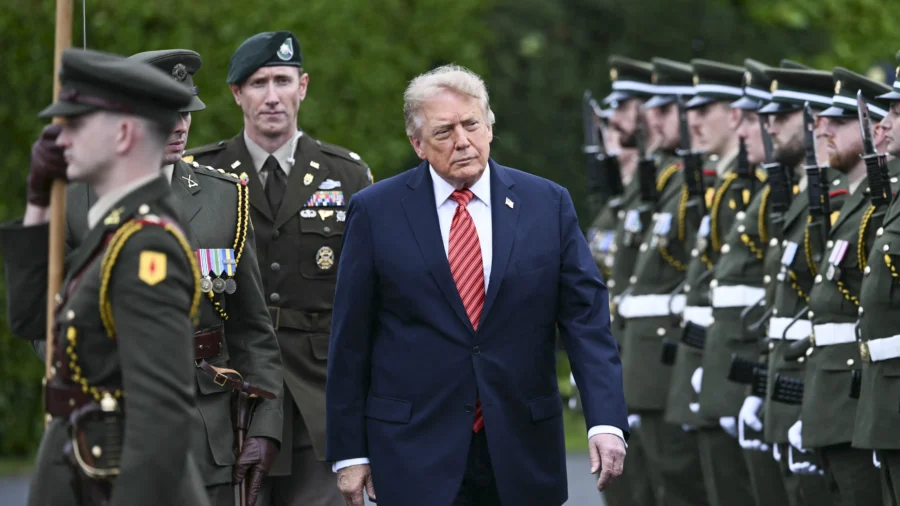
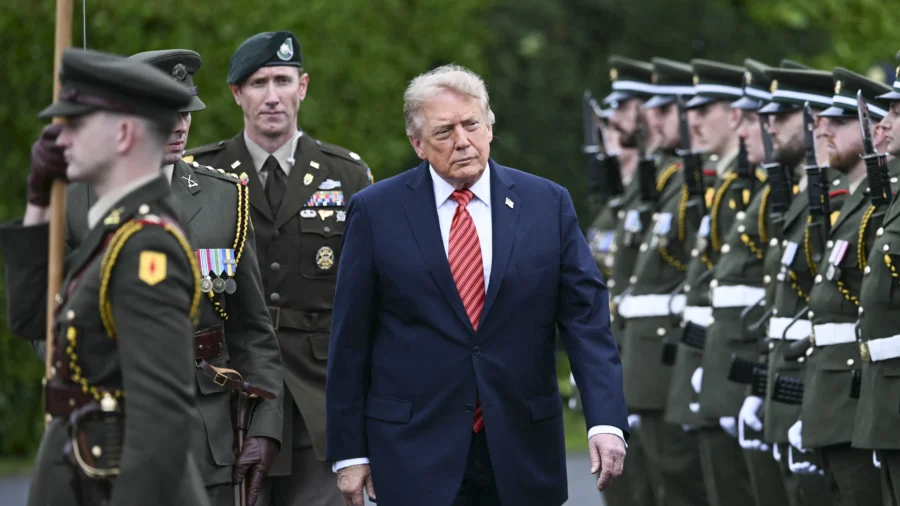
“Mr. Zelenskyy has to do one thing. He has to stop knocking out diesel fuel in Russia,” Trump said during a visit to Ireland on Sept. 13.
“Let him go after targets but not diesel fuel because he’s causing a shortage of diesel. This isn’t done by the Middle East; this is done by what’s happening with Russia and Ukraine.”
The statement also came as the price of diesel—used for heavy transportation, commercial shipping, mining, and agriculture—rose to $6.23 per gallon on Sept. 14, according to figures released by the American Automobile Association (AAA).
A week ago, the price stood at $5.90 per gallon, and it was $3.69 a year ago.
The Sept. 14 diesel price marks the highest average recorded by AAA. And notably, California is averaging $8.15 per gallon for the fuel, the updated figures show.
The rise in diesel prices synchronizes with a surge in crude oil prices in recent days amid the U.S.–Iran military conflict, namely over the crucial Strait of Hormuz.
Saudi Arabia has also faced attacks on its energy infrastructure in recent days.
Brent crude futures, the international benchmark, rose by more than 3 percent on Sept. 14 to $108 per barrel.
U.S. West Texas Intermediate futures also increased by more than 3 percent to $103.50 per barrel.
A wave of long-distance Ukrainian drone attacks on Russian oil refineries in recent months has reduced that country’s fuel production, triggering gasoline shortages across the country.
Ukraine, which has faced regular Russian attacks on its own energy infrastructure, has argued that Russian refineries are legitimate military targets.
In a Sept. 7 post on X, Zelenskyy said Ukrainian soldiers are “responding justly to Russian strikes on Ukraine” by striking a Russian oil refinery in the country’s Ryazan region.
Long-range drone attacks were also launched against facilities in the Perm and Tatarstan regions in Russia, he said.
Russian officials welcomed Trump’s comments.
“Any call on the Kyiv regime to stop attacks on civilian economic infrastructure can only be welcomed,” Kremlin spokesman Dmitry Peskov told a daily conference call with reporters on Sept. 14.
Peskov also said the situation in global energy markets was worsening mainly due to “instability and new rounds of escalation in the Persian Gulf region,” referring to the months-long conflict between the United States and Iran.
That followed visits from U.S. special envoy Steve Witkoff and Jared Kushner in both Russia and Ukraine earlier in the month.
Reuters contributed to this report.