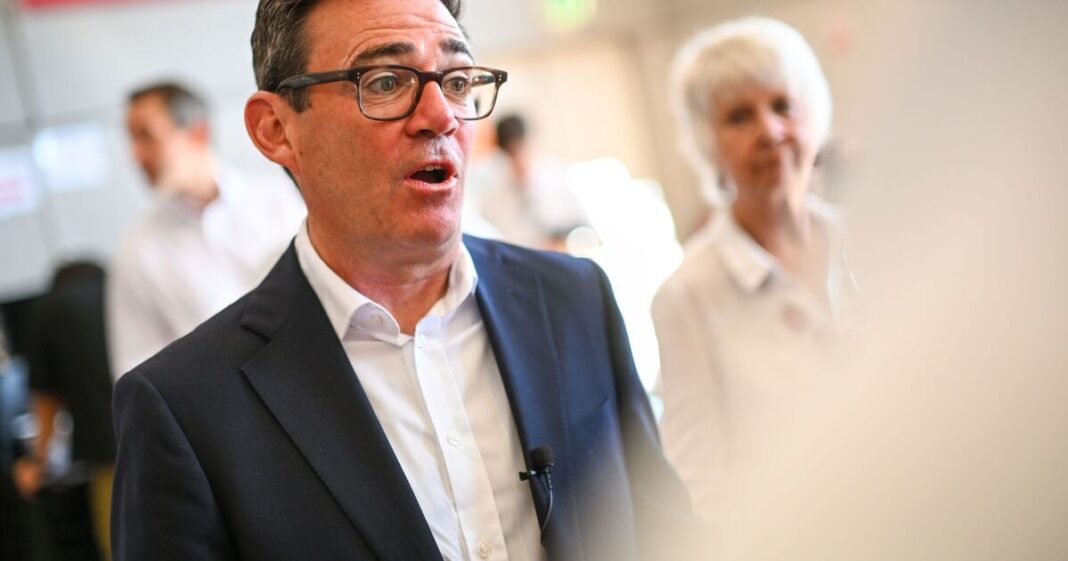
VAT will be scrapped from household electricity bills under plans announced by the government last month. It came as Prime Minister Andy Burnham vowed to ease the cost-of-living squeeze.
In one of his first acts as PM, Burnham promised to “put more money in people’s pockets and bring back hope.” He then announced that VAT would be scrapped on household electricity bills this winter.
The VAT will be reduced from 5% to 0% as of October 1, 2026. The move is expected to cut bills and offer additional support for people during the colder months.
The cut will only apply in England, Scotland and Wales, the UK Government confirmed, with equivalent funding set to be provided for Northern Ireland, where the energy market is regulated differently. The government said it expects all suppliers to pass the VAT cut on in full to every customer – including those on fixed deals.
GOV.UK explains: “The NI Executive will receive comparable funding to enable it to support NI Households with the cost of living to ensure households across the UK benefit.”
While only households in England, Scotland and Wales will benefit, EDF Energy says that the amount will vary depending on how much electricity you use. This means that the savings will vary from household to household, and the £45 figure is only an average.
It explains that while the “government estimates you’ll save around £45 a year from the tax cut; this also depends on how much electricity you use.”
Households should remember that it only applies to electricity. If you pay for gas and electricity (dual fuel), the VAT cut will apply only to the electricity portion of your bill.
It adds: “The cut will only apply to electricity bills, so if you’re on a dual fuel tariff, you’ll see the VAT reduction on the electricity section of your bill. You’ll still pay 5% VAT for your gas, and this will still show on your dual fuel bill.
VAT on energy is set by the government. Most households currently pay 5% VAT on the electricity they use because energy is treated as a good or service in the UK. The rate can vary depending on whether the supply is for a home (domestic) or for a business (non-domestic).
Prime Minister Andy Burnham said: “Westminster has not been working for people for too long, with families struggling with the cost of living. That needs to change.
“I said I wanted to give people breathing space, and that’s what I’m announcing on my second day as Prime Minister. We’re taking immediate action to cut taxes on energy bills, put more money in people’s pockets and bring back hope.”