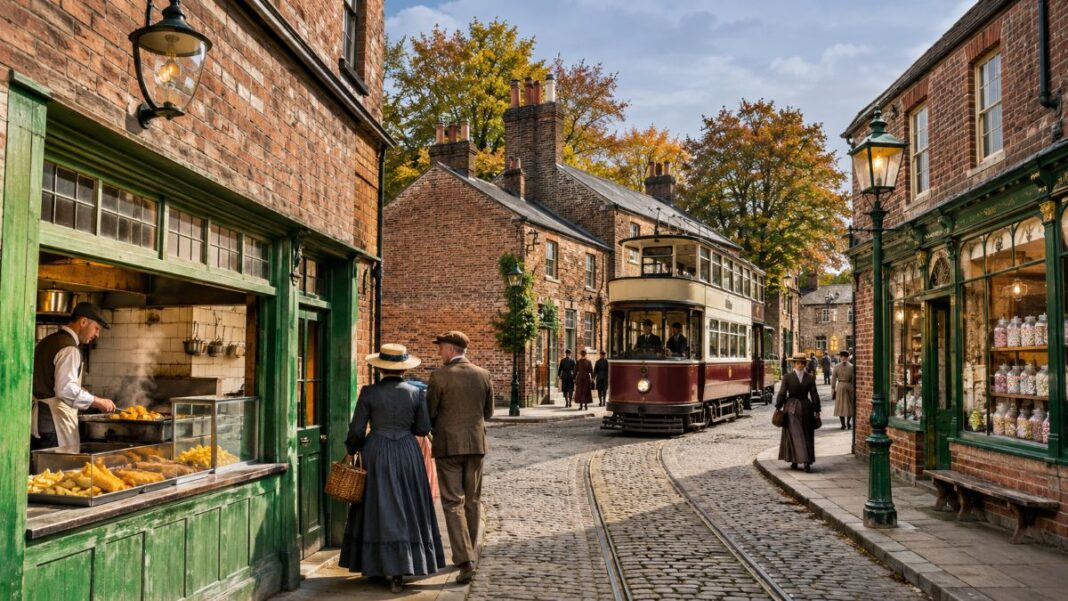

Beamish Museum in County Durham, England, lets you take a walk back in time away from the hustle and bustle of modern life and eat traditional fish and chips cooked by a traditional coal fire. Experience traditional life in the openair living Museum that brings different periods of history to life.
Compared to a regular village, beamish is a living museum. Its themed buildings, characters dressed in period costume and functioning shops, means that visitors are invited to take their time and interact with the authentic environment. Beamish is a mix of cultural tourism, historic food and fun, and appeals especially to families and tourists looking for a break from screens.
Why Beamish Museum Feels Like a Village Frozen in Time
Beamish Museum brings several generations of North East England’s history together within one extensive heritage attraction. Visitors can explore the 1820s landscape, 1900s town, Edwardian pit village, 1940s farm and 1950s town.
Historic buildings, traditional businesses and working demonstrations help recreate the routines of earlier communities. Visitors encounter old-fashioned shopfronts, heritage transport and domestic settings that illustrate how people worked, shopped and travelled.
Costumed museum staff explain historic practices and encourage participation. These interactions turn the attraction into an educational experience rather than a collection of static displays.
The different periods also reveal how industrialisation and social change shaped everyday life across northern England.
Advertisement
Advertisement
Davy’s Coal-Fired Fish and Chip Shop Preserves a Traditional British Favourite
One of Beamish Museum’s distinctive food attractions stands within the 1900s Pit Village.
Davy’s Fried Fish Shop prepares fish and chips using coal-fired cooking ranges and beef dripping, preserving a traditional method associated with Britain’s industrial communities.
Advertisement
Advertisement
The historic cooking process forms part of the experience. Visitors can enjoy a familiar British meal while discovering how fish and chip shops served working-class neighbourhoods.
The museum confirms that Davy’s does not currently offer vegetarian chips because its cooking method uses animal fat.
Travellers seeking a vegetarian alternative can visit Middleton’s Quality Fish and Chips in the 1950s Town, where staff can provide vegetarian chips on request.
Traditional Sweet Shops and Bakeries Bring Edwardian Food Culture Alive
Beamish Museum also celebrates Britain’s historic confectionery and baking traditions.
Advertisement
Advertisement
Jubilee Confectioners, located in the 1900s Town, recreates a traditional sweet shop with period-style displays and an assortment of confectionery.
The attraction introduces visitors to the shopping culture of Edwardian Britain, when independent businesses played an important role in town life.
Nearby, Herron’s Bakery offers bread, pastries, cakes and biscuits. Its selection includes Beamish gingerbread, giving travellers another opportunity to sample food inspired by historic recipes.
The museum also features tea rooms, traditional refreshments and other period-themed dining outlets. Together, these businesses make food an important part of its heritage experience.
Can Visitors Enjoy a Digital Detox at Beamish Museum
Beamish is an ideal place for tourists who want to get off of their devices more.
The line-ups and attractions of its historic streets, hands-on demonstrations and heritage transport inspire people to look up from their devices.
Advertisement
Advertisement
Families have the opportunity to tour recreated homes, interact with costumed staff, and participate in activities of the past.
However, he does not promote that you refrain from taking a smartphone to Beamish. Visitors to the attraction should therefore perceive a trip to Beamish as a voluntary digital detox, not as a voyage to a device-free zone.
Visitors can reduce the buzz and simply enjoy the museum without being so distracted by their phones.
Traveller’s Guide to Visiting Beamish Museum in County Durham
Beamish sits in County Durham in North East England and attracts visitors interested in British industrial heritage, historic architecture and traditional food.
Travellers should consult the museum’s official website before departure to confirm opening hours, admission arrangements and available attractions.
The museum offers an Unlimited Pass that allows eligible visitors to return during its twelve-month validity period, making repeat visits possible.
Advertisement
Advertisement
Historic trams and buses help visitors explore different sections of the site. However, some buildings have steps, uneven surfaces or restricted access.
Beamish also operates an accessible vehicle for visitors who require its adaptations.
| Travel information | Details |
|---|---|
| Destination | Beamish Museum, County Durham |
| Region | North East England |
| Main attractions | Historic towns, pit village, traditional shops |
| Food highlight | Davy’s coal-fired fish and chips |
| Family activities | Heritage transport and interactive demonstrations |
| Tickets | Check official admission and Unlimited Pass options |
| Accessibility | Accessible vehicle available; some uneven surfaces |
| Official website | https://www.beamish.org.uk/ |
Why Beamish Strengthens Heritage Tourism in North East England
Beamish Museum. It explains the industrial, commercial and social customs and traditions of communities up and down the north of Britain.
You will find that its historic buildings and its traditional businesses will provide you with opportunities to learn and to preserve the area’s reputation as a region of interest for heritage tourism.
Visitors to County Durham enjoy a unique opportunity of seeing something different from the usual sightseeing.
With working heritage visitor attractions, period transport and a traditional food it is possible to experience many chapters of British history all under one roof.
Beamish illustrates how sensory-rich, interpretation-focused heritage tourism can offer contemporary audiences access to the everyday lives of people in the past.