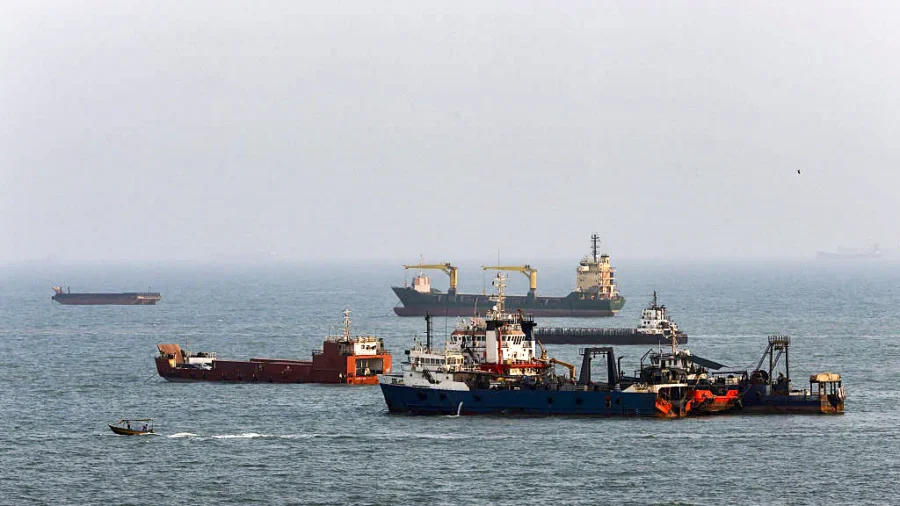
U.S. forces have redirected 100 commercial vessels over the past two months since the United States reinstated its naval blockade against Iran.
The U.S. military has enforced its blockade of ships attempting to enter or leave Iranian ports since July 14, U.S. Central Command (CENTCOM) said on Sept. 12. Over the past two months, the United States and Iran have continued to dispute control over the Strait of Hormuz and have repeatedly exchanged military strikes.
“CENTCOM forces have redirected 100 commercial vessels over the past 60 days since America resumed the steel wall blockade against Iran,” CENTCOM wrote in a Saturday statement on X.
“ZERO ships have passed through the blockade without U.S. forces allowing. American service members remain laser-focused on this mission.”
The update followed CENTCOM’s statement days ago that 10 Iranian tankers linked to Iran’s Islamic Revolutionary Guard Corps (IRGC) had been destroyed by U.S. forces. The tankers were destroyed in response to attempted Iranian strikes against U.S. Navy warships in the Middle East.
As of Sept. 10, U.S. forces had allowed more than 50 vessels carrying humanitarian aid to pass through the blockade, according to CENTCOM.
In addition to redirecting 100 ships, U.S. forces had also disabled three vessels and boarded two others to ensure compliance with the blockade as of Sept. 6.
The Epoch Times reached out to CENTCOM and the White House for comment and did not receive a response before publication time.
During a visit to Dublin, Ireland, on Sept. 12, Trump reiterated his administration’s position that the United States maintains control over the Strait of Hormuz.
“We really very powerfully control the Hormuz Strait, and nobody saw that happening. But we have very powerful control over it,” he said. “We have a naval blockade that’s been so incredible.”
Despite recent Iranian attacks on tankers in the Strait of Hormuz, Trump said Saturday that the United States continues to help guide commercial vessels through the waterway.
“We’re taking a lot of boats out,” he said. “We take out, on average, 25 boats a day, most of them at night.”
Trump ordered a U.S. naval blockade of maritime traffic entering and leaving Iranian ports in April. The blockade, however, was later lifted after the United States and Iran signed a memorandum of understanding in June.
The memorandum of understanding ultimately collapsed in early July when Iran carried out attacks against multiple commercial vessels in the Strait of Hormuz. In response, Trump ordered U.S. forces in the Middle East to reinstate the blockade of Iranian ports on July 14.
Last month, Tehran threatened to keep the Strait of Hormuz closed until the United States agreed to its demands. Before the war began on Feb. 28, the key waterway carried about one-fifth of the world’s oil shipments.
Iran’s Supreme National Security Council Secretary Mohammad-Bagher Zolghadr said the United States needed to end the war, remove the naval blockade, and withdraw all military troops before the regime reopened the strait. Other demands included lifting sanctions against the regime, releasing blocked Iranian assets, and avoiding future threats against Tehran.
Iran and Oman proposed a joint establishment of a “temporary navigational corridor” through the Strait of Hormuz in August.
Iranian President Masoud Pezeshkian told India Today that foreign ministers from multiple Arab states will be meeting in Oman on Monday to discuss the new shipping route through the Strait of Hormuz.
In an interview released Saturday, Pezeshkian said the foreign ministers would discuss a framework agreement to establish a joint Iran-Oman shipping route through the strait. He said the International Maritime Organization would be notified of the agreement’s status.
The Iranian president also claimed the route would remain open if the United States ended its naval blockade and military actions against the regime.
Secretary of War Pete Hegseth suggested last month that the U.S. military could continue to enforce its naval blockade of Iranian ports as long as necessary.
“We can hold it as long as we need to. Indefinitely, the United States Navy can maintain a blockade like that because we’ll rotate ships in and out, as we have and we’ll continue to,” he said.