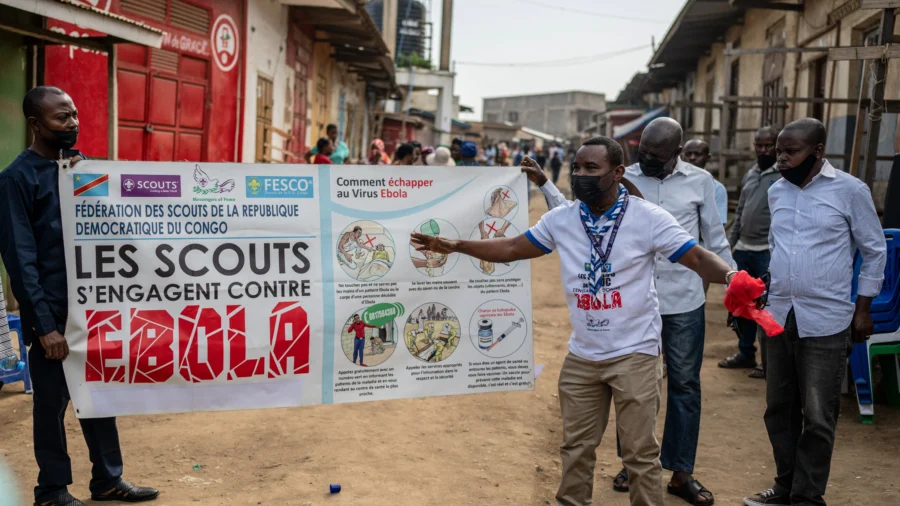
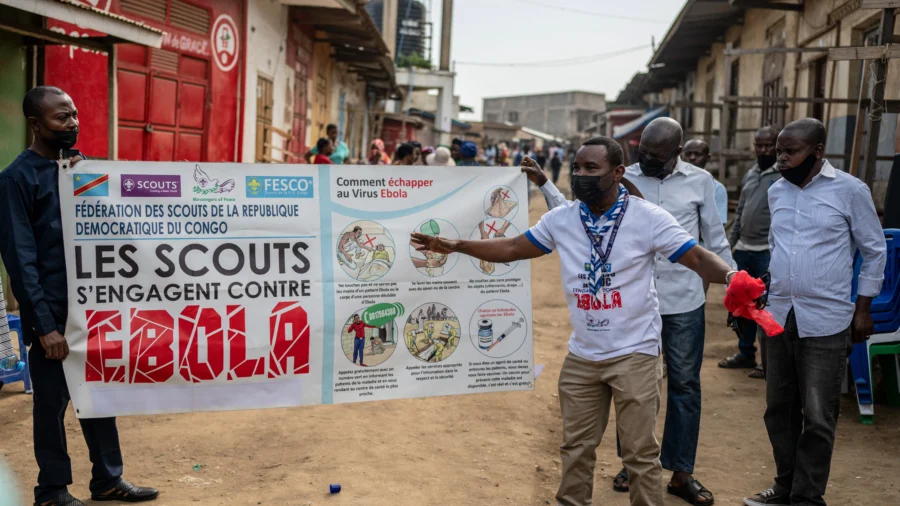
The United States is working to prevent Ebola cases from entering the country by opening a quarantine facility for Americans exposed to the virus in Kenya. The plan was announced by White House officials as part of the U.S. response strategy as the Bundibugyo strain of Ebola outbreak intensifies in Central Africa.
The United States will establish a quarantine facility at Laikipia Air Base in Nanyuki, Kenya, for asymptomatic U.S. citizens exposed to Ebola, senior Trump administration officials said on a call with reporters on May 28.
Americans who develop symptoms will not be transferred to the United States for treatment, but will instead be sent to third countries.
“We want to make sure that Americans on the ground there quickly and efficiently get the care they need,” said one official. “But beyond that, the administration is also working … to ensure that Americans here in the United States don’t contract the disease.”
The policy is a departure from previous U.S. responses, such as during the 2014 Ebola outbreak, when infected Americans were brought to high-containment treatment centers within the United States for care.
Secretary of State Marco Rubio said Wednesday the administration would not allow Ebola cases to enter U.S. territory. “We cannot and will not allow any cases of Ebola to enter the United States,” Rubio said.
The Kenya facility is expected to begin operations on Friday with a 50-bed unit and plans for additional biocontainment and isolation capacity, officials said.
U.S. Public Health Service officers will staff the site, providing supportive care such as monoclonal antibody therapies and the antiviral remdesivir before patients are transferred elsewhere, if necessary.
More than 30 U.S. health workers, including veterans of the 2014 Ebola response, have been trained in Washington and deployed to Kenya. Additional teams are expected to follow, officials said.
The United States has also expanded travel restrictions and screening measures for travelers from affected countries.
The Centers for Disease Control and Prevention (CDC) last week imposed temporary entry restrictions on non-U.S. citizens who had been in the Democratic Republic of Congo, Uganda, or South Sudan within 21 days of arriving in the United States, including green card holders.
The department also said that on May 27, it finalized plans to allocate an additional $80 million in bilateral assistance to key partners on the ground for outbreak operations, including personal protective equipment procurement, border screening, surveillance, contact tracing, and diagnostics.
A separate $50 million was allocated to the UN Office for the Coordination of Humanitarian Affairs to support up to 50 Ebola treatment clinics.
The United States is also providing $300 million through UN humanitarian funds to support broader relief and response efforts in the Democratic Republic of Congo and Uganda.
The WHO also said it is exploring candidate vaccines and post-exposure prophylaxis using the oral antiviral obeldesivir, according to its May 28 technical guidance.
WHO has declared the Bundibugyo strain outbreak an international public health emergency, with more than 900 suspected cases and more than 200 suspected deaths reported in the Democratic Republic of Congo and Uganda.
Reuters contributed to this report.