Federal officials on Sept. 3 launched a multi-campus university training program that’s expected to quickly develop millions of skilled workers for manufacturing careers.
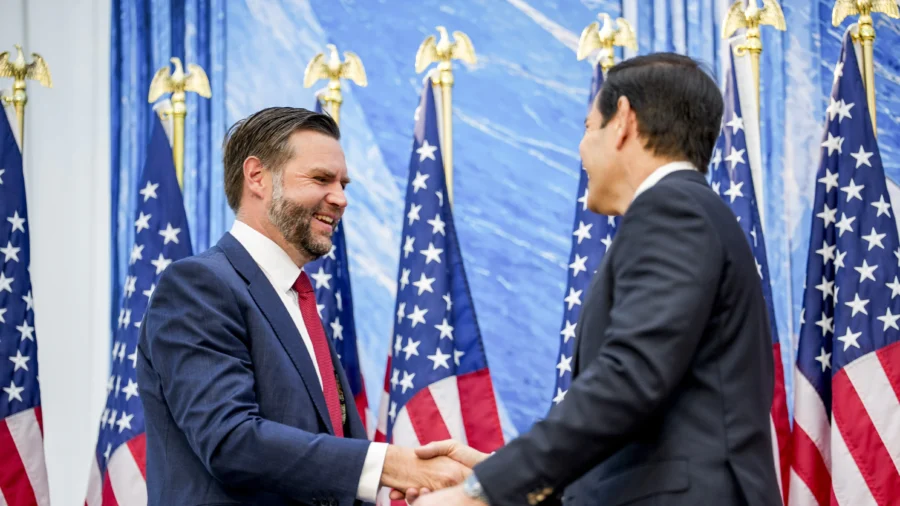
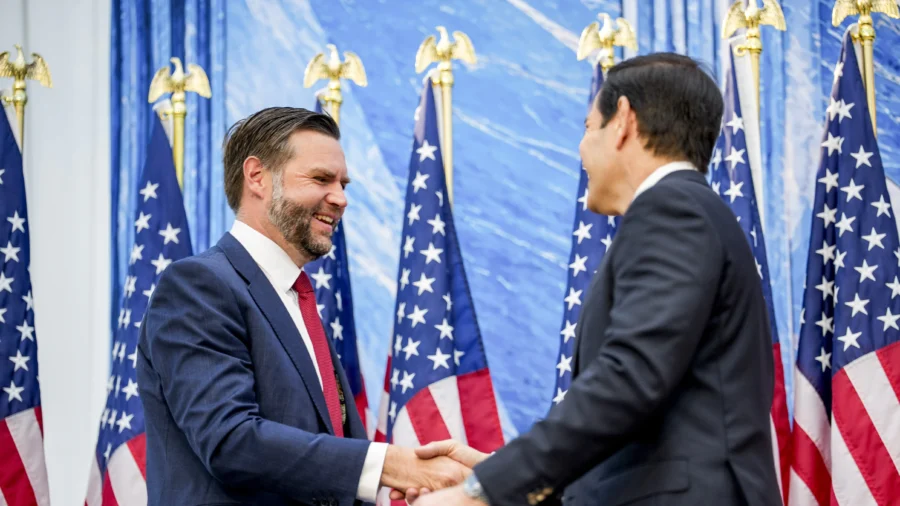
Vice President JD Vance and Secretary of State Marco Rubio, speaking at the Donald J. Trump Institute of Peace in Washington, said this Foundry School initiative is a partnership between the federal government, higher education, and the private sector aimed at making things in America again and relying less on goods from other countries.
Rubio said America became deindustrialized in recent decades and is now “dangerously dependent on other nations.”
The State Department previously announced that leaders from eight universities—Stanford, Arizona State, Ohio State, Penn State, Vanderbilt, Georgia Institute of Technology, Washington University in St. Louis, and the University of Kansas—will team up with CEOs and founders from advanced manufacturing firms and Pax Silica partner countries such as South Korea, Taiwan, and India. Collectively, the entities are expected to develop a plan for preparing 3.8 million skilled workers by 2033 to fill anticipated vacancies in the semiconductor, defense, and energy industries.
The Foundry School campuses have planned 17 sessions in the months ahead, ranging from modern factory design to material and supply chains, to workforce development at scale.
“This is not a two-year project. This is not a two-and-a-half-year project,” Rubio said. “Multiple American administrations are going to have to make this a priority.”
Vance said this initiative is a matter of national security.
“If America doesn’t have enough self-sufficiency in industry and manufacturing, our enemies are able to exploit it, and it makes our country much weaker,” he said.
He cited the COVID-19 pandemic as an example, noting that surgeries were often delayed due to shortage of hospital gowns and a lack of domestically produced options.
The vice president also said education leaders have steered students away from manufacturing careers for far too long, discouraging those who would otherwise want to work with their hands. A prosperous future in America’s financial and technology sectors hinges on domestic manufacturing growth, he added.
“There’s a much broader set of horizons out there,” Vance said.
“Working with your hands is very much the work of the future. And the idea that if you’re working with your hands, you’re not using your mind is one of the dumbest things that America’s leaders ever told a generation of American kids.”
Kimberly Hayek contributed to this report.