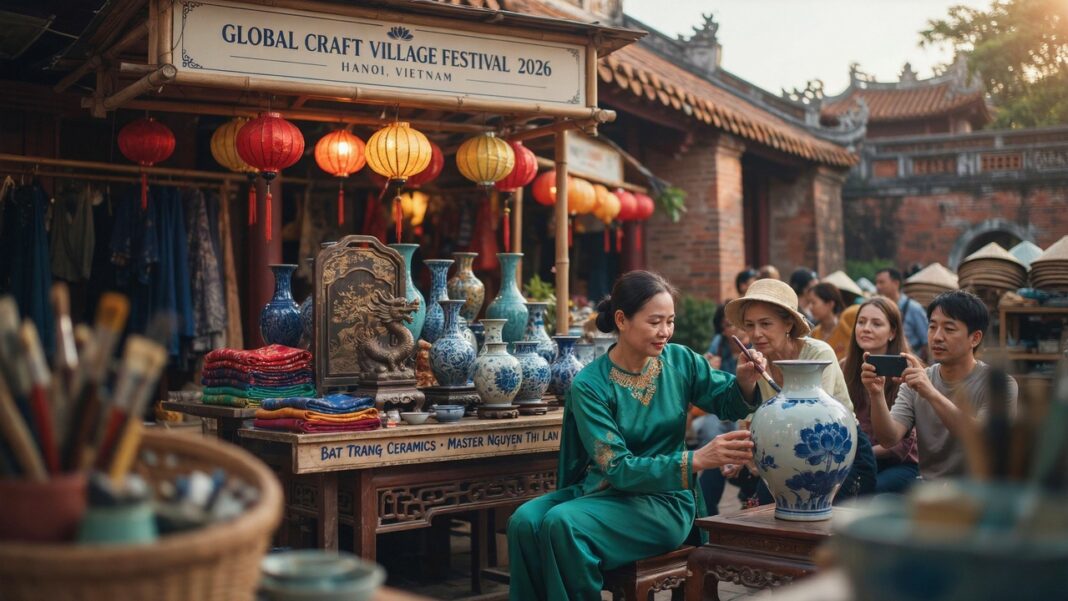

Hanoi, Vietnam, is preparing to host the first Global Festival for the Conservation and Development of Craft Villages from 13 to 16 November 2026, bringing traditional craftsmanship, international cultural exchanges, artisan demonstrations and tourism experiences together at the historic Thang Long Imperial Citadel. The four-day event is expected to welcome approximately 200 international delegates from 40 to 50 countries and territories, according to the Vietnamese Government’s October 2026 organising plan. With exhibitions covering approximately 10,000 square metres, the festival aims to strengthen Vietnam’s position in global handicrafts while creating new opportunities for cultural tourism, rural businesses, international trade and heritage conservation.
Hanoi Prepares for a Landmark Global Festival Celebrating Traditional Craft Villages
Vietnam’s capital is preparing for an international celebration that will place traditional craft villages at the centre of cultural tourism and economic development.
The inaugural Global Festival for the Conservation and Development of Craft Villages 2026 will bring together artisans, designers, businesses, cultural organisations and international representatives.
The festival will take place from 13 to 16 November, with its main activities at the Thang Long Imperial Citadel.
The official opening ceremony is scheduled for 7 pm on 14 November.
The event will introduce visitors to traditional handicrafts, live production techniques, creative designs and cultural activities. It will also provide opportunities for business cooperation and international exchanges.
Advertisement
Advertisement
Unlike a conventional handicraft exhibition, the festival will combine tourism promotion with the preservation of traditional skills.
Visitors will have opportunities to learn about the people, techniques and communities behind Vietnam’s handmade products.
The event forms part of Hanoi’s wider efforts to strengthen craft village tourism and introduce Vietnamese cultural heritage to international audiences.
When and Where Will the Global Craft Village Festival 2026 Take Place?
The festival’s main venue will be the Thang Long Imperial Citadel, one of Hanoi’s most important historical landmarks.
The location provides a meaningful setting for an event focused on preserving heritage while encouraging new forms of artistic expression.
Official arrangements also include activities at the Centre for Vietnam Craft Village Quintessence in Bat Trang and selected craft villages across Hanoi.
Advertisement
Advertisement
Some cultural exchange and hands-on activities will extend into neighbouring Ninh Binh province.
Key Festival Details Travellers Need to Know
| Category | Officially announced information |
|---|---|
| Event | First Global Festival for the Conservation and Development of Craft Villages 2026 |
| Host city | Hanoi, Vietnam |
| Main dates | 13–16 November 2026 |
| Pre-festival activities | 12 November 2026 |
| Main venue | Thang Long Imperial Citadel |
| Opening ceremony | 14 November, 7 pm |
| Planned exhibition area | Approximately 10,000 square metres |
| Expected international delegates | Approximately 200 |
| Expected international representation | 40–50 countries and territories |
| Main attractions | Handicraft exhibitions, artisan demonstrations, competitions and cultural exchanges |
| Additional venues | Bat Trang and selected craft villages in Hanoi and Ninh Binh |
| Organising framework | Hanoi municipal authorities and Vietnam’s Ministry of Agriculture and Environment |
The official government plan was issued on 12 October 2026.
The international participation figures remain expectations rather than confirmed final attendance numbers.
Travellers should also distinguish the festival’s four main dates from the separate village tourism activities scheduled for 12 November.
International Delegates From Around the World Expected to Join Hanoi’s Festival
One of the festival’s most important features is its planned international participation.
The Vietnamese Government’s organising plan projects approximately 200 international delegates from 40 to 50 countries and territories across five continents.
Advertisement
Advertisement
Participants are expected to include representatives of handicraft organisations, traditional craft communities, businesses and design institutions.
The international programme is designed to encourage cultural cooperation and create connections between Vietnamese craft producers and overseas partners.
For local artisans, these exchanges could provide opportunities to introduce their products beyond domestic markets.
For international visitors, the festival will offer a chance to understand Vietnam’s handicraft traditions alongside creative practices from other countries.
The theme, Converging Craft Village Cultural Identities – Connecting Global Excellence, reflects this approach.
It brings together two important objectives: protecting traditional cultural knowledge and encouraging collaboration.
Advertisement
Advertisement
The event also seeks to position Hanoi as a centre for handicraft cooperation in Asia and internationally.
However, the festival’s eventual economic impact will depend on the partnerships, business relationships and tourism activity generated through the programme.
Thang Long Imperial Citadel to Become the Centre of Cultural Exhibitions and Artisan Demonstrations
The Thang Long Imperial Citadel will provide the main setting for the four-day festival.
Its historical importance gives the event a strong connection to Hanoi’s cultural identity.
The citadel is recognised as a UNESCO World Heritage Site and preserves important evidence of the city’s political and cultural history.
Hosting a craft festival at this location will connect Vietnam’s historic architecture with living handicraft traditions.
Advertisement
Advertisement
The announced exhibition space will cover approximately 10,000 square metres.
Organisers plan to create dedicated areas for Vietnamese and international handicrafts, live demonstrations and creative activities.
Main Exhibition Themes
- Traditional Vietnamese handicraft products and techniques
- International craft products and cultural exchanges
- Live demonstrations by skilled artisans
- Creative design and contemporary handicraft development
- Digital transformation in traditional craft industries
- Net-zero and environmentally focused initiatives
- Photography, flowers and ornamental plant exhibitions
- Vietnamese culture, cuisine and visitor experiences
- Product promotion and commercial networking
These areas are intended to show how traditional craftsmanship can continue to develop in a changing economy.
The programme also creates opportunities for visitors to see products being made rather than viewing finished items alone.
For travellers interested in cultural heritage, this distinction is important. It brings attention to the labour, knowledge and technical skill behind handmade objects.
Bat Trang Pottery Village to Highlight Vietnam’s Rich Ceramic Heritage
Bat Trang is among the most important craft destinations connected to the festival.
Advertisement
Advertisement
Located near the Red River, approximately 14 kilometres from central Hanoi, the village has a pottery-making history stretching back more than 700 years, according to Vietnam’s official tourism authority.
Its products include decorative pottery, household ceramics, traditional vessels and artistic pieces.
Bat Trang also attracts travellers interested in understanding how clay becomes a finished ceramic product.
Visitors can explore pottery workshops, observe artisans and discover the techniques involved in producing handmade ceramics.
The village’s pottery market offers another way to experience its traditional industry.
Investment Promotion Conference Scheduled for 14 November
The Centre for Vietnam Craft Village Quintessence in Bat Trang will host an investment promotion conference for rural industrial products on the morning of 14 November.
Advertisement
Advertisement
The conference will focus on strengthening commercial opportunities for businesses and craft producers.
It also aims to connect traditional village industries with potential investors and international partners.
For tourism businesses, the conference highlights the economic relationship between cultural heritage and destination development.
Bat Trang’s participation shows how a working craft village can serve as both a production centre and a cultural tourism destination.
Van Phuc Silk Village to Welcome Visitors Through Traditional Weaving Experiences
Van Phuc will feature in the programme of craft village tourism activities planned for 12 November.
The village is known for its long tradition of silk weaving and its association with Vietnamese textile heritage.
Advertisement
Advertisement
Located around 10 kilometres southwest of central Hanoi, Van Phuc offers a different cultural experience from the pottery workshops of Bat Trang.
Its identity centres on silk production, fabric patterns and traditional weaving techniques.
Vietnam’s official tourism authority identifies Van Phuc as one of the country’s historic silk-making communities.
The village has developed a reputation for producing lightweight, smooth silk fabrics.
Visitors can explore its streets, observe weaving activities where workshops are accessible and discover locally produced textiles.
The festival’s tourism programme offers an opportunity to promote Van Phuc as a destination where cultural history remains connected to everyday production.
Advertisement
Advertisement
For travellers, this creates an alternative to conventional sightseeing by introducing the people and traditional skills behind local products.
Chuyen My and Son Dong Bring Distinctive Decorative Crafts Into the International Spotlight
Two additional craft villages are important to Hanoi’s cultural programme.
Chuyen My is associated with mother-of-pearl inlay, while Son Dong is known for traditional sculpture and decorative craftsmanship.
Both communities represent highly specialised forms of artistic production.
Chuyen My artisans create decorative works using carefully prepared pieces of shell to form patterns and images.
This work requires precision, patience and knowledge of materials.
Advertisement
Advertisement
Son Dong’s craft tradition centres on sculpture, including decorative and culturally significant objects.
These skills form part of the broader artistic heritage found across Hanoi’s craft villages.
International Recognition Strengthens Hanoi’s Craft Identity
In May 2026, Hanoi’s municipal government highlighted the international recognition of Chuyen My and Son Dong through the World Crafts Council.
The recognition reflects the cultural significance of these communities and their traditional production methods.
Together with Bat Trang and Van Phuc, these villages form an important part of Hanoi’s internationally recognised craft network.
The November festival will provide another platform to promote their products and techniques.
Advertisement
Advertisement
Four recognised Hanoi craft villages are planned to receive dedicated exhibition spaces of approximately 90 square metres each.
These areas will allow visitors and international representatives to explore different forms of Vietnamese craftsmanship within the wider festival exhibition.
Asia-Pacific Handicraft Competition to Connect International Artisans and Designers
The Asia-Pacific Handicraft Competition is scheduled for 15 November at the Thang Long Imperial Citadel.
The competition will form part of a wider programme encouraging cooperation between artisans and designers.
Its purpose is not limited to displaying traditional handicraft products.
Organisers also want to support creative design and introduce opportunities for developing new products while retaining traditional skills.
Advertisement
Advertisement
This approach could be particularly relevant to businesses seeking to introduce handmade products to contemporary consumer markets.
Traditional craft producers often work with techniques passed down through generations.
However, changing customer preferences can create a need for different designs, uses and presentation methods.
The festival seeks to encourage communication between traditional artisans and creative professionals.
The competition will provide a setting where craftsmanship and product design can be discussed together.
The event may also help international participants better understand the materials, methods and cultural influences behind Vietnamese handicrafts.
Advertisement
Advertisement
Any awards or competition results will only be known after the relevant activities take place.
Cultural Fashion Programme to Bring Vietnamese and International Handicrafts Together
A cultural exchange and handicraft fashion promotion programme is scheduled for 7 pm on 15 November.
The event will take place at the Thang Long Imperial Citadel.
It will focus on cultural connections between Vietnamese handicrafts and those from other participating countries.
Fashion provides a useful way to demonstrate how traditional craft skills can contribute to contemporary creative industries.
Textiles, decorative techniques and handmade materials often carry cultural meaning beyond their practical use.
Advertisement
Advertisement
For this reason, bringing fashion into the festival programme expands the event beyond conventional product exhibitions.
It also introduces a different audience to the possibilities of traditional craftsmanship.
The planned programme will promote cultural exchange and the use of handicrafts in fashion-related presentation.
Specific participating designers, collections and countries have not been fully detailed in the verified government programme.
Those elements should therefore not be treated as confirmed.
Hanoi Craft Village Tourism Activities to Begin Before the Main Festival
Although the festival officially begins on 13 November, selected tourism activities are scheduled for the preceding day.
Advertisement
Advertisement
On 12 November, visitors and participating groups are expected to take part in craft village visits and hands-on experiences.
Van Phuc and Chuyen My are specifically identified in the official programme.
These activities are designed to introduce participants to craft communities in their working environments.
Rather than limiting cultural experiences to the central festival venue, the programme will direct attention towards the villages where traditional products originate.
This can help visitors understand the relationship between handicraft production and local community life.
The wider festival will also involve exchange activities in selected villages across Hanoi and neighbouring Ninh Binh.
Advertisement
Advertisement
What Can Visitors Expect From Craft Village Experiences?
Depending on the confirmed local programme, travellers may encounter several types of cultural experiences.
- Observing traditional handicraft production
- Learning about local craft histories and techniques
- Exploring workshops and product exhibition spaces
- Discovering handmade products associated with individual villages
- Taking part in organised cultural exchanges
- Visiting communities included in approved craft tourism programmes
Participation arrangements will vary by village and activity.
The government programme confirms the general focus on visits and experiences but does not establish a universal booking system for every activity.
Travellers should check the final published arrangements before planning a specific village excursion.
Special Competitions to Recognise Hanoi’s Artisans and Traditional Products
The festival will also feature activities intended to recognise skilled craftspeople and support product development.
Among them is the first Hanoi Craft Village Product Competition and Artisan Honouring Ceremony 2026.
Advertisement
Advertisement
This initiative is designed to recognise traditional craftsmanship and acknowledge the contributions of local artisans.
Another related event is the Vietnam Fine Arts and Handicrafts Product Competition 2026.
These competitions reflect the importance Hanoi places on both preserving traditional knowledge and improving craft products.
Recognition can help bring attention to individual makers and their communities.
It can also support the wider visibility of traditional village industries.
The competitions are relevant because craft preservation depends on the continued practice of traditional skills.
Advertisement
Advertisement
A village’s heritage cannot survive through exhibitions alone.
It also requires artisans who can teach, produce and develop their craft.
By placing artisan recognition within the festival programme, Hanoi is seeking to reinforce the cultural value of traditional work.
Why This Matters
The festival represents an effort to connect cultural preservation with economic opportunity.
For travellers, it introduces a way to experience Hanoi through living traditions rather than historic buildings alone.
For artisans, the international programme provides an opportunity to present their skills and products to new audiences.
Advertisement
Advertisement
Businesses may benefit from professional networking, product promotion and investment discussions.
The festival also supports Hanoi’s wider ambition to strengthen craft village tourism.
Its long-term significance will depend on whether the event generates lasting partnerships, greater awareness of traditional crafts and stronger connections between cultural destinations and tourism operators.
No confirmed economic return or visitor spending figure has yet been published for the inaugural event.
Vietnam’s Craft Villages Form an Important Part of Hanoi’s Rural Economy
Traditional craft villages hold both cultural and economic significance in Vietnam.
They preserve forms of knowledge that are passed between generations while supporting local production and employment.
Advertisement
Advertisement
For Hanoi, their importance extends beyond the sale of decorative products.
Craft communities also contribute to the city’s cultural identity and tourism appeal.
In May 2026, the Hanoi municipal government reported that the capital had 337 officially recognised craft villages, traditional craft villages and traditional trades.
This figure provides useful context for the scale of the city’s craft heritage.
However, it should not be interpreted as the number of villages participating in the November festival.
The participating communities and exhibition arrangements represent a more specific programme.
Advertisement
Advertisement
Hanoi’s 2026 rural industry development plan also identifies craft villages as a priority for economic development.
The plan supports improvements in production, skills, environmental management, technology and tourism connections.
The November festival fits within this wider policy direction.
It is intended to help craft communities develop while protecting their distinctive traditions.
International Trade and Investment Could Open New Opportunities for Rural Producers
The festival will include business-oriented activities alongside its cultural programme.
These activities are designed to create connections between craft producers, businesses, investors and international organisations.
Advertisement
Advertisement
For rural producers, reaching new markets can present several challenges.
Traditional workshops may have strong production skills but limited experience with overseas distribution, modern product presentation or international commercial relationships.
The festival’s investment conference and exhibition programme are intended to support these areas.
They will provide spaces where producers can introduce their products and discuss possible cooperation.
Government arrangements also include coordination with international delegations and the World Crafts Council.
The Ministry of Agriculture and Environment has responsibilities covering international participation, the investment conference and selected competitions.
Advertisement
Advertisement
It will also coordinate with relevant authorities concerning visas and the transport of goods for participating international delegates and artisans.
These arrangements demonstrate that the programme includes practical support for international professional participation.
Nevertheless, the event’s commercial benefits remain objectives rather than established results.
Any actual contracts, investment commitments or export agreements would need separate confirmation.
Sustainable Craft Production and Digital Innovation to Feature at the Festival
Another important part of the festival is its attention to how traditional handicraft industries can develop sustainably.
Official plans include exhibition areas addressing digital transformation and net-zero initiatives.
Advertisement
Advertisement
These themes reflect broader changes affecting rural production and traditional industries.
Environmental management is particularly relevant where production processes involve materials, energy, waste or water.
Hanoi’s rural industry development programme calls for improved environmental protection and the use of suitable technologies.
It also supports digital applications and innovation in rural business operations.
Within the festival, these subjects will sit alongside demonstrations of traditional craft techniques.
This combination creates an opportunity to discuss how old skills can continue within a modern economy.
Advertisement
Advertisement
However, the presence of a net-zero exhibition theme does not mean that the festival itself has been certified as carbon neutral.
No such certification has been established in the official information reviewed.
The programme should instead be understood as including sustainability-related discussions and exhibitions.
Hanoi’s Cultural Tourism Strategy Places Traditional Villages Alongside Historic Attractions
Hanoi is widely known for its historic architecture, traditional streets, cultural landmarks and food.
The craft village festival introduces another reason for visitors to explore the capital.
Instead of concentrating only on the central city, travellers can discover communities with specialised artistic traditions.
Advertisement
Advertisement
Bat Trang offers ceramic production.
Van Phuc introduces silk weaving.
Chuyen My highlights mother-of-pearl inlay.
Son Dong represents traditional sculpture.
These destinations provide different experiences while contributing to a shared cultural story.
The official tourism programme also identifies Duong Lam among the localities being promoted through village tourism connections.
Advertisement
Advertisement
Duong Lam is better known for its historic rural architecture and traditional village character than for the specific crafts represented by Bat Trang or Van Phuc.
Including it in the promotional effort broadens the cultural routes available around Hanoi.
The festival could help tour operators develop itineraries combining heritage sites with working craft communities.
However, the official programme does not confirm that every village will offer identical experiences or participate on every festival day.
Visitors should therefore distinguish general destination recommendations from formally scheduled festival activities.
Cultural Performances and Evening Programmes to Enrich the Four-Day Event
The festival will feature cultural entertainment alongside its exhibitions and professional activities.
Advertisement
Advertisement
Art performances and exchange programmes are scheduled for the evenings of 13 and 16 November at the Thang Long Imperial Citadel.
These events will complement the opening ceremony on 14 November and the international handicraft fashion programme on 15 November.
The evening programme is intended to bring cultural expression into the wider festival experience.
Traditional crafts are closely connected to other forms of cultural heritage.
Music, performance, clothing and local customs can help audiences understand the communities that produce handmade goods.
The festival’s combination of exhibitions and cultural activities may therefore appeal to visitors with different interests.
Advertisement
Advertisement
Some will attend for professional opportunities.
Others may be interested in heritage, photography, craftsmanship or cultural performances.
Detailed public access arrangements for individual evening events have not been confirmed in the official information reviewed.
What Travellers Should Know
Travellers planning to visit Hanoi during November 2026 should distinguish the announced programme from practical arrangements that remain subject to confirmation.
The central festival is scheduled for four days, but some village tourism activities will begin on 12 November.
The Thang Long Imperial Citadel will host the main exhibitions and several major events.
Advertisement
Advertisement
Other activities will take place at selected locations outside the central venue.
Before Booking
- Festival dates: 13–16 November 2026.
- Opening ceremony: Scheduled for 7 pm on 14 November.
- Main venue: Thang Long Imperial Citadel, Hanoi.
- Pre-festival programme: Selected craft village tourism experiences on 12 November.
- Additional destination: Bat Trang will host the rural industry investment conference.
- Other villages: Van Phuc, Chuyen My, Son Dong and Duong Lam are among those included in tourism promotion.
- Admission: A general admission price has not been confirmed in the reviewed official announcements.
- Registration: Public registration procedures for all activities have not been fully detailed.
- Village excursions: Transport, participation rules and individual tour arrangements should be checked separately.
- International travel: Travellers must follow Vietnam’s applicable entry requirements for their nationality.
The festival programme is still an announced schedule as of 30 October 2026.
Visitors should confirm final arrangements with the relevant organising authorities before making time-sensitive travel plans.
How Can International Travellers Make the Most of Hanoi’s Craft Festival?
The festival offers an opportunity to combine an organised cultural event with visits to traditional craft destinations.
A traveller interested mainly in the exhibition programme could focus on the Thang Long Imperial Citadel.
Those interested in learning about production techniques could consider visiting a working craft village.
Advertisement
Advertisement
Bat Trang is particularly relevant for pottery enthusiasts.
Vietnam’s national tourism authority identifies it as a destination where visitors can explore ceramic workshops and a pottery market.
Van Phuc is an option for visitors interested in traditional weaving and silk products.
Chuyen My and Son Dong provide further insight into specialised decorative crafts.
However, some workshops and village experiences may depend on local operating arrangements.
The most practical approach is to treat the central festival and village excursions as separate activities unless they are offered together through an officially confirmed programme.
Advertisement
Advertisement
Travellers should also allow for differences between attending an exhibition, joining a professional conference and participating in an organised village visit.
These activities may have different entry or registration requirements.
How the Festival Supports Hanoi’s Longer-Term Craft Village Development Plans
Hanoi’s festival is linked to a broader policy for developing rural industries.
The city’s April 2026 development plan aims to support craft village production, economic opportunities and traditional cultural preservation.
Its priorities include vocational training, technological improvements, environmental protection and stronger links with tourism.
The policy also encourages the development of exhibition and sales spaces for craft products.
Advertisement
Advertisement
These priorities help explain why the November festival combines cultural programmes with commercial networking.
It is not intended solely as a short-term visitor attraction.
The wider objective is to create a stronger environment for traditional craft communities.
For artisans, this could involve improved market access and opportunities for collaboration.
For local authorities, craft tourism presents a way to increase the visibility of traditional villages.
For visitors, it offers more opportunities to explore Hanoi’s cultural heritage.
Advertisement
Advertisement
The festival will provide an international platform for these objectives, although their longer-term outcomes cannot yet be measured.
Frequently Asked Questions About Hanoi’s Global Craft Village Festival 2026
When will the first Global Craft Village Festival take place?
The festival is scheduled for 13–16 November 2026 in Hanoi, Vietnam. Selected craft village tourism activities are also planned for 12 November.
Where is the main venue?
The main venue is the Thang Long Imperial Citadel in Hanoi. Additional activities are planned at Bat Trang and selected traditional craft villages.
How many countries are expected to participate?
The Vietnamese Government’s October 2026 plan estimates around 200 international delegates from 40 to 50 countries and territories. These figures are projections, not confirmed final attendance.
Which craft villages are being promoted?
Bat Trang, Van Phuc, Chuyen My, Son Dong and Duong Lam are among the destinations included in Hanoi’s tourism promotion arrangements.
Will visitors be able to attend handicraft demonstrations?
Live demonstrations are part of the announced festival programme. However, access conditions, individual workshop schedules and any registration requirements should be checked when organisers publish final details.
Advertisement
Advertisement
Hanoi’s First Global Craft Festival Marks a New Chapter for Vietnam’s Cultural Tourism
The Global Festival for the Conservation and Development of Craft Villages 2026 will bring together traditional handicrafts, international cooperation and cultural tourism in Hanoi.
From 13 to 16 November, the Thang Long Imperial Citadel is set to become a gathering place for artisans, designers, businesses and representatives from overseas.
The programme will extend beyond exhibitions to include competitions, cultural performances, investment discussions and craft village experiences.
For travellers, the event provides an opportunity to discover the skills and communities behind Vietnam’s handmade products.
For Hanoi, it represents a significant effort to promote traditional crafts while building stronger connections between heritage preservation, rural economic development and international tourism.
The event’s success will ultimately be measured not only by its exhibitions and attendance, but also by the lasting opportunities it creates for the craft communities it seeks to celebrate.