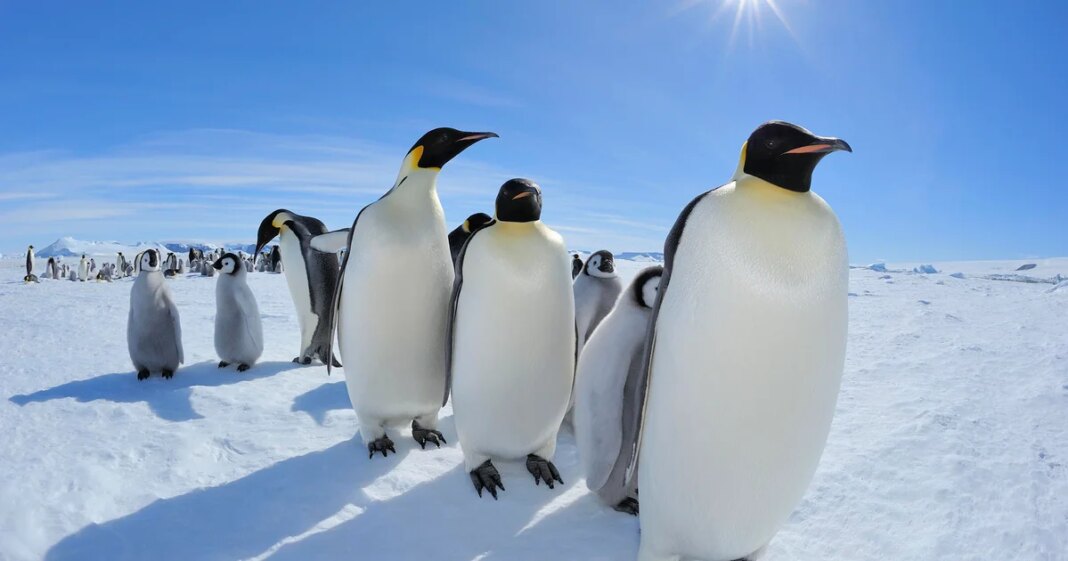
Greater protections for endangered emperor penguins and how to manage growing tourism are topping the agenda at talks on Antarctica opening in Japan on Tuesday.
Officials from the nearly 60 countries that are signatories to the Antarctic Treaty are meeting in Hiroshima for annual discussions on protecting and managing the fragile region.
The continent and its abundant wildlife are protected under the 1959 treaty, which designates it as a land of science and peace, while freezing territorial claims.
“The discussions taking place here in Hiroshima are especially important at a time when Antarctica is increasingly affected by global challenges such as climate change,” Francisco Berguno, executive secretary of the Antarctic Treaty Secretariat, told a news conference Tuesday.
Berguno warned the continent “plays a critical role in regulating the Earth’s climate and oceans” and urged “long-term thinking, careful management, and international trust.”
“Decisions taken here help ensure that human activity in Antarctica remains carefully managed, environmentally responsible and scientifically driven,” he added.
Around 400 government officials and researchers from some 50 countries, including the United States, China, Russia and Ukraine, were toi take part in the meeting, according to Jiji Press.
Among the most closely watched issues this year will be the status of emperor penguins, which last month the International Union for the Conservation of Nature (IUCN) declared endangered.
Conservation group World Wildlife Fund (WWF) is urging that the animal be designated a specially protected species at the Hiroshima meeting, which could put restrictions on shipping and tourism that are adding pressure to the penguins.
Their numbers have plummeted primarily due to climate change that causes the sea ice where they live, hunt and breed to break up earlier in the year.
“These icons on ice may well be heading down the slippery slope towards extinction by the end of this century unless we act now,” WWF’s chief advisor for polar and oceans, Rod Downie, said in a statement.
But it remains unclear if the meeting can reach consensus on upgrading protections, with some sources saying a decision was unlikely in Hiroshima.
Also high on the agenda will be a sharp rise in tourists — almost 120,000 visited Antarctica in 2024-25 — and delegates will mull potential restrictions on areas or activities, as well as possible quotas.
Experts warn existing frameworks don’t take into account the increasing diversity of tourist activity in the region, from kayaking and hot air ballooning, to motorbiking.
“How to regulate and manage tourism in Antarctica has become a key issue,” said Hideki Uyama of Japan’s foreign affairs ministry, the meeting’s chair.
Ringing alarm bells about Antarctica
Scientists warned in August that abrupt and potentially irreversible changes in Antarctica driven by climate change could lift global oceans by meters and lead to “catastrophic consequences for generations.”
More broadly, a state-of-knowledge review by a score of top experts revealed accelerating shifts across the region that are often both a cause and effect of global warming, according to a study published in Nature, a peer-reviewed international scientific journal.
The study’s authors suggest that limiting CO2 emissions, and in turn preventing global warming from exceeding at least 1.5 degrees Celsius, “will be imperative” to reduce and prepare for the broad effects of abrupt Antarctic and Southern Ocean changes.