Key allies of Andy Burnham have warned the prime minister not to back down over his promises to put water companies under public control, after details emerged about the prime minister’s plan to give mayors more oversight of the industry.
Mathew Lawrence and Mark McVitie, who helped provide an intellectual underpinning to Burnham’s project over the summer, have both warned that merely giving politicians oversight of key utilities rather than financial control will fall short of what the prime minister promised.
Their comments come after it emerged the prime minister is considering creating a set of regional bodies to hold water companies in England and Wales to greater account, including by questioning bosses on bills and sewage spills. Lawrence and McVitie warned this would not be enough to deliver Burnham’s promise of bringing “the essentials of life” under public control.
Lawrence, the director of the Common Wealth thinktank, said: “Putting mayors in charge of water services is a successful model the world over. But the critical question is, will public oversight without ownership provide meaningful control over privatised companies or not?
“Can they ban dividend payments, stop financial extraction, reduce the cost of capital that determines overall cost, or choose to take the service back into public hands to run for the public benefit? If the answer is no, devolving oversight risks handing over responsibility without the power to fix the problem.”
McVitie, the former director of the Labour Growth Group, said: “Local leaders having real power over water investment would be a positive step. But public control has to mean more than public scrutiny.
“The question is whether the public interest can actually be enforced in the face of the interests of monopoly operators. A functioning system needs to raise the required investment at a reasonable cost, prevent financial extraction when services fail, and ensure that operators which are no longer viable can be restructured.”
He added: “Regional boards may improve planning, but unless the financial model is made to work for the British people, rather than the other way round, we risk giving local leaders more responsibility for a system they don’t have the power to fundamentally change.”
Burnham plans to release a “10-year plan” for Britain in November, part of which will spell out how he intends to bring utilities such as water and energy companies under public control.
Under plans first reported on Tuesday by the Telegraph, Burnham is understood to be considering creating nine regional bodies, roughly matching the geography of the biggest water companies in England and Wales. They will be tasked with setting company objectives and holding bosses to account over bills, shortages and sewage discharges.
The boards are likely to engage with customers and run public consultations, but it remains unclear whether they will be given financial control over the companies.
Government sources described the reports as “speculation”, and added that there would be more details in the 10-year plan.
after newsletter promotion
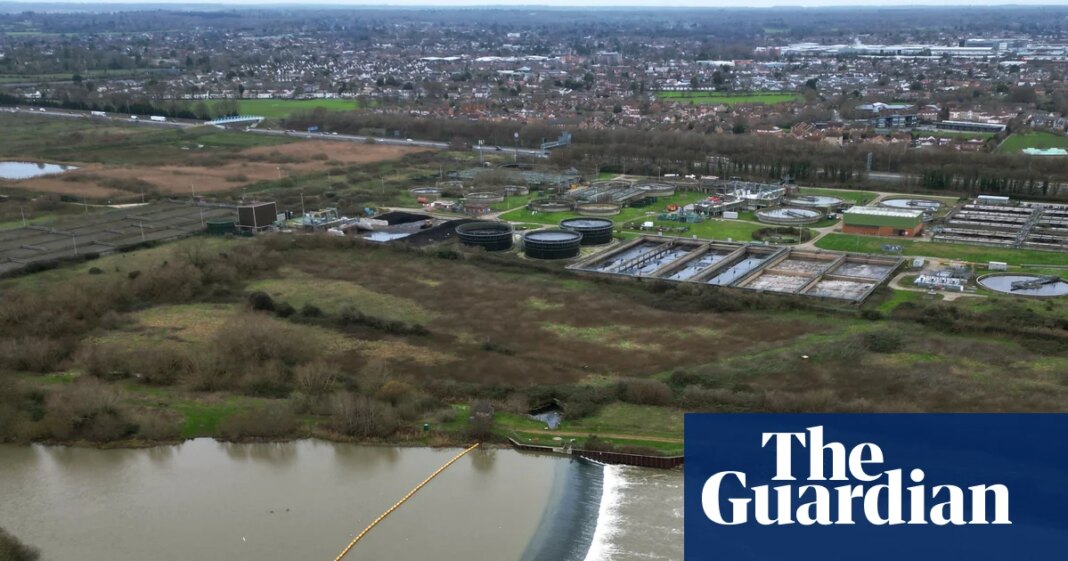
In the shorter term, the prime minister faces a decision over what to do about the financially stricken Thames Water, which is the subject of a bailout bid by its creditors. At the end of March the regulated value of Thames’s assets was estimated at £23bn, while its net debt increased to £18.5bn.
Burnham said during his campaign to become an MP he would nationalise Thames, but doing so could cost several billions of pounds.
The Guardian recently revealed Burnham is considering changing the law to take the company into special administration, which could be the first step to nationalisation.
In the meantime, customer dissatisfaction with the water industry has continued to grow. The number of complaints made by households about water companies is up 48% year on year, according to the Consumer Council for Water, the steepest annual rise in two decades.
Mike Keil, the CCW chief executive, said the numbers reflected “just how dissatisfied many people still are with the state of the water sector and the enormous task water companies face in rebuilding consumer trust”.
A government spokesperson said: “Our water industry has not been working for people for far too long. We’re bringing in tougher regulation, stronger enforcement and greater accountability, so water companies deliver for customers and the environment.”