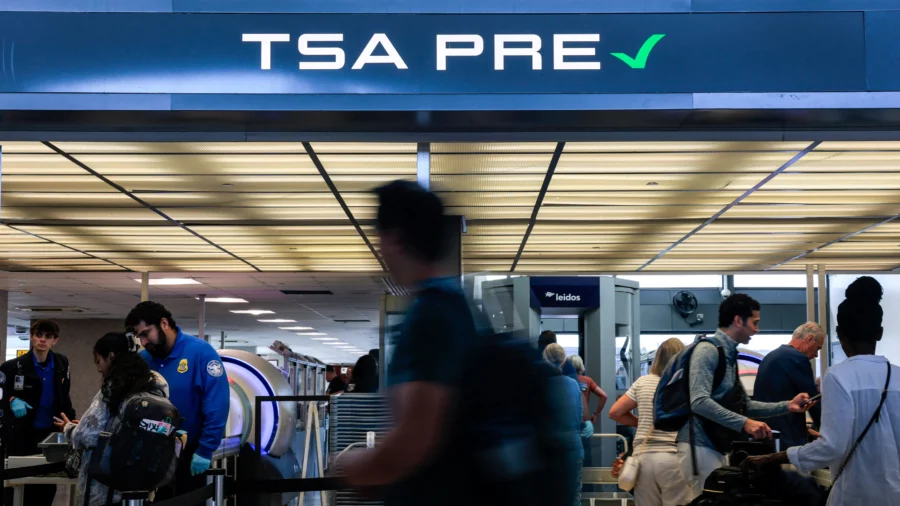
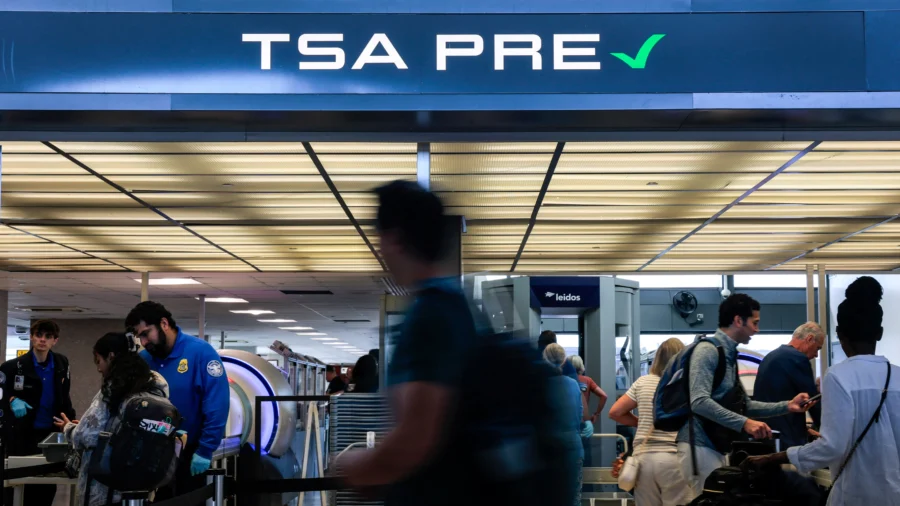
Transportation Security Administration officers will not be permitted to sit while checking identification at U.S. airport checkpoints, the agency and a major union said Tuesday.
TSA is removing the chairs.
“This welcome change reinforces both our security posture and our commitment to hospitality by having these officers on their feet and alert,” the TSA said in a statement to media outlets. “All officers must meet fitness for duty requirements to be capable of performing their vital national security function.”
But the American Federation of Government Employees TSA Council 100, which represents the officers, criticized the move as a “disregard for workers’ rights and safety.”
The chairs “serve as basic ergonomic and safety support for officers that stand and walk on hard surfaces all day,” the union said. The no-chair policy is the latest bit of turbulence to hit the airport screeners.
President Donald Trump fired TSA head David Pekoske in January 2025, and the position was vacant until the Senate confirmed David Cummins in August.
In July, Cummins, a senior vice president of Serco, a UK-headquartered company that runs public services for governments, appeared before the Senate Commerce, Science, and Transportation Committee and outlined plans to include more private employees in the wake of the partial Homeland Security shutdown in the spring.
He also told senators, “I am deeply concerned that in the face of another shutdown, we’re going to start seeing attrition pick up. And so we need to be prepared as an agency and develop contingency plans on how we’re going to deal with that eventuality if it happens.”
He asked lawmakers to “do whatever you can to keep that from happening and to ensure our workers are paid.”
“There is too much at stake to have them distracted by months without pay,” he said.
In April, Trump proposed cutting more than 9,400 workers and just over $1.5 billion, or about 20 percent, from the annual budget of the 60,000-employee TSA. The president also proposed requiring smaller airports to use private security.
That step would cut the TSA payroll by more than 4,500 jobs as a first move toward privatizing the agency created by Congress after the Sept. 11, 2001, terrorist attacks. The agency has taken over passenger screening at most U.S. airports since.
About 20 airports already use private security screeners, including in San Francisco, Kansas City, and Sarasota, Florida.
The shutdown forced 50,000 TSA workers to go without pay for six weeks, causing airport security waits to be as long as four hours or more.
Reuters contributed to this report.