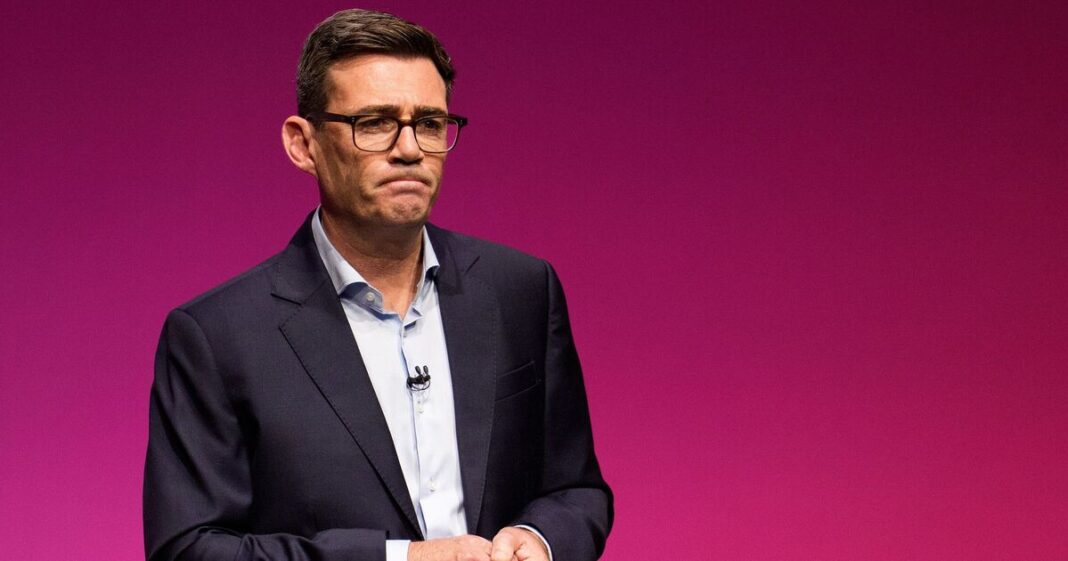

Andy Burnham announced his plans to get rid of the triple lock (Image: Getty)
The triple lock is set to be axed after years of speculation, and despite an outcry against curbing the benefit for state pensioners, a tearful Prime Minister Andy Burnham has announced.
But the end of the triple lock, and the switch to something closer to a ‘double lock’ system without wage growth being used to calculate the annual increases for state pension payments, is not going to happen until 2030, if it happens at all following parliamentary scrutiny.
It means that, as of now, state pensioners are still on course for several years’ more triple lock boosts, including the next one, due in April 2027.
Though the final assessment figures have not yet been released, state pensioners are currently on course for a boost of up to £488.80 a year, for new post-2016 state pensioners with a full National Insurance record.
New state pensioners who hit state pension age during or after April 2016 are set for a larger triple lock increase than older state pensioners as their weekly payments are higher (although the new state pensioners aren’t entitled to some defunct schemes such as Second State Pension). Older state pensioners are in line for up to £374 extra.
Despite the plans to end the lock in 2030, Mr Burnham has confirmed he is going to stand by the triple lock until the end of the current Parliament. The mechanism uprates state pension payments annually by one of three metrics (inflation, wage growth or a flat 2.5%, whichever is highest).
According to the latest analysis by financial platform Hargreaves Lansdown, it means new state pensioners are in line for a boost to their state pension worth approximately £488 a year. That’s because the Triple Lock forecasts show that, right now, the benefit is set to increase by 3.9% in April 2027.
Right now, wage growth is higher than inflation. Inflation sits at 3.1%, while wage growth sits at 3.9%, and while these aren’t the final figures, it looks likely that wage growth rather than inflation will be the metric used when the final triple lock is set at the next Budget in October.
As reported by Helen Morrissey, Head of Retirement Analysis at Hargreaves Lansdown: “Such an increase would put someone on the full new state pension on course to receive £250.70 a week from next April – up from the current £241.30 per week. Someone on a full basic state pension would receive £192.10 a week – up from £184.90.
“This will be a welcome boost to pensioner incomes but even a full state pension is only ever going to cover the basics. If you want to live well in retirement, then you will need to take your pension planning into your own hands.”
But if the figures were to remain the same, it would lead to a £488 per year boost for a new state pensioner with a full National Insurance record. If wage growth drops in the following three-month period, the calculation would reduce, but if it increases, the triple lock rises yet higher.
The absolute minimum rise possible for a post-2016 pensioner is £313.69, as this is the minimum floor 2.5% for an increase.
But for some, the boost may still not be enough to guarantee an ‘adequate retirement’.
Ms Morrissey added: “If you have a gap between what you have and what you need, then taking small actions, like boosting contributions every time you get a pay increase or a promotion could have a big impact over time.
“Your employer might also be willing to increase their contribution if you increase yours – known as the employer match – and this can also make a big difference. This steady drip feed of contributions invested over the long term can transform your retirement.
“If you’re worried that you’ve neglected your pension, then it’s important to say that it’s never too late to make a difference to your retirement.
“Take stock of what you have, and if you have any extra money to contribute, it can still make a huge difference. You can usually access money in a pension from age 55 (rising to 57 in 2028).”