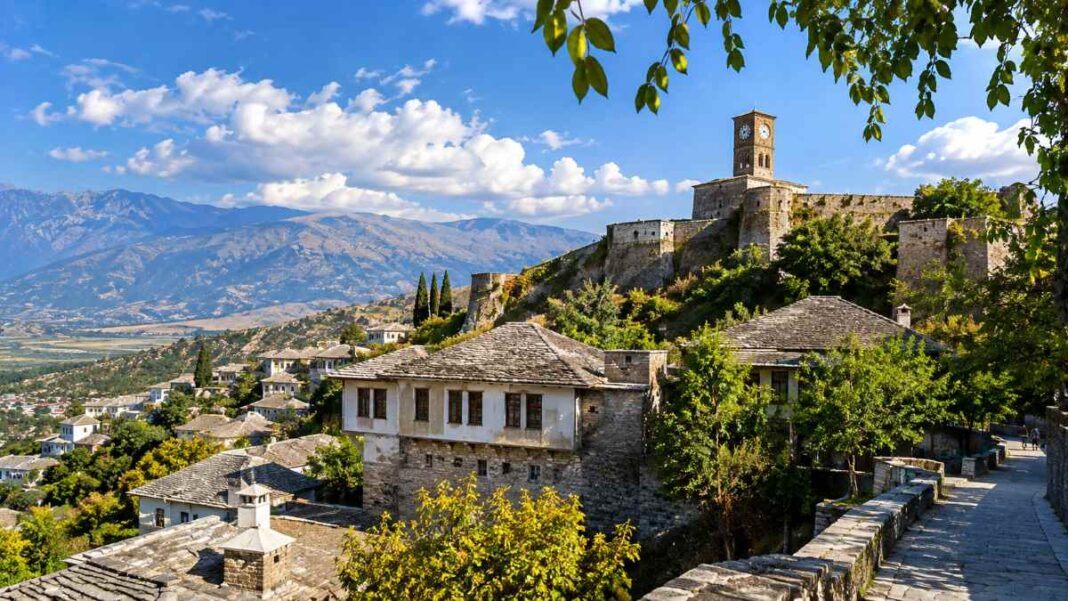
 Image generated with Ai
Gjirokastër, in southern Albania, is attracting attention among travellers looking beyond Europe’s heavily visited historic cities. Often called the ‘City of Stone’, the destination is recognised for its Ottoman-era architecture, steep cobbled streets and distinctive fortified houses that rise above the Drino Valley. Its historic centre forms part of the UNESCO World Heritage property known as the Historic Centres of Berat and Gjirokastra. The designation recognises the towns as exceptional examples of architectural character associated with the Ottoman period, with Gjirokastër particularly notable for its preserved traditional residential buildings. Unlike larger European heritage destinations, Gjirokastër offers a more compact experience. Visitors can explore much of its historic quarter on foot, moving between the Old Bazaar, traditional houses, museums and the imposing castle that dominates the hillside. The town’s appeal is not limited to architecture. Its position between the Gjerë mountain range and the Drino Valley also gives it a distinctive landscape, combining historic streets with expansive views of southern Albania.
Ottoman Tower Houses Define the City’s Architectural Identity
The most recognisable feature of Gjirokastër is its traditional stone architecture. Its fortified residential buildings, commonly known as kullë, were constructed to provide security, privacy and comfortable family living.
These multi-storey houses typically feature thick stone walls, small windows, wooden galleries and slate-covered roofs. Their design reflects the wealth, social position and defensive requirements of the families who built them.
Two important examples are Zekate House and Skenduli House.
Advertisement
Advertisement
Built between 1811 and 1812, Zekate House is regarded as one of the finest surviving examples of the traditional Ottoman tower house. Its twin towers, defensive lower levels, carved wooden ceilings and decorated reception room provide insight into the domestic architecture of the period.
Skenduli House, dating from 1823, offers another perspective on the city’s residential heritage. Its elaborate wooden interiors, distinctive staircases and traditional reception spaces demonstrate the craftsmanship associated with wealthy households in historic Gjirokastër.
Advertisement
Advertisement
Visitors should check opening arrangements before travelling, as access to some historic houses is managed locally and may depend on the availability of family members or guides.
Gjirokastër Castle Provides Panoramic Views Across the Drino Valley
Standing above the historic centre, Gjirokastër Castle is one of Albania’s most prominent fortified landmarks. Its strategic position overlooking the valley reflects the town’s historical importance along routes connecting the interior of the Balkans with the southern regions.
Advertisement
Advertisement
The fortress has developed over several historical periods and contains a number of military and cultural exhibits. Visitors can explore its courtyards, defensive structures and museum displays while enjoying panoramic views across the surrounding mountains and settlements.
The Old Bazaar below the castle provides another important part of the visitor experience. Its narrow streets contain traditional shops, artisan workshops and cafés, creating opportunities to discover local craftsmanship and everyday life.
The combination of the fortress, historic houses and bazaar makes Gjirokastër particularly suitable for walking-based cultural tourism.
Traditional Cuisine Adds to the Slow-Travel Experience
Food is an important part of the destination’s cultural identity. One of Gjirokastër’s best-known local dishes is qifqi, a traditional preparation made with rice, eggs, mint and seasoning. The mixture is shaped into small portions and cooked in a special pan, giving the dish its distinctive form.
Advertisement
Advertisement
Another regional speciality is oshaf, a traditional dessert prepared with sheep’s milk and dried figs. Local dairy products, honey, seasonal produce and regional cooking traditions also contribute to the area’s culinary appeal.
These dishes offer visitors a way to connect with the region’s food heritage through family-run restaurants and traditional eateries.
The surrounding countryside also provides opportunities for rural excursions and visits to local agricultural producers. Farm-based experiences can complement heritage visits, although travellers should confirm availability and operating arrangements directly with individual providers.
November Offers a Quieter Visit, but Rain Remains a Consideration
November can be an appealing period for travellers who prefer historic towns without the intensity of peak summer tourism. Visitor numbers are generally lower across Albania during the late autumn season, allowing a more relaxed experience at cultural attractions.
However, describing early November as consistently sunny or dry would be misleading. Gjirokastër experiences cooler conditions and increased rainfall during this period. Visitors should prepare for wet streets, changing weather and cooler evenings, with waterproof footwear and layered clothing recommended.
The quieter season can also mean reduced opening hours or limited availability at smaller guesthouses and family-run attractions. Checking accommodation and sightseeing arrangements in advance is therefore advisable.
Advertisement
Advertisement
Heritage Hospitality Has Potential, but Investment Claims Need Verification
Gjirokastër’s traditional houses and historic setting provide opportunities for boutique accommodation and heritage-led tourism. Restored buildings can offer visitors an experience closely connected to the city’s architectural identity, while supporting local employment and the conservation of traditional structures.
Nevertheless, claims that regional authorities have recently approved grants converting historic tower houses into luxury corporate retreats or that a major remote-work hospitality market has emerged are not established by the available official evidence.
The destination’s strongest current proposition remains cultural tourism, independent travel and small-scale hospitality. Carefully managed restoration and locally owned accommodation could strengthen this offer while preserving the character that makes the city distinctive.
Gjirokastër’s Appeal Lies in Authentic Heritage and a Slower Pace
Visitors drawn to unique architectural styles, history, rustic cuisine and away from the crowds of Europe will find it in Gjirokastër. The city’s UNESCO status, Ottoman wooden and stone houses, historical fortress and unique cuisine are already a sure attraction for international visitors. It is important that, as tourism markets expand, the city protects this history by safeguarding those properties and ensuring there is additional support for local businesses catering to visitors.