Federal employees can once again use TikTok on their government-issued devices, according to a Department of Justice (DOJ) memorandum released on Friday.
The version of the app now operated by the TikTok U.S. Data Security Joint Venture no longer falls under the No TikTok on Government Devices Act, passed in 2022, which had banned it from government devices over national security concerns about its Chinese parent company, ByteDance.
The joint venture functions independently of ByteDance, has a majority ownership of American investors, and has revised the algorithm and cybersecurity measures that were originally developed by the Beijing-headquartered company, the DOJ said.
“Employees of Executive Branch agencies may download TikTok onto their official devices, subject to the agency’s discretion and consistent with all applicable workplace policies,” the memorandum reads.
According to the memo, U.S.-based third-party cybersecurity experts are on retainer for the TikTok U.S. Data Security Joint Venture to audit and certify privacy while proactively identifying and disclosing any vulnerabilities.
“These safeguards would appear to make TikTok USDS just as data-secure as any other social networking service, if not more so,” the DOJ said.
“We conclude that, as a matter of statutory interpretation, the version of TikTok currently available for download in the United States,” the DOJ memorandum stated, no longer falls “within that prohibited category of applications.”
Federal agencies are still allowed to independently decide whether to ban the application from government devices for reasons such as promoting employee productivity, the memo stated.
The federal government and TikTok’s relationship has been tense since at least 2020, the memo noted.
In 2022, Congress passed the No TikTok on Government Devices Act, directing the Office of Management and Budget to develop guidelines for agencies to remove TikTok or any other service developed by ByteDance from government devices.
Two years later, Congress enacted the Protecting Americans from Foreign Adversary Controlled Applications Act, making it unlawful for any entity to distribute, maintain, or update any foreign-adversary-controlled application. The legislation included a measure about a “qualified divestiture” that would have to be deemed acceptable by the president of the United States.
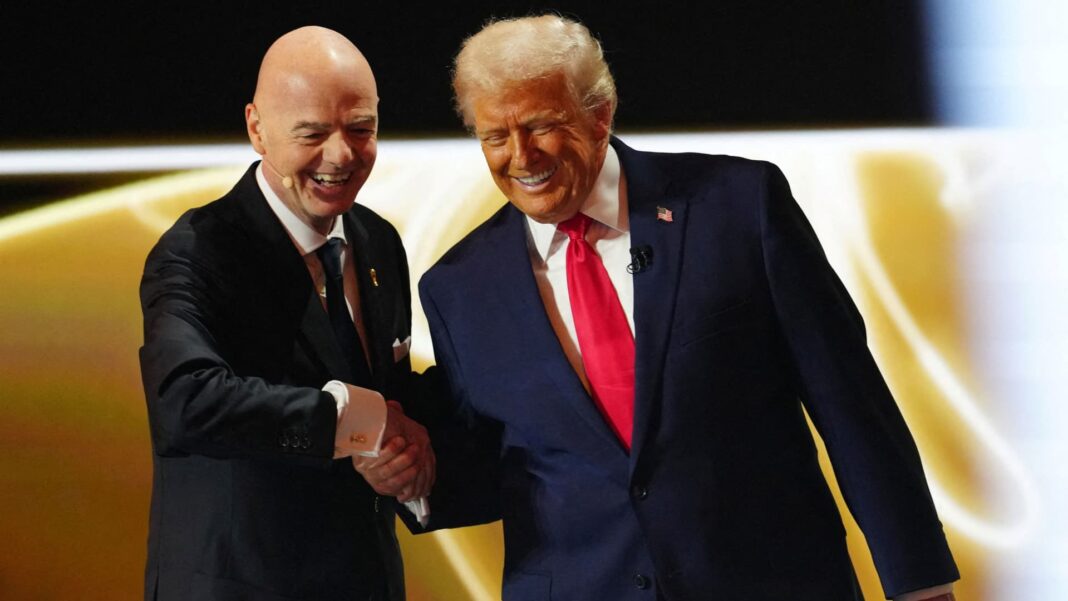
“TikTok’s United States application will be operated by a newly established joint venture based in the United States,” his order stated, adding that ByteDance would own less than 20 percent of the entity.
Because the new joint venture would be majority-owned and controlled by American investors, as well as subject to U.S. laws that would properly protect individuals’ data and national security, the ban on TikTok would no longer apply once the divestiture was complete, Trump had said in his order.
By January 2026, the deal was finalized, and the TikTok U.S. Data Security Joint Venture was established.
The joint venture’s managing investors are Silver Lake, Oracle, and MGX, owning cumulatively 45 percent of its shares.