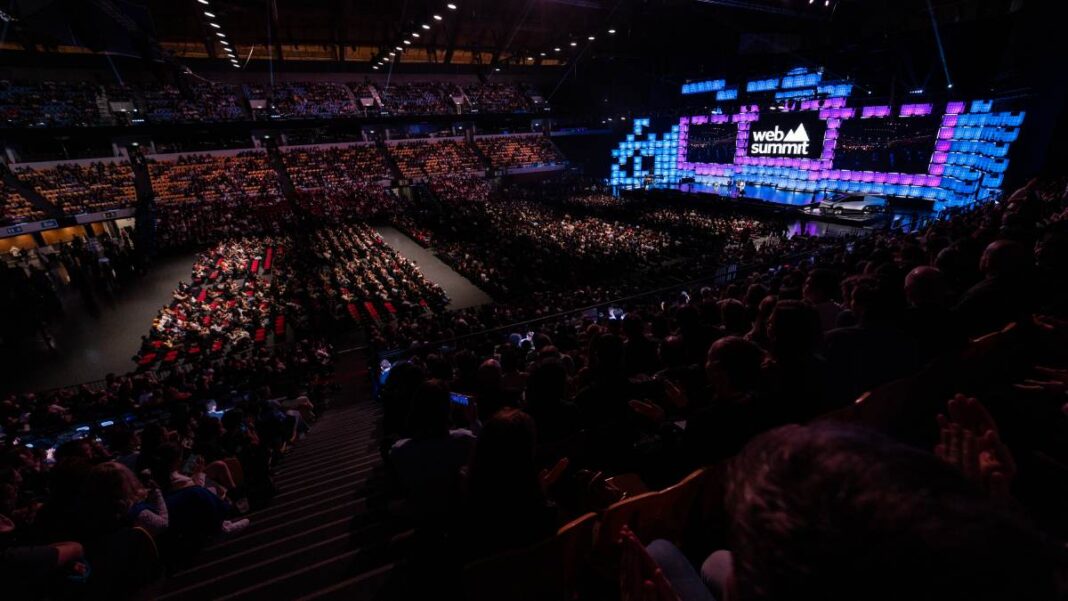

The beginning of Web Summit 2026 Lisbon has put Portuguese capital on test due to large number of international tech leaders that have invaded its transport and hospitality system. Specific logistical procedures for metropolitan transit system, civil aviation, and hotels district are activated due to such an overwhelming annual influx that causes all of city’s infrastructure to work at full capacity. As delegation movement reaches its climax in the Parque das Nações port area, the challenging nature of running a top-tier tech conference in a crowded historical city is revealed to Portuguese ministries and city officials while trying to balance international business diplomacy with domestic urban infrastructure challenges.
The Decennial Milestone: A Decade of Web Summit in the Portuguese Capital
A watershed moment in contemporary Portuguese economic development is represented by the opening of the 2026 conference, marking exactly ten years since the global tech summit was first hosted by Lisbon in November 2016. Over the course of the past decade, the conference has been leveraged by Portugal as an international showcase, fundamentally altering the perception of the domestic economy from a post-crisis recovery market into an energetic European capital of technology and venture funding.
Advertisement
Advertisement
The Institutional Foundation and Public Funding Architecture
This ten-year presence was secured through an institutional anchor dating to 3 October 2018, when an expansive public-private partnership agreement was executed by the Portuguese Constitutional Government and the Lisbon City Council (Câmara Municipal de Lisboa) with the event organisers. An annual public co-financing framework across a ten-year cycle was formalised under this binding contract, representing an aggregate public subvention spanning from 2019 through to the end of 2028.
The financial burden of this state commitment is apportioned across central and municipal administrative bodies so that economic promotion is balanced with municipal responsibilities:
Advertisement
Advertisement
- Funding is provided annually by the Portuguese State, disbursed through the national tourism authority, Turismo de Portugal, alongside the national agency for competitiveness and innovation, IAPMEI.
- The remaining annual portion is contributed by the Câmara Municipal de Lisboa, channelled directly through the regional tourism entity, the Associação Turismo de Lisboa.
An uninterrupted institutional platform was established through this predictable financing mechanism, allowing Portuguese regulatory modernisations, international trade partnerships, and corporate tax incentives to be showcased directly to global technology leaders by national ministries.
Evolution of Lisbon’s Innovation Footprint Between 2016 and 2026
When the summit was initially relocated from Dublin to Lisbon in 2016, Portugal’s native entrepreneurial ecosystem was structurally fragmented, with venture investment volumes and local incubators lagging behind standard continental European benchmarks. Over the subsequent decade, administrative reform was catalysed by the presence of the conference, culminating in comprehensive statutory protections and direct capital initiatives for high-growth enterprises.
Advertisement
Advertisement
The creation of hundreds of technology hubs, accelerators, and specialized venture syndicates across the country was stimulated by the convergence of global capital flows with domestic public policy. Simultaneously, the structural physical boundaries of the city itself were forced to be addressed by national authorities. The conference has steadily been converted from a purely promotional asset into an annual stress test of municipal resilience by the concentration of visitors within the specific riverfront precinct of Parque das Nações, testing whether enterprise demands can be sustained at scale by the capital’s public transport, civil aviation, and hospitality assets.
Hospitality Under Peak Load: Lisbon’s Metropolitan Accommodation Crunch
The most intensive corporate hospitality surge in Portugal’s commercial calendar is marked by the opening day of Web Summit 2026 Lisbon, placing extreme demands on lodging establishments across the Greater Lisbon area (Grande Lisboa). While an autumn deceleration is experienced by traditional leisure tourism across southern Europe, a transition into high-yield, corporate-dominated room allocations is undergone by Lisbon’s hotel sector.
Advertisement
Advertisement
Surging Occupancy and Rate Volatility Across Greater Lisbon
It is reported by hoteliers across the capital that accommodation occupancy rates within central urban districts and the Parque das Nações parish have reached near-total saturation, stabilising across three-star, four-star, and luxury five-star categories. Significant regional displacement is generated by the geographical pattern of this demand. Because primary hotel stock in the immediate vicinity of the Feira Internacional de Lisboa (FIL) and the MEO Arena is reserved by multinational delegations and event organizers months in advance, peripheral municipalities are sought out by independent attendees and venture delegations.
Sharp occupancy increases are driven by this spatial spillover across secondary nodes, including Cascais, Oeiras, Sintra, and across the river into the northern districts of the Setúbal Peninsula. Elevated rate structures are experienced by corporate procurement departments and delegates booking on short cycles. It is demonstrated by market tracking from regional lodging associations that the average daily rate (ADR) charged across metropolitan hotels surges relative to standard November averages, with central Lisbon rooms frequently commanded at premium corporate rates per night.
Regulatory Realities: Short-Term Rentals, Tourist Taxes, and Housing Friction
Significant volumes of travellers are shifted into the local accommodation sector (Alojamento Local) due to the inability of conventional hotel stock to independently absorb tens of thousands of simultaneous arrivals. Thousands of private residential apartments across historic parishes—such as Santa Maria Maior, Misericórdia, and Arroios—are converted into short-term corporate accommodation during conference week.
However, longstanding socio-political friction regarding metropolitan housing affordability is exacerbated by this intensive reliance on residential units. Increased regulatory scrutiny has been brought about by the widespread commercialisation of inner-city housing stock, prompting national legislative initiatives and municipal restrictions designed to curb unconstrained holiday home proliferation. The challenge faced by local authorities lies in balancing the operational needs of global corporate congresses against the daily residential requirements of the permanent urban population.
Advertisement
Advertisement
To mitigate this municipal cost burden, direct reliance is placed by local authorities on the Taxa Municipal Turística (Municipal Tourist Tax). Established to ensure that urban infrastructure maintenance is directly supported by temporary visitors, an overnight surcharge is levied by the municipality across all regulated lodging establishments. Substantial receipts are channelled directly into municipal accounts during the broader event schedule. It is statutorily required that these receipts be reinvested by the Câmara Municipal de Lisboa into public rights-of-way, enhanced street hygiene operations, park restorations, and public safety assets across heavily visited parishes.
Metropolitan Mobility Pressures: Special Transit Measures and Transit Clearance
Massive passenger clearance pressures across public transportation systems are generated by the movement of tens of thousands of attendees between downtown accommodation zones, historic commercial areas, and the Parque das Nações event perimeter. Comprehensive multi-operator logistics protocols have been enacted by state transit authorities to maintain public mobility.
Metropolitano de Lisboa: Capacity Adjustments on Red and Green Lines
A special mobility operation was formally enacted on 4 November 2026 by state-owned rail operator Metropolitano de Lisboa to service the heavy passenger flows expected between 9 and 12 November. The rapid clearance of passengers arriving at Humberto Delgado Airport and travelling directly to Estação Oriente via the Red Line (Linha Vermelha) is prioritised as the core operational objective.
Several high-capacity operational adjustments have been implemented by Metropolitano de Lisboa under this exceptional protocol:
- Maximum frequency operations are maintained on the Red Line, which provides the uninterrupted underground connection between the airport terminal, the Oriente multimodal station, and the northern residential intersections.
- Additional standby trainsets are deployed along the Red Line to immediately absorb peak morning surges heading towards the exhibition complex and evening flows returning towards the historic centre.
- Reinforcements are directed to the Green Line (Linha Verde), which connects downtown transfer points at Baixa-Chiado and Alameda to the suburban commuter interchanges at Cais do Sodré and Roma-Areeiro.
- Enhanced station surveillance, multilingual customer guidance personnel, and specialized safety teams are deployed across critical network transit hubs to direct incoming international travellers.
Multimodal Fare Integration: The Web Summit Transport Pass Framework
To prevent long ticket queues from crippling automated entry gates at major stations, a unified transit ticketing protocol was established between Metropolitano de Lisboa, municipal bus operator Carris, and national railway operator Comboios de Portugal (CP).
| Transport Operator | Network Mode | Web Summit 2026 Operational Measures | Ticketing Integration |
| Metropolitano de Lisboa | Underground Heavy Rail | Increased train frequencies on Red and Green lines; reserve trainsets deployed; specialized guidance staff stationed at major hubs. | Integrated within the multimodal Web Summit Transport Pass (WSTP). |
| Carris | Municipal Buses, Trams & Funiculars | Dedicated Web Summit Shuttle operated along Tagus corridor; reinforcement of arterial municipal routes. | Full validation across regular smart cards and the dedicated multi-day WSTP. |
| Comboios de Portugal (CP) | Suburban Commuter Rail | High-volume regional transit clearance connecting Estação Oriente to suburban commuter lines. | Unlimited suburban CP rail transit included in multi-day WSTP tiers. |
Central to this logistical effort is the Web Summit Transport Pass (WSTP), a dedicated multimodal credential designed to simplify delegate journeys across the city. The reusable navegante ocasional contactless smart card is incorporated into the pass, providing unlimited consecutive travel following initial validation.
Advertisement
Advertisement
To streamline international arrivals, dedicated sales counters were established inside Lisbon Airport immediately adjacent to the official Web Summit accreditation terminal from 7 November through 10 November 2026. Conference accreditation, public transit pass collection, and direct entrance into the airport’s underground metro terminal are thus permitted for incoming delegates without creating landside pedestrian bottlenecks.
Surface Clearance: Carris Dedicated Shuttles and Arterial Traffic Restrictions
To support the heavy underground rail system, an express Web Summit Shuttle has been deployed by municipal transit provider Carris, operating continuously along the Tagus riverside corridor between Praça do Comércio in downtown Lisbon and Estação Oriente. The service is operated as a dedicated direct route, allowing corporate travellers to be cleared from the historical Baixa quarter without adding pressure to standard residential bus lines.
Simultaneously, extra articulated buses have been deployed by Carris along major municipal corridors, specifically bolstering capacity on arterial routes. Surrounding the venue itself, temporary traffic closures along the central spine of Alameda dos Oceanos have been enforced by the Lisbon Municipal Police, prioritising emergency access routes, pedestrian safety zones, and active transit corridors for authorized conference shuttles.
Civil Aviation Bottlenecks: Portela’s Structural Thresholds and the Alcochete Mandate
Public focus on the physical limits of Lisbon’s civil aviation infrastructure has been renewed by the opening wave of corporate delegations arriving for the conference. Having operated with a single main runway situated within the urban core of the capital, Humberto Delgado Airport (LIS) has been run above its nominal design capacity for several consecutive years.
Runway Saturation at Humberto Delgado International Airport
Slot constraints at Humberto Delgado reach critical levels during peak mega-event cycles. Rigid movement restrictions are faced by international carriers deploying supplementary wide-body aircraft and chartered delegations, generating downstream schedule delays across the national aviation network. Physical runway expansion is rendered impossible by the physical containment of the airport within dense residential neighbourhoods across Portela, Alvalade, and Lumiar.
Severe passenger queueing across customs facilities, baggage reclaim areas, and terminal taxi concourses is produced by the convergence of corporate executives, trade delegations, and regular tourist traffic within this constrained terminal footprint. While extra staff are deployed by border control and ground support agencies to accommodate delegates, the operational bottlenecks at Portela illustrate the limits of managing major international events with constrained infrastructure.
Advertisement
Advertisement
Strategic Infrastructure Evolution: The Luís de Camões Transition
To resolve these recurring aviation constraints, a definitive infrastructure decision regarding the Novo Aeroporto de Lisboa (NAL) was executed by the Portuguese Constitutional Government. Following the definitive recommendations of the Independent Technical Commission, the construction of the capital’s replacement international airport at the Campo de Tiro de Alcochete on the south bank of the Tagus estuary was approved by the Council of Ministers.
Officially designated as the Aeroporto Luís de Camões, the future aviation hub is planned as a comprehensive replacement for Humberto Delgado Airport, engineered to eliminate metropolitan slot shortages through a modern, dual-runway layout capable of scaling passenger traffic extensively. Airport concessionaire ANA Aeroportos de Portugal has been instructed by central authorities to proceed with technical planning, site preparations, and environmental impact assessments at the Alcochete site.
However, because the complete operational transition to the new facility is not projected until the mid-2030s, corporate event peaks over the coming decade must be navigated through interim capacity mitigations at Humberto Delgado, maintaining vulnerability during international conference weeks.
Economic Diplomacy and Industrial Policy: State Announcements at the Summit
Far beyond functioning as a commercial trade show, Web Summit 2026 Lisbon is utilised as the central platform for Portuguese economic diplomacy, multilateral state agreements, and sovereign technology strategy.
Inauguration of the Portugal–United States CEO Forum
Reflecting the government’s strategic focus on foreign direct investment, the official backdrop for the launch of the Portugal–United States CEO Forum was provided by the opening of this year’s conference. Announced jointly by the Ministry of Foreign Affairs (Ministério dos Negócios Estrangeiros) and the Ministry of Economy and Territorial Cohesion (Ministério da Economia e da Coesão Territorial), executive leadership from leading American and Portuguese corporations is convened by the forum alongside senior government ministers.
A structured institutional channel is established by this bilateral body to accelerate cross-border investment and industrial supply chain cooperation. Strategic sectors prioritised under the forum’s working agenda include:
Advertisement
Advertisement
- Advanced semiconductor manufacturing, telecommunications networks, and sovereign cloud infrastructure.
- The clean energy transition, deepwater offshore wind installations, and industrial green hydrogen pipelines.
- Critical digital infrastructure, biopharmaceutical manufacturing, and transatlantic defence technologies.
Short-term executive visits are intended to be transformed into long-term foreign direct investment commitments by the Portuguese Government through staging the inaugural CEO Forum on the immediate sidelines of Web Summit.
Sovereign Digital Ambitions: The National Artificial Intelligence Agenda
The main stage of the conference has also been utilised by the national executive to present the operational trajectory of Portugal’s National Artificial Intelligence Agenda (Agenda Nacional de Inteligência Artificial). Portugal is aimed to be established as a responsible, high-performance computing centre in southern Europe, with substantial economic benefits projected across European digital markets.
Several foundational state initiatives were detailed by the government during the ministerial address:
- European AI Gigafactories Application: A formal bid to host European Union AI gigafactories has been advanced by Portugal, representing substantial industrial capital investment to build high-performance computing clusters powered by the national electrical grid’s high share of renewable power.
- National Strategy for Data Centres: Significant capital inflows are directed towards secure domestic data hosting, sovereign cloud systems, and national digital security assets.
- Deployment of the Amália Large Language Model: The sovereign Portuguese language foundation model, “Amália,” is being moved into practical public service deployments, providing automated assistance across public administration and providing AI-guided learning tutors for students nationwide.
- The Digital Skills Pact (Pacto para as Competências Digitais): A nationwide training programme uniting government ministries, universities, and private employers has been instituted to train citizens across core and advanced digital disciplines.
The Entrepreneurial Dividend: Startup Portugal and Ecosystem Maturation
Coinciding with the decennial presence of the summit in Lisbon, a formal ten-year retrospective has been issued by public agency Startup Portugal, tracking the development of the domestic venture ecosystem since the conference arrived in 2016.
The Decade Manifesto: Targeting Scaling of Domestic Innovation
The transformation of Portugal’s startup economy over the past decade is underscored by major legislative and institutional milestones. A central turning point was marked by the enactment of the Startup Law (Lei das Startups) (Law No. 21/2023), under which modern legal definitions for innovative enterprises were codified, favourable employee stock option frameworks were introduced, and international technical recruitment channels were streamlined.
This legislative foundation has been reinforced by direct public capital deployment. Direct financial support across hundreds of entrepreneurial projects has been disbursed by Startup Portugal via its specialized startup and incubator voucher initiatives, while domestic enterprises have been sponsored at overseas trade summits through the Business Abroad internationalisation programme. From having zero home-grown unicorns a decade ago, thousands of active technology startups and scaleups are now counted in Portugal’s national registry.
Advertisement
Advertisement
In its published 10-Year Manifesto, an ambitious benchmark for the coming decade was established by the agency, aiming for the domestic entrepreneurial ecosystem to be scaled until an expanded share of Portugal’s Gross Domestic Product (GDP) is contributed by innovative startups.
Road 2 Web Summit 2026: Accelerating Domestic Innovation onto the World Stage
To help Portuguese founders capitalise on the international venture capital presence in Lisbon, the eleventh edition of the Road 2 Web Summit (R2WS) programme has been mounted by Startup Portugal in partnership with the Lisbon Municipality. More than one thousand domestic startups have been supported over the lifespan of the initiative.
For the 2026 cohort, state co-financing subsidies towards official exhibition packages, comprehensive pitch coaching, and access to dedicated investor matchmaking sessions were received by participating companies. Direct growth grants are awarded during the summit in collaboration with national energy company Galp:
- Most Promising Startup Award: Determined through competitive live pitch sessions held at the joint Portugal x Lisboa pavilion in Pavilion 1.
- Best Bootcamp & Conference Performance Award: Conferred in recognition of execution, peer collaboration, and commercial development during the preparation stages.
A central hub is provided by the joint institutional pavilion where structured networking between international venture capitalists and emerging Portuguese technology leaders is conducted by public agencies, including Turismo de Portugal, IAPMEI, AICEP Portugal Global, and Portugal Ventures.
The Post-2028 Horizon: Physical Constraints and European Bidding Pressures
As the 2026 event takes place across the Parque das Nações waterfront, the long-term outlook for the conference is being closely evaluated by political and economic leaders. The existing ten-year hosting agreement expires after the November 2028 edition, creating an active renegotiation window through which Lisbon’s continued hosting role will be determined.
The Temporary Venue Footprint
The structural footprint of Lisbon’s exhibition venues remains the primary operational constraint facing the retention of the summit. The structural ceiling of the combined indoor floor space provided by the Feira Internacional de Lisboa (FIL) exhibition pavilions and the adjacent MEO Arena has been reached for several editions.
Advertisement
Advertisement
To house the incoming attendees, extensive temporary pavilions, marquees, and covered connecting tunnels must be constructed across adjacent public plazas, parking lots, and riverfront concourses each year by technical organizers. While permanent structural expansions to the FIL exhibition halls were discussed in initial public agreements, construction has been delayed by complex municipal planning procedures, financial constraints, and environmental reviews. Production overheads are significantly increased by this continuous reliance on temporary modular structures, and exposure to autumn weather disruptions is faced by attendees.
Contractual Renewal and Competitive European Challenges
It has been publicly confirmed by conference leadership that exploratory negotiations are underway with multiple major European metropolises seeking to recruit the flagship conference once the Lisbon contract concludes in 2028, with a formal announcement expected during the 2027 edition. Massive, unified exhibition facilities capable of hosting vast delegations under single, permanent roofs are offered by competing capitals—such as Munich, Paris, and Madrid—backed by multi-runway international airports with substantial spare capacity.
For Portugal, more than financial subventions will be required to retain Europe’s premier technological conference. It must be demonstrated by central and municipal authorities that public transit and airport congestion can be addressed while a credible plan for permanent exhibition expansion is executed. Lisbon’s long-term standing as a premier European technology capital will ultimately rest on its ability to modernize core transport infrastructure and deliver the planned Aeroporto Luís de Camões, ensuring that global enterprise gatherings can be comfortably sustained by municipal services for decades to come.
Lisbon needs to continue focusing on metropolitan resilience as it faces the challenge of balancing its reputation for innovation excellence with capacity constraints. The ability to continue hosting top international conferences after present contracts expire will depend on transport improvement, airport expansion, and increased conference venues capacity.