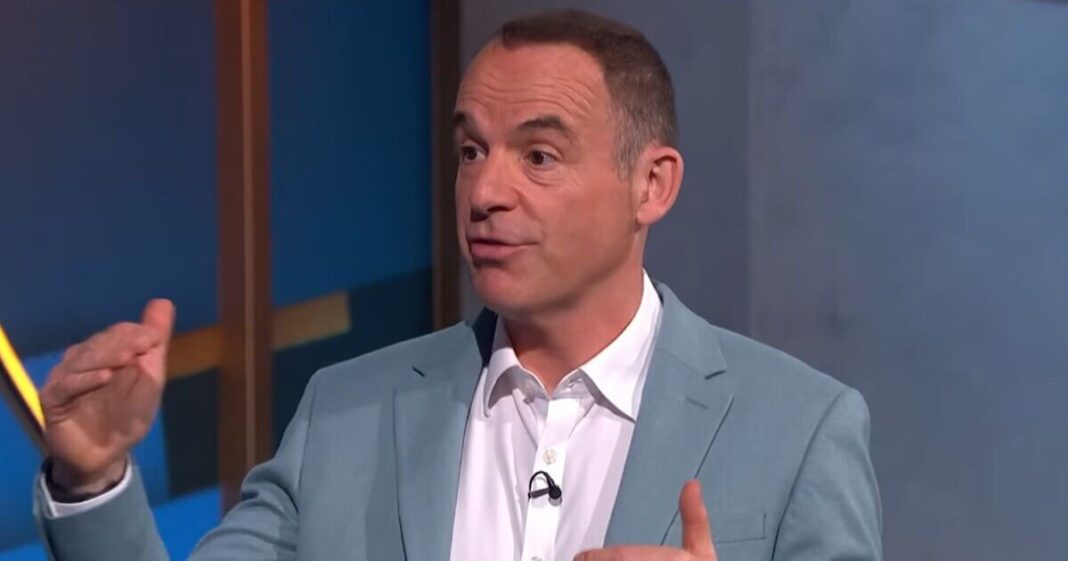

Martin Lewis shared some tips on his BBC podcast (Image: ITV)
Martin Lewis has shared some thoughts about building up your savings and investments for your retirement and later life. He took an intriguing question on his BBC podcast about how to best manage your funds.
A listener phoned in with a question as they had recently started investing through a stocks and shares ISA with Moneybox. The man said he was paying in £50 a month into a more adventurous portfolio of investments.
They said they had cash savings as well which they were paying into, and they were paying into a workplace pension. Their question was around the age they should look to cash in their investments.
Mr Lewis reminded listeners of his general rule of thumb here, saying: “My investment rule is if it’s money that you don’t need and you’re putting it away for more than five years, savings is the poor relation to investing, so you should consider investing.”
The person said they were 47 and were planning to access their investments when they turn 60. Their question was that since they planned to access their investments at this age, given Mr Lewis’ five-year rule, should they stop paying in at age 55 so these final investments have adequate time to grow.
‘They are volatile’
In response to the question, Mr Lewis explained the idea behind only putting funds into investments if you don’t need them for at least five years: “The reason for saying five years is because markets move up and down, that’s literally the point of them, they are volatile.
“What you’re more interested over the five years is the long-term trend.” Mr Lewis pointed to another reason why you want to give yourself a generous period over which you don’t need the funds.
He said: “The reason we talk about a long period is to ride out the short term. You don’t ever want to be in a position where you need the money today and today is a bad day to take the money out.”
Mr Lewis clarified with the man that as he didn’t need the funds immediately, the idea of accessing his investments at the age of 60 was just a general idea. The man confirmed this was the case, and he had picked this age as this was when he was planning to retire.
The consumer expert told the man that his five-year principle is on the conservative side, as some investment experts say just three years may be enough time for your investments to grow. Mr Lewis told the novice investor one option he has is to move his investments to a less adventurous portfolio as he got nearer his 60th birthday.
‘Soft guidance’
He told the man: “I don’t think there is any blanket moratorium on you continuing to invest nearer the age of 60.” Running through the different options, Mr Lewis said: “If you’re going more cautiously and you’re only talking about money that you’re dabbling with, you could push it up to 57 or 58.
“You might also think, I might not take it all out when I’m 60, I might even put some more in at that point for it to grow later and for me to keep the pot growing. See it as a soft guidance concept rather than a hard rule.”
The man also asked that should he decide to move over some of the funds into a less adventurous and less risky pot, how much should he move over. Mr Lewis told him this is completely up to him and it is “perfectly reasonable” to make this move as you approach the date when you plan to cash in your investments.
‘Learning money’
Mr Lewis had a final word of encouragement for the newbie investor for when he makes those decisions at age 55. He said: “I know you’ve only just started, but I think you will be a lot more educated about the situation then and more confident in making your own decisions at that point, which is why it’s great that you’ve started.
“Some of this is learning money. You should see it as learning money.” If you are buying investments through an ISA wrapper, you can buy up to £20,000 each tax year through these tax-free accounts.
The ISA allowance rules are changing from April 2027. Currently, you can use all the £20,000 allowance for deposits into either cash ISAs or stocks and shares ISAs, split as you decide.
However, from April 2027 you will only be able to use up to £12,000 of the allowance for either type of account, while the remaining £8,000 will only be available for investments.
People age 65 and over will be exempt from the new rules and will retain the current allowance.