Fresh exchanges of fire between Iran and the United States are raising new questions about the future of ceasefire talks, despite recent suggestions from U.S. President Donald Trump that a deal could be reached within days.

Overnight, Iran reportedly launched seven ballistic missiles and drones toward Bahrain and Kuwait, prompting air defence responses across the Gulf region.
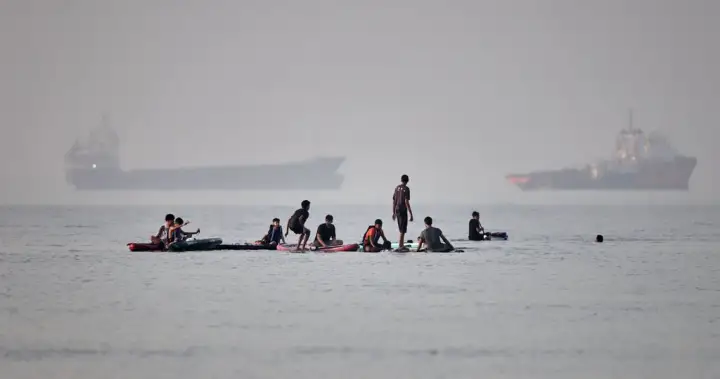
The U.S. military said it intercepted the projectiles and later struck Iranian surveillance and radar sites, including facilities in the Strait of Hormuz.
According to U.S. Central Command, the sites were targeted after Iranian drones and missiles “posed an immediate threat to regional maritime traffic,” U.S. Central Command said on social media.
It confirmed it hit radar sites, including an island in the strait, “to defend against further attacks.”
Iran said it had targeted the Kuwaiti Ali Al Salem air base that hosts US forces, and the US navy’s fifth fleet in Bahrain, according to state-run Islamic Republic News Agency (IRNA).
No causalities of American personnel have been reported yet, according to Reuters.

Get breaking National news
Get breaking Canada news delivered to your inbox as it happens so you won’t miss a trending story.
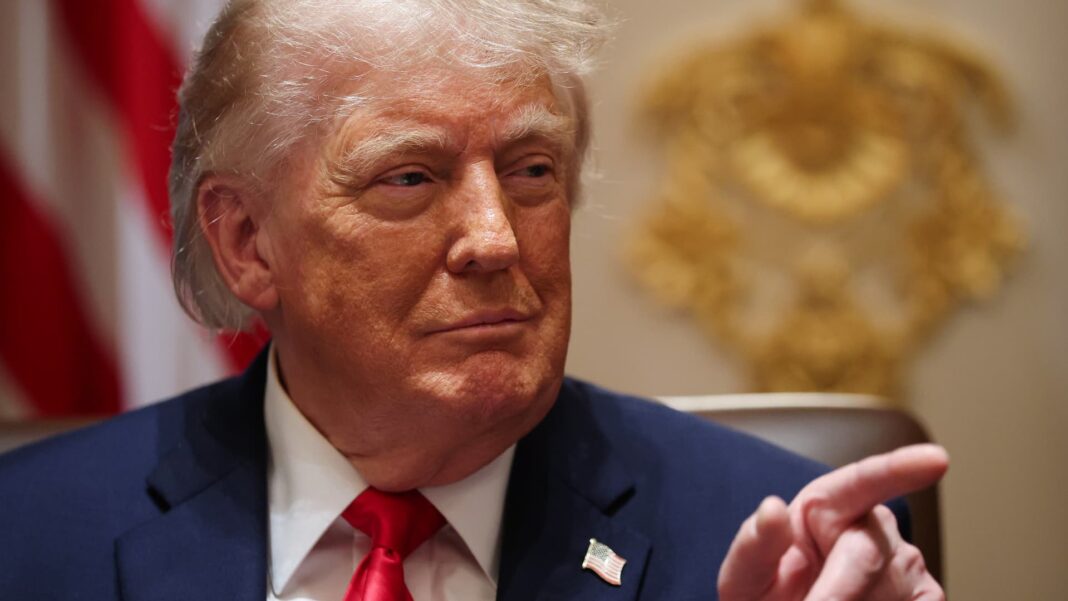
Earlier this week, Trump suggested a deal could be reached by the weekend and said Friday that the United States would be wrapping up the conflict quickly.
Global News Washington correspondent Reggie Cecchini said messaging from Tehran suggests negotiations remain at a standstill, with several key issues still unresolved despite ongoing diplomatic efforts.
“The messaging from Tehran suggests negotiations are at a complete standstill because there are various issues that still have to be ironed out,” he said.
One of the biggest sticking points remains Iran’s nuclear program.
Trump has repeatedly insisted that any agreement must prevent Iran from obtaining a nuclear weapon, while Iranian officials have signalled that nuclear issues are not part of the current discussions.
Cecchini said both sides continue to publicly claim progress, but it remains unclear whether negotiators are any closer to a final agreement.
Rising energy prices linked to instability in the Strait of Hormuz have contributed to inflation concerns in the United States, Canada and globally, creating additional challenges and “political risk.”
Energy analysts have previously warned that continued instability around the Strait of Hormuz could put upward pressure on global oil prices, which directly impact costs for Canadian consumers.
Despite concerns that the ceasefire could collapse, Trump told reporters Friday that “the situation with Iran seems to be going quite well.” He told an event that, “We’re going to come out of Iran very quickly and it’s going to be very strong one way or the other, whether it’s a piece of paper or the very tough way.”
–with files from The Canadian Press
© 2026 Global News, a division of Corus Entertainment Inc.